
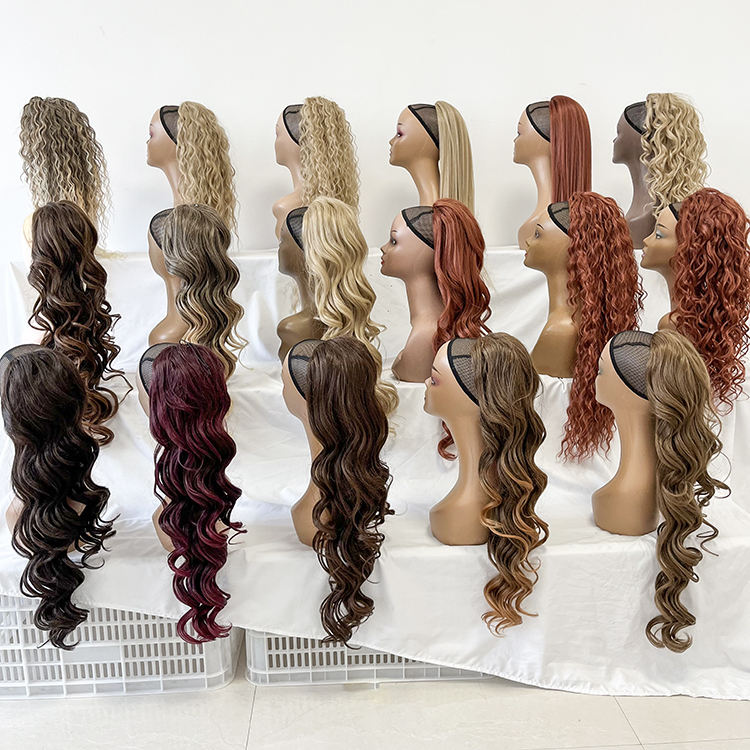
Choosing a Wholesale hair accessories supplier is ultimately about protecting your margins and your customer experience at the same time. In the US B2B market, the “best” supplier is the one that can repeatedly deliver the right styles, stable quality, accurate counts, and on-time replenishment—without surprises when you scale from a few cartons to container-level orders.
If you share your selling channel (salon, beauty supply store, e-commerce, subscription boxes), your top accessory categories, and your monthly volume target, you can request a quote and a sample set that matches your actual reorder plan instead of a generic catalog offer.
Top 5 Qualities to Look for in a Wholesale Hair Accessories Supplier
The takeaway: a strong supplier behaves like an operations partner, not just a product source. Quality is important, but so are the routines that keep quality consistent when styles change weekly.
First, look for SKU discipline. Great suppliers can maintain clean product coding, consistent packaging, and accurate carton counts—this is what prevents shrink, picking errors, and customer complaints. Second, look for proactive communication: clear lead times, fast confirmation on out-of-stocks, and early warnings when a material or color is changing. Third, evaluate their QC mindset. Even for low-ticket accessories, defects create high friction (returns, bad reviews, and wasted labor).
Finally, consider trend responsiveness with guardrails. The best partners can introduce new styles quickly while keeping core best-sellers in stock. That balance—trend + continuity—is what keeps your inventory healthy.
The Importance of MOQ When Choosing a Hair Accessories Wholesaler
MOQ (minimum order quantity) isn’t just a purchasing hurdle; it shapes your cash flow, your SKU strategy, and your ability to test new styles. For US businesses, the wrong MOQ can force you into overbuying slow movers or underbuying fast movers, both of which hurt.
A useful way to think about MOQ is “risk per SKU.” If you’re expanding into new categories—like claw clips, hair bows, or kids’ sets—start with the smallest MOQ that still gives you stable unit economics and consistent production. Then scale only after you see sell-through.
Also clarify how MOQ is measured. Is it per SKU, per color, per assortment, or per total order value? Two suppliers can both say “MOQ 300,” but one means 300 total across styles (manageable), while the other means 300 per color (inventory trap). Push for a pilot-friendly MOQ structure that matches your merchandising reality.
How to Evaluate the Product Range of Wholesale Hair Accessories Suppliers
A wide product range is only valuable if it’s usable. Many catalogs look impressive but hide weak depth in the SKUs that actually drive revenue. Your evaluation should focus on: depth in best-sellers, consistency across variants, and a pipeline of newness.
Start by mapping your “core set” and your “seasonal set.” Core products are evergreen items you reorder monthly—basic elastics, no-snag hair ties, neutral headbands, and classic clips. Seasonal products are holiday colors, festival looks, or trending shapes. Ask the supplier what percentage of their range is stable year-round versus seasonal, and how often they refresh designs.
Request a curated assortment recommendation instead of browsing everything. A good supplier can propose a tight assortment for your channel (for example, salon retail vs beauty supply) and explain why those SKUs win—materials, price points, and customer segments. That explanation is a signal they understand B2B outcomes, not just manufacturing.
Questions to Ask Before Partnering with a Wholesale Hair Accessories Vendor
The fastest way to avoid bad partnerships is to ask questions that force operational clarity. You’re not only buying accessories—you’re buying predictability.
Here are five questions that reveal how the vendor will perform once you place repeat orders:
- How do you handle defects and shortages, and what is the claim window after delivery?
- How do you ensure carton counts and SKU labels are accurate for mixed assortments?
- What are your standard lead times for first orders vs reorders, and what causes delays?
- Can you support custom packaging/private label, and what is the MOQ and timeline for it?
- What happens when a material, color dye lot, or design detail changes—do you notify buyers in advance?
Treat the answers as a scorecard. Vendors who give specific processes and examples tend to be easier to scale with than those who only promise “best quality” without defining what that means in practice.
Comparing Domestic vs. International Wholesale Hair Accessories Suppliers
Domestic (US-based) suppliers often win on speed and flexibility. Faster shipping, easier returns, and simpler communication can make a big difference if your business relies on frequent restocks or short trend cycles. You may also benefit from buying in smaller lots without committing to large production runs.
International suppliers often win on unit cost and manufacturing breadth—especially when you need large volumes, custom designs, or a wide range of materials. The tradeoff is planning: longer lead times, more complex logistics, and higher risk if packaging, labeling, or specs aren’t crystal clear.
A practical approach is a hybrid strategy: source core evergreen SKUs domestically for fast replenishment, and source custom or high-volume programs internationally where the cost savings and customization options matter most. Your best mix depends on how predictable your demand is and how much working capital you can allocate to inventory in transit.
How to Negotiate Pricing with Wholesale Hair Accessories Distributors
Pricing negotiations work when you negotiate the whole deal, not just the unit price. For Wholesale hair accessories, landed cost includes packaging, labeling, freight, payment terms, and the cost of defects.
Start by sharing a realistic forecast: monthly volume ranges, your top 20 SKUs, and which items are “must-always-be-in-stock.” Suppliers are more likely to offer meaningful discounts when they see a stable reorder plan rather than a one-time inquiry. Then negotiate using levers that don’t compromise quality—like increasing order frequency, simplifying packaging, or committing to fewer colors for core SKUs.
If you’re distributing to salons or retailers, don’t ignore payment terms. A slightly higher unit price with better terms (or a more forgiving defect remedy) can produce stronger cash flow and less operational stress than the cheapest quote.
This comparison snapshot helps you negotiate with clarity:
| Negotiation lever | What you ask for | What you give up (if anything) |
|---|---|---|
| Tiered price breaks | Price by annual volume and by reorder cadence | You may need to commit to a forecast range |
| Mixed-SKU cartons | Lower handling fees or better unit pricing for assortments | You may accept standardized carton packs |
| Packaging simplification | Reduced cost for simpler inserts/labels | Less “premium” unboxing experience |
| Payment terms | Net terms or smaller deposit for repeat orders | Supplier may require reorder history |
| Defect policy | Credit/replacement rules for shortages/defects | You must document issues within a claim window |
Use the table to keep negotiations grounded. After you align on terms, re-check that the quote references your exact SKUs, packaging, and carton pack-out so there’s no confusion at fulfillment time.
Signs of a Reliable Wholesale Hair Accessories Supplier for US Businesses
Reliability shows up in small behaviors: accurate confirmations, consistent packaging, and honest communication when something goes wrong. In the US market, reliability also means the supplier understands your downstream realities—Amazon compliance, retailer labeling, salon merchandising, or barcode requirements—depending on your channel.
Look for a supplier who can do pre-shipment verification on mixed orders and who proactively flags substitutions. If an item is out of stock, a reliable partner offers close alternatives with clear photos and pricing, rather than silently replacing SKUs. They also keep records—so your reorder is actually the same as last time.
A good test is the “first reorder.” Many suppliers can impress on the first order; fewer can deliver the second order with the same quality, counts, and packaging. Build your vendor scorecard around reorder performance, not initial samples alone.
The Role of Shipping and Logistics in Choosing a Hair Accessories Wholesaler
Shipping and logistics are where margins quietly disappear. Accessories are typically lightweight, but they’re also prone to damage (cracked clips, bent headbands) and packing mistakes (wrong color assortments, missing units). Your supplier’s logistics discipline matters as much as product design.
Ask how they pack for crush resistance, how they separate SKUs within a carton, and how they label cartons for fast receiving. If you run a warehouse, request carton dimensions and weights ahead of time so you can plan storage and inbound labor. If you drop-ship to stores, you’ll need consistent carton labeling and documentation.
Also plan for peak seasons. Back-to-school, holiday gifting, and spring events can create surges. A capable wholesaler will help you pre-book inventory or schedule production so you’re not paying rush freight or losing sales due to stockouts.
How to Verify the Authenticity of Wholesale Hair Accessories Suppliers
“Authenticity” here means the supplier is legitimate, consistent, and able to deliver what they claim—not a broker who disappears when you need after-sales support. Verification starts with business basics: verifiable company details, clear product photos that match reality, and a willingness to provide samples under your requested SKUs.
Then move to process verification. Ask for evidence of QC checks (even simple ones like count verification and visual defect checks), and confirm how they handle traceability—batch identifiers, carton labels, and order records. If they can’t tell you how they prevent packing errors on assorted cartons, expect problems at scale.
A useful step is to run a controlled pilot: one mixed-SKU order with strict labeling requirements and a defined defect claim window. If they pass that test cleanly, you can expand with confidence.
The Impact of Supplier Relationships on Your Hair Accessories Business Growth
Supplier relationships directly shape growth because they determine your speed, your new-product pipeline, and your ability to keep best-sellers in stock. When you have a vendor who understands your business goals, they can help you plan launches, reserve capacity, and reduce lead-time surprises.
Good relationships are built through clarity and feedback. Share sell-through data on key SKUs, give fast feedback on defects, and be specific about what “good” looks like (pack-out accuracy, consistent materials, no substitutions without approval). In return, expect transparency about lead times, constraints, and product changes.
When you treat supplier management as a system—scorecards, reorders, and continuous improvement—you can scale more predictably, introduce new styles with less risk, and negotiate better terms based on real performance.
Last updated: 2026-03-02
Changelog:
- Updated the guide for US B2B buyers focusing on supplier selection, MOQ risk, and assortment planning
- Added negotiation and logistics frameworks to reduce landed cost and fulfillment errors
- Strengthened verification steps for supplier legitimacy and reorder reliability
Next review date & triggers: 2027-03-02 or earlier if your sales channel changes (retail vs e-commerce), defect/return rates rise, or lead times shift significantly
FAQ: Wholesale hair accessories
How do I choose a Wholesale hair accessories supplier for a US-based B2B business?
Prioritize reorder reliability, accurate carton counts, clear defect remedies, and a product range with depth in your core best-sellers.
What MOQ is reasonable when buying Wholesale hair accessories?
It depends on whether MOQ is per SKU or per assortment; start with pilot-friendly MOQs so you can test sell-through before scaling.
How can I test product quality for Wholesale hair accessories before a big order?
Place a mixed-SKU pilot order, inspect packing accuracy, stress-test key items (springs, seams, elasticity), and track defects within a set claim window.
Is it better to buy Wholesale hair accessories domestically or internationally?
Domestic often wins on speed and flexibility, while international can win on unit cost and customization; many buyers use a hybrid strategy.
What should I negotiate first with Wholesale hair accessories distributors?
Lock down SKU specs and pack-out rules first, then negotiate price breaks, payment terms, packaging costs, and defect policies.
What are red flags when sourcing Wholesale hair accessories?
Silent substitutions, vague defect remedies, inconsistent labeling, and reluctance to provide samples or clear lead times are common warning signs.
Share your target categories, top SKUs, expected monthly volume, and packaging/labeling needs, and you can get a tailored quote and sample plan for Wholesale hair accessories sourcing in the US.