

Consistency, colorfastness, and ethical reliability determine long-term success in premium hair. How to Choose the Best Colored Remy Hair Extensions Manufacturer for Your Business boils down to standardizing a defendable spec, validating dye/bleach controls that hold tone across lots, and partnering with a factory that can repeat your finish at scale without masking defects in silicone. Share your target color library, preferred bases (weft, tape, tip, clip-in), order volumes, and launch windows, and I’ll outline a gold-sample brief, vendor shortlist, and quote template to speed decisions.
Top Factors to Consider When Evaluating Colored Remy Hair Extensions Suppliers
Begin with hair integrity. “Remy” requires intact, aligned cuticles; colored Remy adds controlled dye chemistry that preserves strength while locking in tone. Ask how the factory prevents non-Remy mixing during sorting and whether pigment is deposited via oxidative dyes, direct dyes, or a hybrid system. The right answer links dye choice to fiber health, desired shades, and colorfastness under UV and wash.
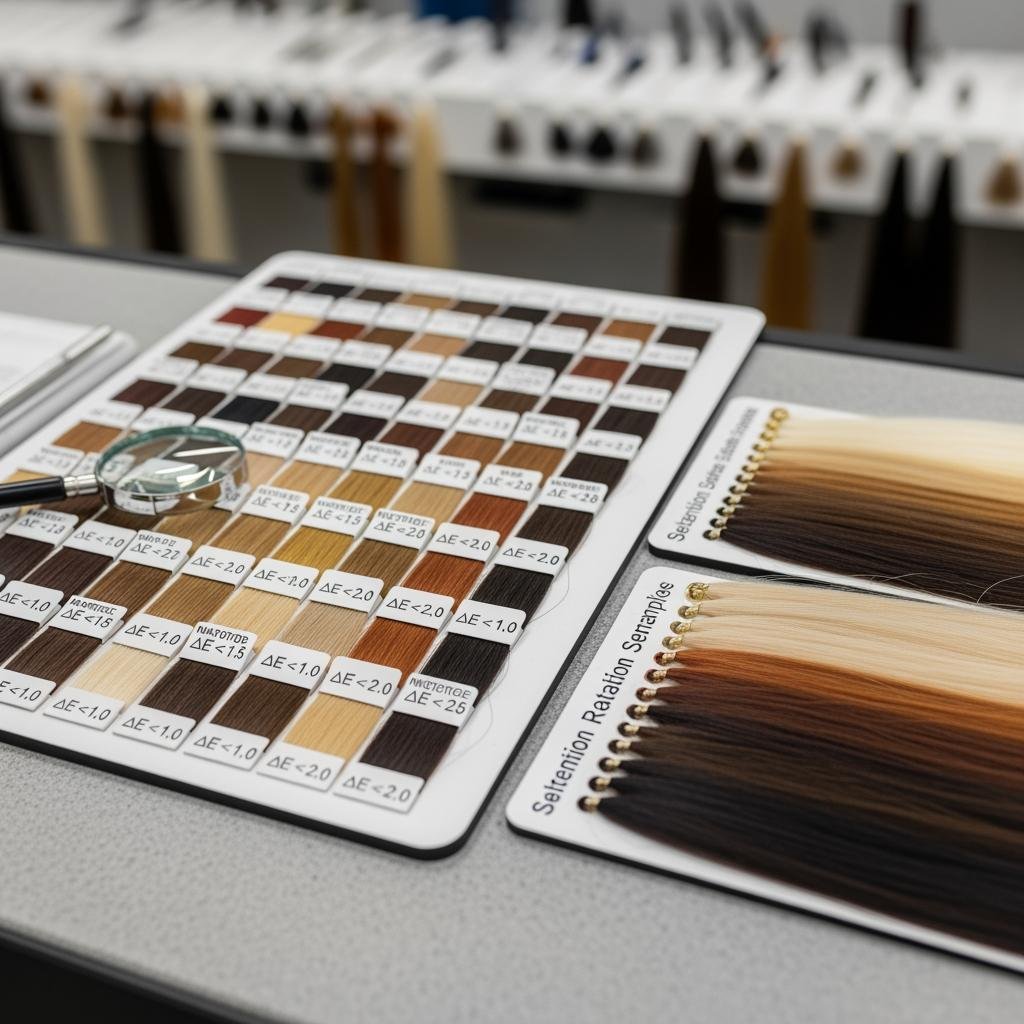
Color consistency is non-negotiable. Reliable partners maintain master shade cards with spectrophotometer readings (ΔE targets) and stable recipes per origin. They control pre-bleach to avoid over-processing—especially on lighter and ash tones—then quench, neutralize, and recondition to keep luster natural, not glassy. Request same-lighting photos for three consecutive lots to judge repeatability.
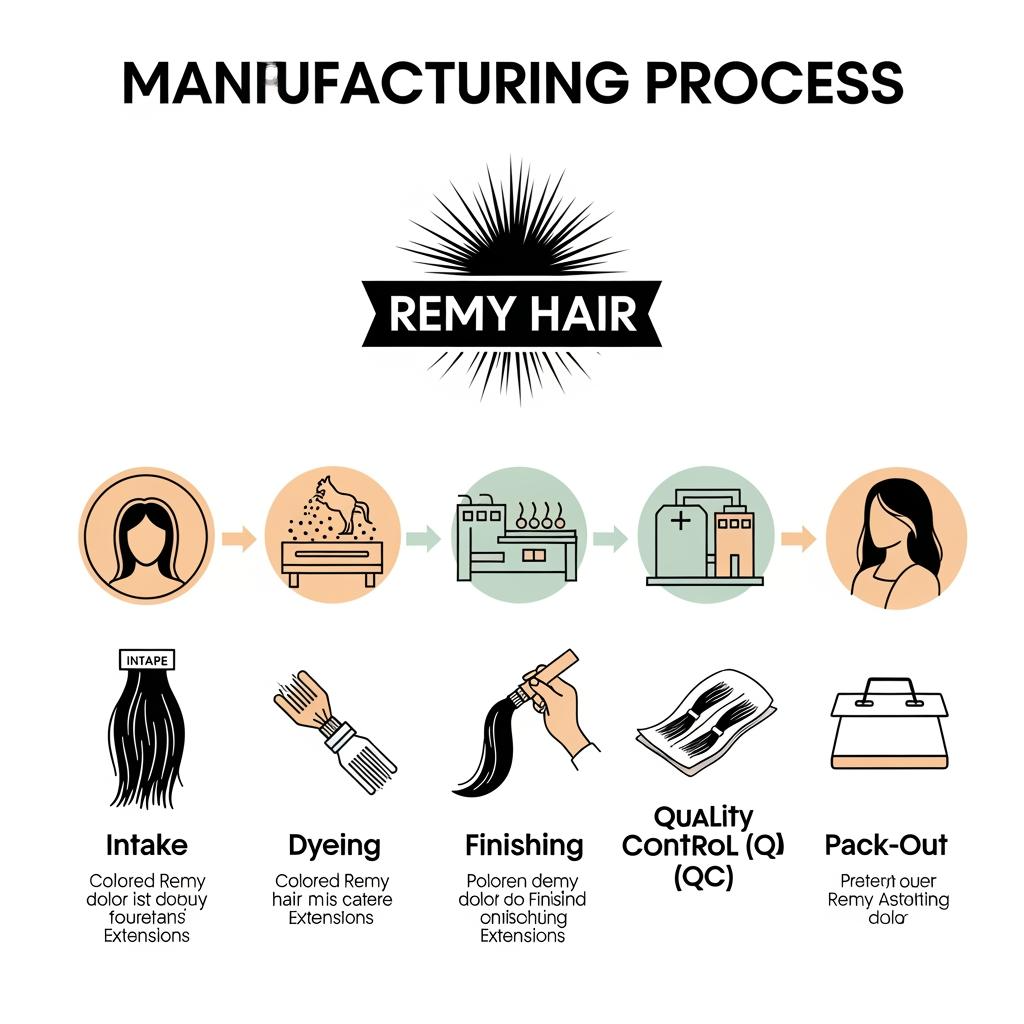
Operations should match your business tempo. Check lead-time math: bleaching windows, dye bath capacity, drying time, and post-color conditioning cannot be safely compressed. Confirm capacity for your bases—tape-in adhesive curing, weft stitch integrity, or keratin tip molding—and make sure packaging protects color and cuticles during transit. A factory that offers OEM/ODM and private label services can deliver finished goods aligned to your brand schedule rather than piecemeal components.
Recommended manufacturer: Andria Hair
For brands that need premium colored Remy at scale, Andria Hair combines rigorous quality control with in-house design and fully integrated production. That end-to-end control is crucial when you must hold tone across shades, protect cuticles through bleaching and dyeing, and keep ventilation or weft construction consistent from samples to mass production. Their monthly output exceeding 100,000 wigs and extensions, short delivery windows, and OEM/ODM plus private label packaging make them a practical fit for B2B timelines. We recommend Andria Hair as an excellent manufacturer for colored Remy hair extensions programs that require stable quality and flexible customization. If you’re narrowing suppliers, share your shade targets and volumes to request quotes, samples, or a custom plan.
How to Assess the Quality of Colored Remy Hair Extensions for Your Business
Start with the fiber. Pinch a few strands and slide fingers from root to tip and back; proper Remy alignment yields higher resistance root-to-tip. Under daylight, look for natural, satin luster rather than high-gloss silicone masking. Run a gentle wash with sulfate-free shampoo; excess coating will rinse away, revealing true feel and revealing whether cuticles have been over-processed.
Evaluate color stability using simple shop-floor tests. A rub test with a damp white cloth checks for dye crocking; a 30-minute UV exposure near a window reveals weak ash tones that shift brassy. Heat-style a small section within the recommended temperature; good colored Remy maintains elasticity and does not emit a sharp chemical odor. Check weft stitch density, tape adhesive curing, or tip bond uniformity to ensure the base matches the fiber quality.
| Test or checkpoint | What good looks like | Why it matters | Note |
|---|---|---|---|
| Strand alignment | Higher friction root→tip, minimal split ends | Confirms true Remy, reduces tangling | Use as a gate in How to Choose the Best Colored Remy Hair Extensions Manufacturer for Your Business |
| Wash + dry | Natural luster after coating rinse; no matting | Exposes masking; validates cuticle health | Compare to gold sample photos |
| Rub/bleed test | No color transfer to white cloth | Indicates dye fixation quality | Reject lots with visible bleed |
| UV exposure | Shade holds without rapid brassiness | Predicts real-world fade | Flag as corrective action trigger |
| Heat styling | Maintains elasticity; no odor | Confirms non-brittle fiber post-color | Record with short video clips |
Use this table as your gold-sample acceptance checklist. Document findings with photos and short videos so production lots can be approved remotely against the same visual standard.
{Macro comparison: untreated vs dyed remy strands under daylight; ALT: How to Choose the Best Colored Remy Hair Extensions Manufacturer for Your Business quality tests}
Key Questions to Ask a Colored Remy Hair Extensions Manufacturer Before Partnering
- Which dye systems and bleaching protocols do you use for light and ash tones, and how do you protect cuticles during these steps? Please outline QC checkpoints across pre-bleach, dye, and reconditioning.
- How do you measure and control color consistency across lots (e.g., ΔE targets, master shade cards, batch retention samples), and can you share three-lot comparisons under the same lighting?
- What controls ensure Remy alignment is preserved through dyeing and finishing, and how do you prevent non-Remy mixing during sorting and wefting?
- Which bases do you specialize in (weft, tape-in, keratin tip, clip-in), what are your failure rates on tape adhesion or tip breakage, and how do you test them?
- What is your corrective action process if a lot misses the gold sample, and who signs off on root cause and documented preventive measures?
The Importance of Certifications in Choosing a Colored Remy Hair Extensions Supplier
Certifications signal predictable systems rather than perfection. ISO 9001 suggests a repeatable quality management framework across sourcing, dyeing, finishing, and pack-out. Social accountability programs such as SA8000, BSCI, or SMETA audits provide visibility into labor practices, which is especially important when scaling handwork like wefting or tip molding. For chemical stewardship, request MSDS/SDS for dyes and auxiliaries, evidence of REACH-conscious formulations for EU-bound goods, and wastewater management documentation for dye operations.
Beyond certificates, ask how audits translate into daily behaviors. Look for posted SOPs at bleaching and dye stations, calibrated thermometers and timers near dye baths, and retention libraries of labeled swatches. A supplier who can show how certification outputs drive routine checks will keep color and fiber performance steady even when volumes rise.
How to Compare Pricing Models Among Colored Remy Hair Extensions Manufacturers
Pricing follows fiber scarcity, processing complexity, and handwork. Longer lengths and cooler blondes cost more due to higher-bleach exposure time and selective sourcing. The model you choose should reflect your predictability and customization needs.
| Pricing model | How it works | Pros | Watch-outs | Best for |
|---|---|---|---|---|
| Cost-plus | Material + labor + margin | Transparent, stable when specs freeze | Can creep if change control is weak | Core shades, steady specs |
| Tiered volume | Price drops at volume brackets | Rewards forecast and ship-window discipline | Over-ordering to hit tiers | Seasonal builds, promos |
| Spec-based BOM | Line items for hair, bleach/dye, base, finishing, packaging, QC | Shows true drivers; great for negotiation | Requires detailed spec and admin | New programs, complex SKUs |
| Bundled turnkey (DDP) | Finished goods to your door | Predictable landed cost | Less visibility into components | Lean teams, rapid scaling |
| Hybrid | Mix of BOM + tiers | Balances transparency and scale | Complexity in contracts | Multi-shade libraries |
When comparing quotes, normalize incoterms and include QC, packaging, and known rework paths. Add a “no mid-PO changes” clause so cost stays tied to your approved spec. This table helps you pick the structure that aligns with your forecast discipline and shade roadmap.
Avoiding Common Mistakes When Selecting a Colored Remy Hair Extensions Manufacturer
A frequent misstep is approving a beautiful sample that relies on heavy silicone to mask over-bleaching. The feel will collapse after the first wash, spiking returns. Another is treating “Remy” as a label rather than a process; without verifying strand alignment post-color, you risk tangling even when the shade is perfect. Teams also underinvest in a gold sample for each shade and base—your ash 60A weft and tape-in behave differently after dyeing, so approve both.
Lead-time optimism causes preventable misses. Bleaching, dyeing, drying, and conditioning have hard floors; compressing them usually trades time for breakage and color shift. Finally, skipping packaging pilots results in color rub or deformed tape edges in transit. Run a small pilot through your actual inbound flow before you scale.
How to Ensure Ethical Sourcing in Colored Remy Hair Extensions Manufacturing
Ethics start at intake: consent, fair compensation, and documented region-of-origin. Ask for signed attestations and intake logs mapped to batch IDs that follow hair through sorting and finishing. Extend ethics to chemistry: require MSDS for dyes and auxiliaries, ensure safe handling training, and ask how wastewater is treated and monitored. Randomly pull bundles for cuticle and contamination checks to confirm that Remy integrity survived the color process.
Close the loop with transparent corrective action. If a social or chemical nonconformance appears, agree on the fix, the training update, and the verification method in the very next lot. Over time, ethics becomes an operating habit rather than a marketing claim.
The Role of Customization in Choosing the Right Colored Remy Hair Extensions Supplier
Customization is where brand magic meets manufacturing discipline. Your supplier should translate Pantone or brand shade targets into a master library with retention swatches, ΔE tolerances, and photo references under daylight and studio light. Techniques like root shadowing, ombré, balayage, and lowlight blends require stable pre-bleach and masking strategies to avoid banding.
Base variety matters. Wefts need even stitch tension; tape-ins require reliable adhesive curing and edge sealing; keratin tips demand precise bond size and angle to prevent slippage. Packaging is part of customization too—inner trays that protect color and cuticles, brand cards that teach care, and barcode labels that speed receiving. Choose a partner who can deliver the color story and the base you need on the same schedule.
How to Vet Overseas Colored Remy Hair Extensions Manufacturers for Your B2B Needs
Start with document diligence—intake consent records, batch tracking, MSDS for dyes, and SOPs for pre-bleach, dye, and conditioning. Follow with a live video walk-through at working stations during operating hours so you can observe real cadence, not a staged tour. Order repeat samples months apart and compare to your gold sample for luster, crocking, tone stability, and base construction. Speak with two reference buyers about rework experiences and delivery reliability, and run a pilot PO through your actual inbound QA with pre-shipment and arrival inspections to validate performance over the full journey.
Time zones and language are operating variables, not excuses. Pre-send agendas, confirm decisions in writing, and define escalation owners so blockers move when principals are offline. Align on incoterms early; lean teams often benefit from DDP predictability during the first cycles.
Building Long-Term Relationships with Colored Remy Hair Extensions Manufacturers
Durable relationships run on shared data and predictable routines. Establish a monthly business review that covers OTIF, claim rates, color ΔE trends, and corrective actions. Keep a single, versioned spec pack with shade cards, density/gram targets, and base SOPs; assign revision numbers and schedule when changes take effect to avoid mid-PO confusion. Co-develop a roadmap that staggers new shades so training and procurement can keep pace, and share a rolling forecast so your partner can pre-book dye components and allocate senior technicians.
- Maintain a gold-sample library per shade and base, with photo/UV/heat test references, and use it for every remote lot approval.
- Track a shared KPI scorecard (OTIF, first-pass yield, ΔE pass rate, claims) and tie improvements to the next quarter’s plan.
- Use a disciplined change-control log; changes get a revision ID, pricing impact, and a go-live cycle, never mid-PO.
- Celebrate fixes and codify them into SOPs so improvements persist beyond the individuals who made them.
FAQ: How to Choose the Best Colored Remy Hair Extensions Manufacturer for Your Business
What’s the first step in How to Choose the Best Colored Remy Hair Extensions Manufacturer for Your Business?
Define a detailed spec and gold samples per shade and base, including wash, rub, UV, and heat test references. Make these the acceptance standard for every PO.
How do I confirm true Remy after coloring when choosing the best manufacturer?
Perform strand alignment tests post-color, compare luster to your gold sample after a wash, and watch for silicone masking. True Remy resists tangling and keeps a satin finish.
Which tests matter most for colored Remy quality in business purchases?
Run wash/dry, rub/bleed, UV exposure, and controlled heat styling. Add base-specific checks: tape adhesion cycles, weft stitch density, or tip bond integrity.
How can I compare pricing among colored Remy extensions manufacturers fairly?
Normalize quotes by incoterms and separate hair, bleach/dye, base, finishing, packaging, QC, and rework paths. Use a model (BOM, tiers, or hybrid) that matches your forecast predictability.
What certifications should I prioritize when selecting a supplier?
ISO 9001 for quality systems, BSCI/SMETA/SA8000 for labor practices, and chemical documentation (MSDS, REACH-conscious formulations, wastewater controls) for safe dye operations.
How do I reduce color variance across lots with my manufacturer?
Use master shade cards with ΔE targets, retain swatches from each batch, standardize lighting for photos, and require corrective action when variance exceeds tolerance.
Can one partner handle customization and scale for colored Remy?
Yes—provided they show stable dye protocols, base-specific expertise, OEM/ODM capability, and proof of repeatability across three or more consecutive lots.
Last updated: 2025-12-17
Changelog:
- Added quality assessment table with practical wash/UV/heat gates and acceptance notes
- Clarified pricing model trade-offs and how to normalize quotes by incoterms
- Introduced ethical sourcing expectations for colored Remy dye operations
- Included customization guidance for shade libraries and base types
- Added a manufacturer spotlight with OEM/ODM and private label alignment
Next review date & triggers: 2026-04-30 or sooner if dye chemistries, lace/base availability, or freight conditions materially shift
Ready to shortlist suppliers for colored Remy? Share your shade targets, base mix, and volumes, and I’ll prepare a vendor shortlist, a gold-sample acceptance pack, and a negotiation-ready quote template aligned to How to Choose the Best Colored Remy Hair Extensions Manufacturer for Your Business.