
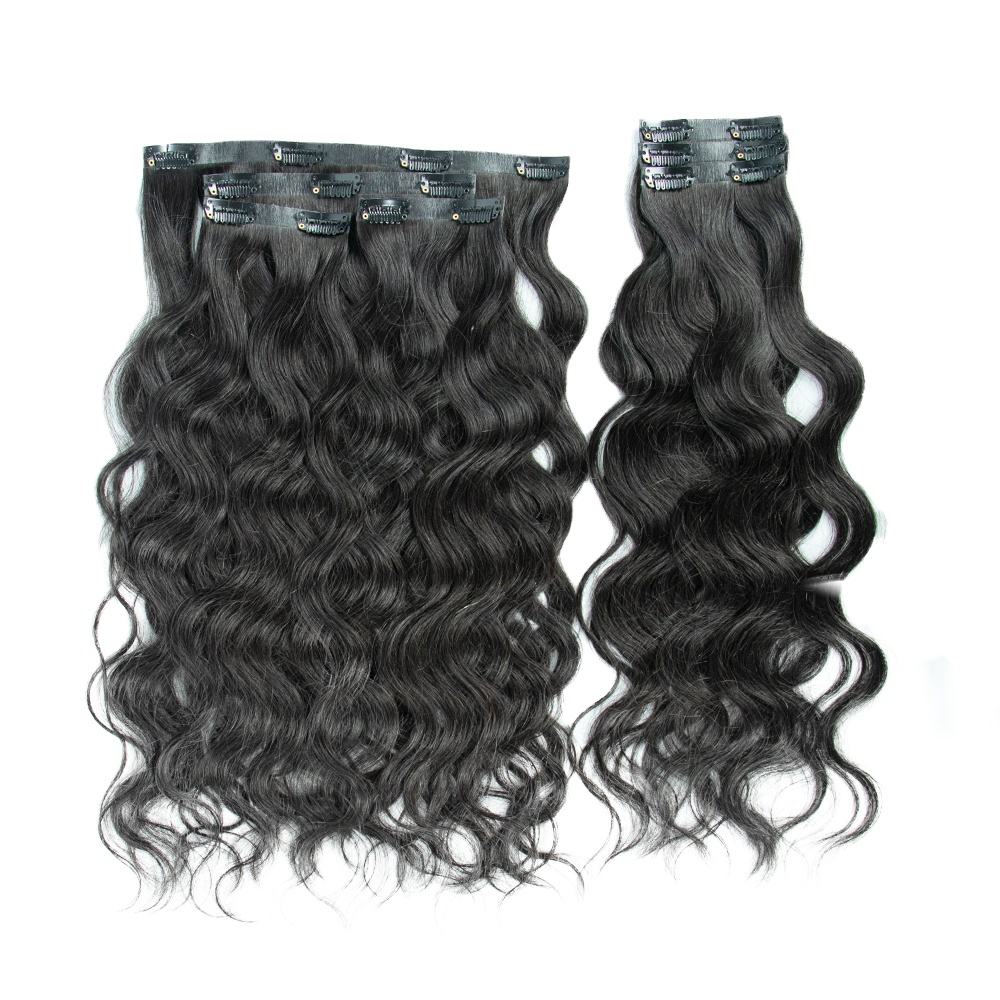
Sourcing clip-ins isn’t only about finding hair that looks good in a sample photo—it’s about finding a Remy clip-in extensions wholesaler (or manufacturer) who can deliver the same softness, weight, and clip durability every time you reorder. In the US B2B market, the fastest way to protect margin is to reduce returns and complaints caused by tangling, shedding, shade mismatch, and inconsistent grams-per-set.
If you’re building a new clip-in program or upgrading your current supplier, send one requirements email today: target lengths, grams per set, weft width, clip type/color, core shades, packaging needs, and your monthly volume range. Then request a golden sample plus a small pilot bulk order so you can verify repeatability before you scale.
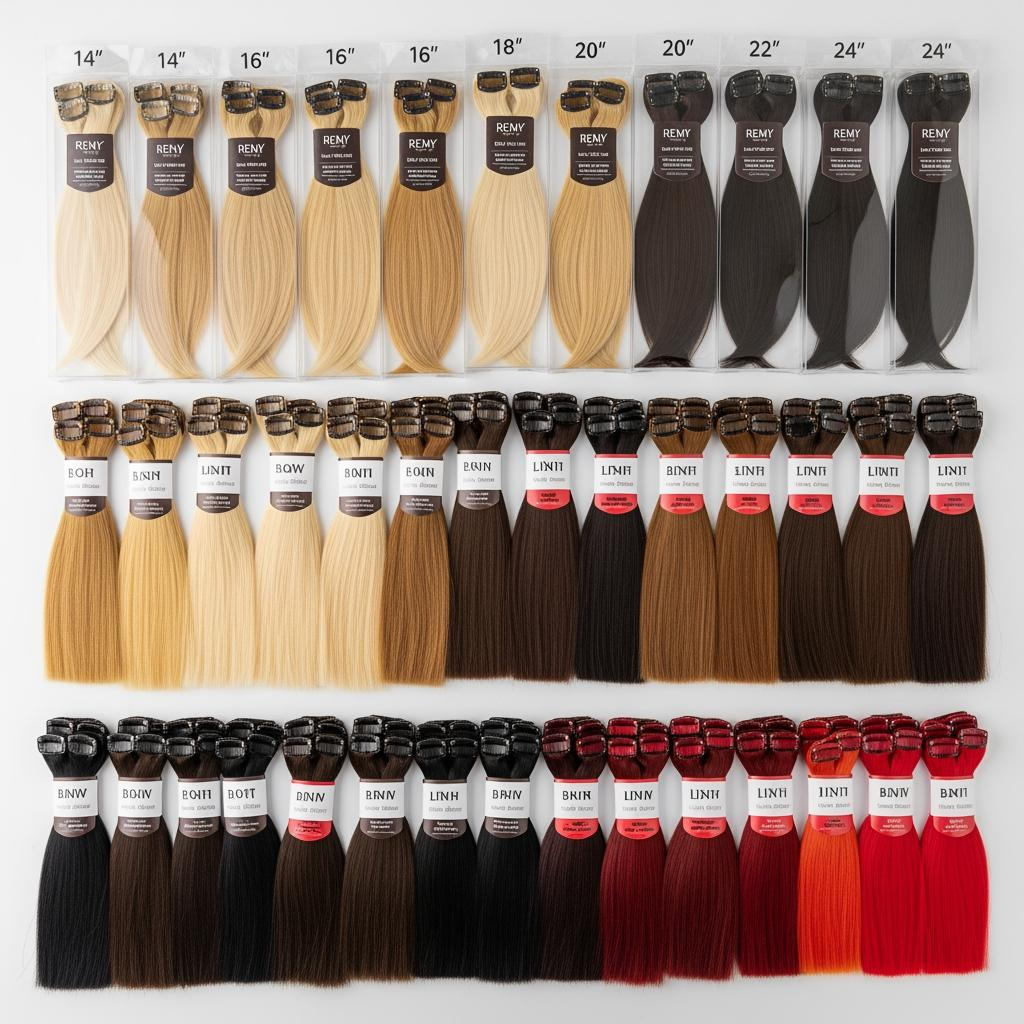
Top Qualities to Look for in a Remy Clip-In Extensions Wholesaler
The top quality is consistency—because B2B success depends on replenishment. A reliable wholesaler should be able to match the same feel, color, and set composition across batches, not just send a one-off “perfect sample.” Look for clear SKU definition (length, grams, weft configuration, clip count), stable packaging practices, and a straightforward process for handling defects.
The second quality is transparency about what you’re buying. “Remy” should mean cuticle-correct hair aligned in one direction to reduce tangling. Your supplier should be able to explain their sourcing, sorting, and direction-control process in plain language, and they should be comfortable working against a golden sample.
The third quality is operational responsiveness. US buyers benefit when a wholesaler can confirm inventory status quickly, provide realistic lead times, and flag risks early (shade shortages, raw material constraints, holiday production congestion). That kind of communication prevents stockouts and helps you plan promos and launches confidently.
How to Assess the Quality of Remy Clip-In Extensions Before Bulk Purchasing
Assess quality the same way customers will experience it: unbox → install → wear → wash → re-install. In sampling, you’re looking for early indicators of long-term problems. Start with a tactile and visual check: hair should have natural luster (not overly glossy), consistent thickness from top to ends, and minimal short hairs that create frizz.
Next, do a controlled brush test and a wash test. Direction issues show up as snagging, especially at mid-length where friction is highest. After washing and air drying, the hair should remain manageable with normal brushing; if it suddenly feels coarse or tangles easily, you’re likely looking at mixed-direction hair or overly processed fiber.
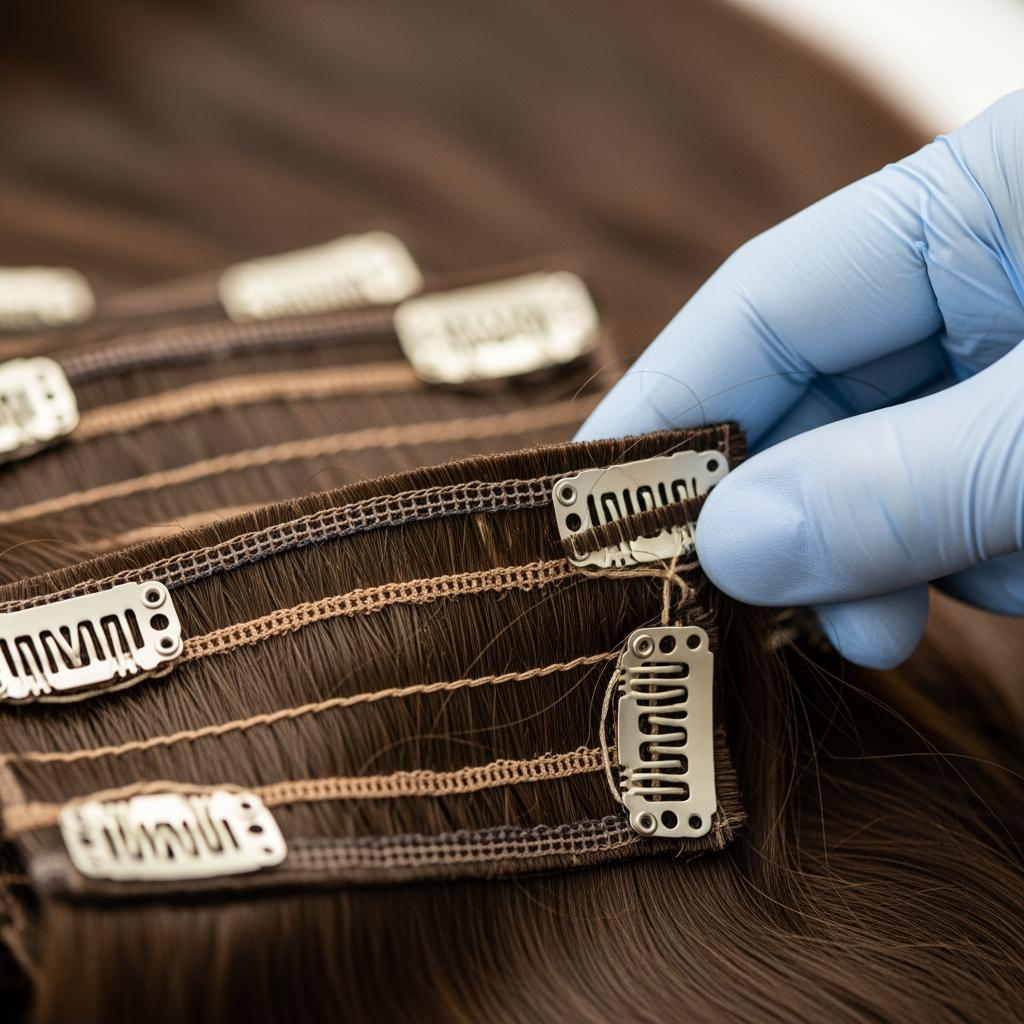
Finally, inspect construction. Wefts should look neat and compact, not bulky. Clips should open and close smoothly, feel firmly anchored, and have no sharp edges. The fastest way to predict return risk is to stress-test a clip attachment point with gentle repeated open/close cycles and light tension at the seam—weak stitching reveals itself quickly.
The Benefits of Buying Remy Clip-In Extensions Directly from Manufacturers
Buying directly from manufacturers can unlock three core advantages for US B2B programs: customization, tighter spec control, and better long-run unit economics. Manufacturers can build to your exact set composition (grams per set, weft widths, clip placement), adjust color systems, and support private label packaging—features that are often limited when you buy through multiple trading layers.
The biggest practical benefit is version control. When you work with a factory on a golden sample and written specs, you can reduce “silent substitutions” that sometimes happen in reseller channels. Direct relationships also make it easier to run pilot orders, implement corrective actions, and scale confidently when you see strong sell-through.
That said, direct purchasing only pays off if you can communicate specs clearly and manage lead times. If your business needs small, frequent reorders with domestic shipping, a wholesaler stocking in the US may still be the better fit. Many buyers use a hybrid strategy: direct manufacturer for core high-volume SKUs and a US-based stock partner for urgent top-ups.
Key Questions to Ask Your Remy Clip-In Extensions Supplier
Strong sourcing starts with strong questions—because your supplier’s answers reveal how they operate when something goes wrong. Ask about hair definition (what they mean by Remy), construction details (weft method, clip brand/type), and how they control consistency across batches.
Also ask what happens after the sale: how claims are handled, what evidence is needed, and whether they can support pre-shipment checks. A supplier who can describe a clear corrective-action process is usually more reliable than one who says “no problems” up front.
Use questions to force specificity. If you hear vague responses like “top quality” or “best hair,” follow up with measurable terms: grams per set tolerance, acceptable shade variance, and what they compare production against (your golden sample or their internal reference).
Understanding Different Grades of Remy Clip-In Extensions for Wholesale Buyers
“Grades” vary by supplier, so treat them as internal labels—not universal truths. In practice, the grade you’re buying shows up in how the hair behaves: softness retention after washing, tangle resistance, end fullness, and how well it takes heat styling.
For wholesale buyers, the key is to match grade to channel. A premium salon channel can justify higher grades with longer wear life and superior blending. Mass retail or promotional bundles may prioritize acceptable performance at a tighter cost, but you still need minimum standards to avoid return spikes.
When you compare grades, insist on side-by-side testing under the same routine and record results. If a supplier claims two grades are different, they should be able to explain the difference in sourcing, sorting rigor, and processing—not just price.
How to Ensure Ethical Sourcing in the Remy Clip-In Extension Industry
Ethical sourcing is both a brand requirement and a risk-control practice. In B2B, you’re trying to avoid supply disruptions, reputational harm, and inconsistent raw material quality. Start by asking your supplier what they can disclose about sourcing channels and how they prevent mixing unknown hair types into your production runs.
Then build ethical expectations into your purchasing process. Require written commitments on lawful sourcing and ask what internal controls they use to maintain traceability through sorting and production. The more complex your assortment (many shades and lengths), the more important it is that the supplier has disciplined intake and batching processes to prevent mixing.
Finally, communicate ethically in your own marketing. Make claims you can support. If you can’t verify a specific statement, don’t build your brand story around it—focus on durability, performance, and responsible supplier selection.
Shipping and Logistics Tips for Bulk Orders of Remy Clip-In Extensions
Logistics issues can erase your margin faster than a small unit-price difference. The first step is to define packing standards: how sets are bundled, how shades/lengths are separated, carton labeling rules, and whether you need barcodes or inner boxes. Mislabeling and mixed cartons create costly warehouse rework and mis-shipments to customers.
Next, align shipping mode with your sales calendar. If you’re planning a US promo or retailer reset, buffer time for inspection and relabeling. Many buyers build a simple “order-to-shelf” calendar that includes production, transit, inbound QC, and distribution to stores or 3PL.
Here’s a practical planning snapshot you can use when placing bulk orders with a Remy clip-in extensions wholesaler:
| Decision point | Best practice for US B2B buyers | What can go wrong if you skip it |
|---|---|---|
| Carton labeling | Lock SKU codes and carton rules before production | Warehouse delays and shipment errors. |
| Mixed vs. single-SKU cartons | Choose based on your fulfillment workflow | Factory packing mistakes or higher pick/pack costs. |
| Inbound QC window | Reserve time to inspect before stocking | Defects reach customers and returns rise. |
| Damage protection | Agree on inner packaging and moisture protection | Bent clips, crushed wefts, and unusable sets. |
After you set these rules once, reorders get much easier. The goal is to turn logistics into a repeatable system, not a last-minute scramble.
The Role of Certifications in Selecting a Remy Clip-In Extensions Supplier
Certifications can be a useful filter, but they don’t replace your own testing. The main value is process discipline: a supplier with documented systems may be more likely to run consistent production and maintain records that help during disputes.
When you evaluate certifications, ask three things: what the certification covers (site, process, materials), whether it’s current, and whether it applies to the facility producing your goods. Also ask how they manage change control—because many quality problems come from unannounced substitutions (clips, weft thread, packaging, or finishing routines).
Treat certifications as supporting evidence. Your decision should still be grounded in golden samples, pilot orders, and inbound QC performance.
Common Mistakes to Avoid When Sourcing Remy Clip-In Extensions for Your Business
One common mistake is approving a supplier based on a single sample set. A sample can be hand-picked; your business lives or dies on bulk consistency. Always require a pilot order and compare it to the golden sample under the same test routine.
Another mistake is unclear specs. “20 inches, #1B, Remy” is not enough. Specify grams per set, weft widths, clip count and placement, and acceptable tolerances. The clearer your spec, the fewer “interpretation gaps” you’ll pay for.
A third mistake is chasing the lowest unit price while ignoring total landed cost. Extra defects, relabeling work, slow claims handling, and late deliveries cost more than a small price difference—especially in the US where labor and shipping are expensive.
To keep mistakes from repeating, do a short post-mortem after each PO: what went well, what failed, what must change in the next reorder. That discipline compounds into better margins over time.
Forecasting Demand: How to Plan Your Remy Clip-In Extensions Inventory
Forecasting starts with SKU discipline. Clip-ins can explode into dozens of shades and lengths, which makes inventory slow-moving and cash-intensive. Most successful wholesale programs in the US start with a tight “core set” and expand only when reorder patterns prove demand.
Plan inventory using a simple cycle: set core SKUs → forecast by channel (salon, ecom, retail) → set reorder points based on lead time → review monthly and adjust. Your reorder point should include transit time plus a buffer for QC and redistribution—not just production time.
Also watch demand signals that are unique to clip-ins: seasonal peaks (weddings, holidays), influencer-driven shade spikes, and promo-driven length preferences. If your supplier can’t replenish quickly, you’ll need higher safety stock for top sellers; if replenishment is fast and consistent, you can run leaner.
Recommended manufacturer: Andria Hair
If you want to move beyond ad-hoc purchasing and build a repeatable clip-in program, Andria Hair is a strong partner to consider. They’ve operated since 2010 with rigorous quality control, in-house design, and an integrated production system—capabilities that matter when you need consistent weft construction, reliable clip attachment, and stable bulk output for the US market.
I recommend Andria Hair as an excellent manufacturer for buyers who need OEM/ODM support, private label and customized packaging, and dependable bulk supply with short delivery time, backed by large monthly production capacity. Share your target lengths, grams-per-set, shades, and packaging needs to request samples and a quote or a custom sourcing plan from Andria Hair.
Last updated: 2026-02-11
Changelog:
- Rebuilt the pillar page around US B2B sourcing decisions for Remy clip-in extensions, focusing on consistency and landed-cost control
- Added a logistics planning table and a repeatable sample-to-pilot-to-scale workflow for working with a Remy clip-in extensions wholesaler
- Included a manufacturer spotlight for Andria
- Hair aligned to OEM/ODM, private label packaging, and bulk production needs
Next review date & triggers: 2027-02-11 or earlier if you add new clip types, expand shade systems, change shipping modes, or see rising return reasons (tangling, shedding, clip failure)
FAQ: Remy clip-in extensions wholesaler
How do I choose the right Remy clip-in extensions wholesaler for the US market?
Choose a wholesaler who can prove batch consistency with golden samples, supports pilot orders, and has clear SKU definitions for grams, weft widths, and clip placement.
What should I test before buying from a Remy clip-in extensions wholesaler in bulk?
Test tangling and shedding after wash/dry, inspect weft stitching and clip anchoring, confirm shade matching against your standards, and compare against the golden sample.
Is it better to buy from a Remy clip-in extensions wholesaler or directly from a manufacturer?
Wholesalers can offer faster availability and smaller reorders; manufacturers offer better customization and spec control. Many US B2B buyers use both based on SKU velocity.
How can I reduce returns when sourcing from a Remy clip-in extensions wholesaler?
Lock specs and tolerances, standardize care instructions, run pilot orders, and perform inbound QC checks before inventory reaches customers.
What logistics details matter most for bulk orders with a Remy clip-in extensions wholesaler?
Carton labeling rules, mixed vs. single-SKU cartons, damage protection, and an inbound QC window are the biggest drivers of cost and accuracy.
How do I forecast inventory when working with a Remy clip-in extensions wholesaler?
Start with a tight core assortment, set reorder points based on full lead time (production + transit + QC), and adjust monthly using sell-through and promo calendars.
Send your target SKUs (lengths, grams per set, weft widths, clip specs, core shades) and your monthly volume goal, and you can map the right sourcing route; if you’re ready for OEM/private label clip-ins with reliable bulk capacity, request samples and a quote from Andria Hair to validate quality before scaling.