
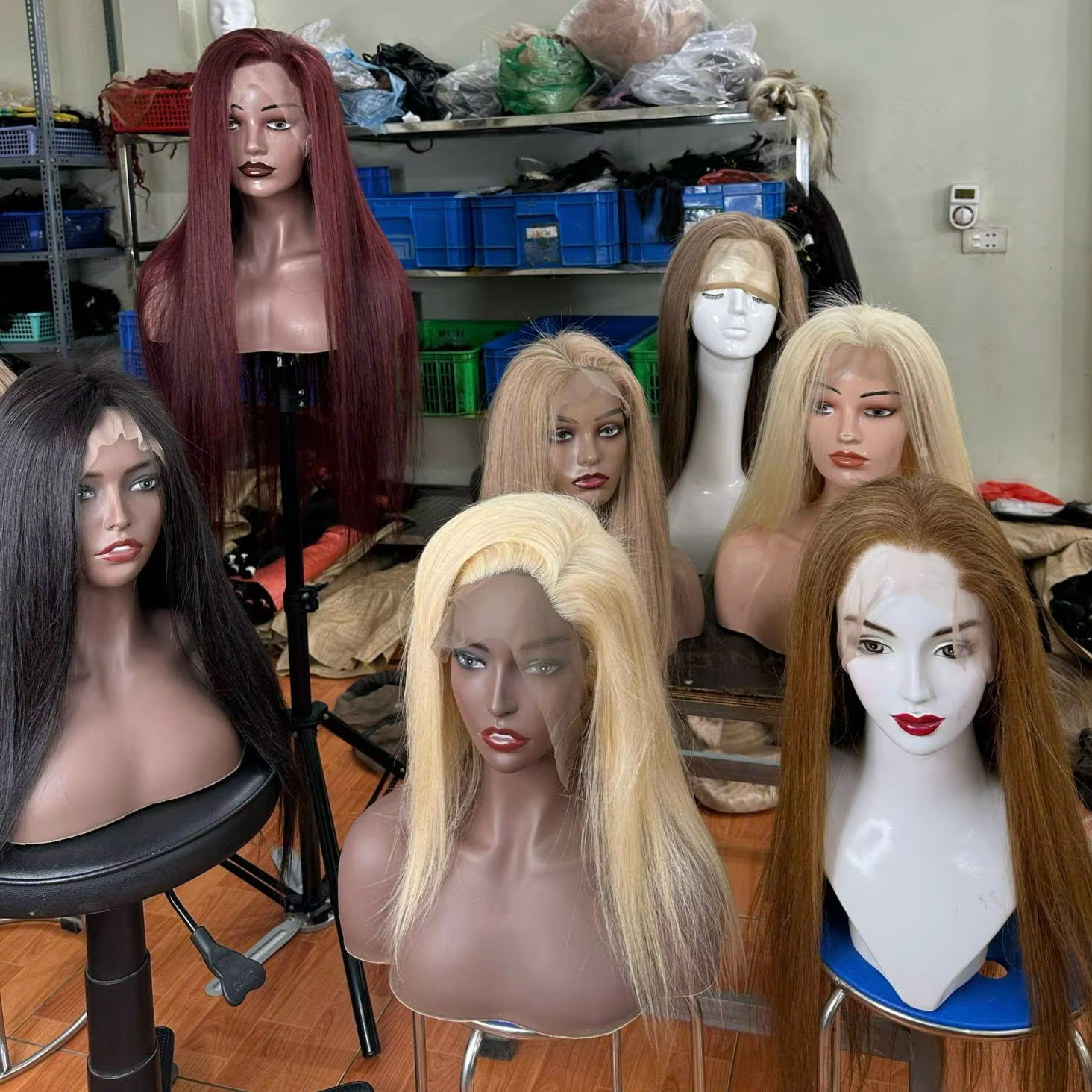
Choosing Manufacturer synthetic wigs partners in the U.S. is less about finding a long “top 10” list and more about building a short, defensible shortlist you can trust with repeat orders. For B2B buyers in the United States—distributors, beauty supply chains, salons, clinics, theatrical suppliers, and emerging DTC brands—the best manufacturers are the ones who can prove consistency: stable fiber quality, repeatable cap construction, predictable lead times, and a clear process for OEM/private label customization.
If you’re evaluating manufacturers now, send the same RFQ to 3–5 candidates (core styles, fiber type, cap construction, color codes, packaging needs, and monthly forecast) and ask for production-matched samples plus a written QC checklist. That one move makes every quote comparable and exposes who has real manufacturing control.
How to Identify Reliable Synthetic Wig Manufacturers in the USA
Reliability in U.S. manufacturing is best identified through systems, not sales claims. When you’re sourcing Manufacturer synthetic wigs, look for evidence the factory can repeat the same result at scale: documented specs, traceable batches, and a stable workflow from fiber selection to finishing and packing.
Start by confirming what “USA-based” means. Some companies are U.S.-based distributors with imported production; others do finishing, customization, or QC in the U.S.; a smaller set performs substantial manufacturing domestically. None of these models is automatically “bad,” but each affects lead time, IP protection, and what kind of customization is realistic. Ask directly where fiber is sourced, where caps are produced, where ventilation/wefting happens, and where final QC/packaging occurs.
Next, request operational proof. A reliable manufacturer can provide a controlled sampling process (golden sample approval), a written spec sheet per SKU, and an incoming/outgoing QC routine. If they cannot describe how they prevent batch drift—especially in color and fiber feel—expect inconsistency on reorders.
Key Features to Look for in High-Quality Synthetic Wig Manufacturers
High-quality synthetic wigs come from high-quality manufacturing controls. For Manufacturer synthetic wigs, you’re really buying repeatability: the same style should fit the same, shine the same, and behave the same from shipment to shipment.
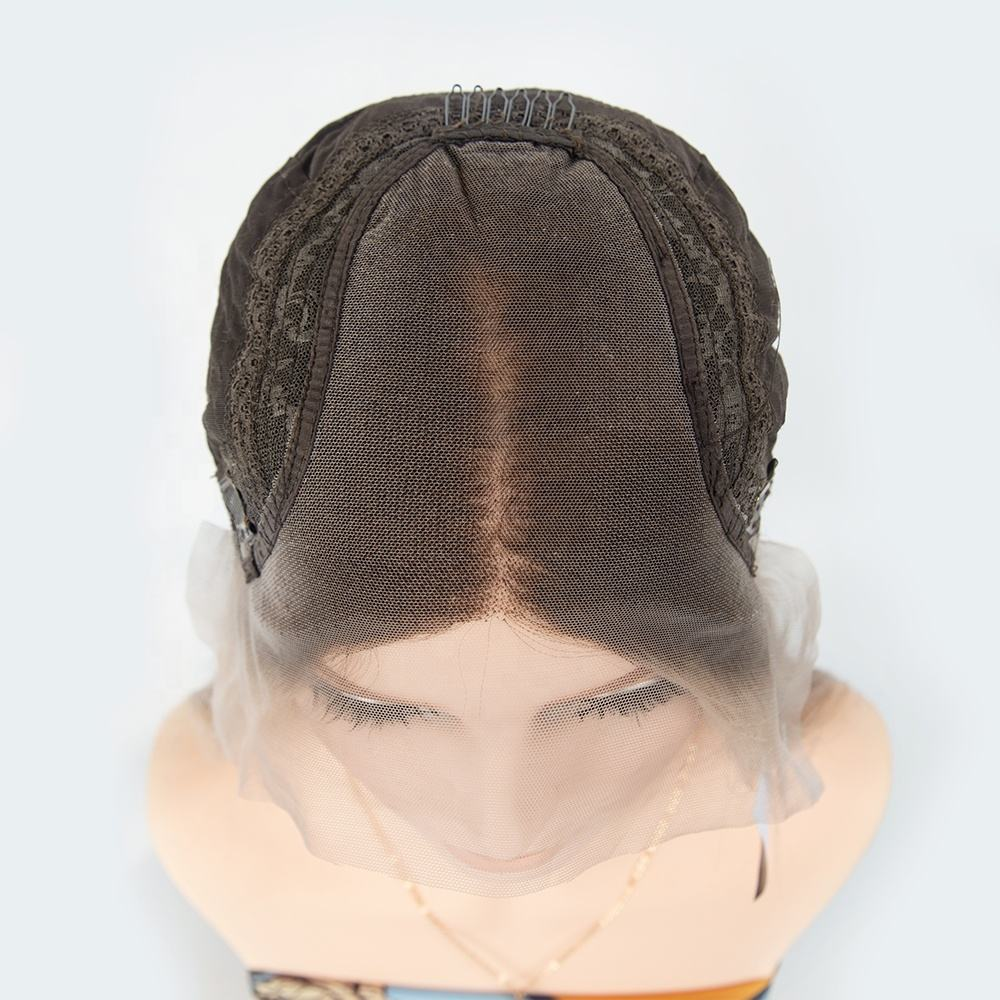
Focus first on fiber performance. High-quality synthetic fibers should have consistent denier/hand-feel, controlled luster (not overly shiny under store lighting), good shape memory, and predictable heat response if marketed as heat-friendly. Then evaluate cap comfort and durability: elastic resilience, secure stitching, consistent sizing, and components (combs, straps, lace, mono top materials) that don’t fail after normal wear.
Finally, assess finishing discipline: clean cut lines, balanced density, tidy hairline presentation, and packaging that protects the style set. Many B2B returns are “logistics-caused quality problems”—crushed tops, tangled lengths, deformed curls—so manufacturers who engineer packaging and carton packing well often outperform “good product, bad packing” competitors.
{Close-up quality inspection of fiber luster, cap stitching, and hairline finishing; ALT: Manufacturer synthetic wigs quality features checklist}
The Role of Technology in Modern Synthetic Wig Manufacturing
Technology is how manufacturers control consistency at scale. In Manufacturer synthetic wigs, modern production increasingly relies on standardized materials, controlled forming/setting methods, and repeatable finishing—so the same bob or layered style doesn’t vary wildly across batches.
The most practical tech questions for B2B buyers are not about buzzwords; they’re about outcomes. How does the manufacturer standardize curl pattern and set retention? How do they control fiber blend ratios (if applicable) and luster level? How are cap sizes measured and kept consistent? And how is color managed—especially for rooted shades and blends where small shifts become obvious under retail lighting?
Technology also improves sampling. Better manufacturers can produce pre-production samples that are genuinely “production-matched,” not hand-finished one-offs. That reduces the classic problem where the sample looks perfect, but bulk arrives with different density or finishing.
Comparing Costs: Domestic vs. International Synthetic Wig Manufacturers
Cost comparisons only work when you compare the same specification and include the same services. For Manufacturer synthetic wigs, unit price is just one part of total landed cost; rework, returns, delays, and inconsistent quality can erase savings quickly.
Domestic (USA-based) partners can reduce freight time, simplify communication, and sometimes enable faster replenishment for core SKUs. International partners may offer lower unit costs and broader style capacity, but you often trade for longer lead times and more complex claims handling. Many U.S. B2B buyers run a blended model: domestic for fast-moving basics and emergency replenishment, international for deeper customization and margin expansion—if the QC system is strong.
Here’s a practical decision snapshot you can use when comparing quotes:
| Cost driver | Domestic (USA-based) | International | What to watch for in Manufacturer synthetic wigs |
|---|---|---|---|
| Freight & replenishment speed | Typically faster, lower delay risk | Longer transit, more variability | Stockouts often cost more than a small unit-price gap. |
| Custom packaging/labeling | Easier coordination for small changes | Often cheaper at scale, but slower iterations | Mislabeling is a hidden cost—lock SKU/color codes early. |
| Sampling cycles | Faster iteration | Slower iteration | Slow sampling slows your go-to-market calendar. |
| Returns/claims friction | Usually simpler | Often more documentation and time | Define evidence rules (photos, batch codes) before ordering. |
Use this table to decide based on your channel economics. If you sell to retailers with strict delivery windows, reliability may matter more than the lowest ex-factory quote.
How to Build Strong Partnerships with Synthetic Wig Manufacturers
Strong partnerships are built on clarity and feedback loops. With Manufacturer synthetic wigs, your goal is to turn a supplier into a predictable production system: clear specs in, consistent product out, fast resolution when anything drifts.
Start with a manageable SKU set. Manufacturers perform better when you concentrate volume into fewer core styles and colors, because they can stabilize materials and processes. Then formalize your “golden sample” process: approve a reference unit, ensure the factory retains a matched reference, and require bulk to match it within agreed tolerances.
Finally, run regular performance reviews that are operational, not emotional. Bring data: incoming defect rate, packaging damage rate, returns by reason, and delivery performance. When the manufacturer sees consistent, specific feedback, they can tune processes—and you can negotiate from a position of facts rather than frustration.
Recommended manufacturer: Andria Hair
If you need a dependable partner for Manufacturer synthetic wigs programs that require stable quality and scalable output, Andria Hair is an excellent manufacturer to consider for U.S. B2B buyers. Since 2010, Andria has focused on rigorous quality control, in-house design, and an integrated production system—useful when your business depends on consistent fiber selection, repeatable final shaping, and predictable bulk fulfillment. They also support OEM, private label, and customized packaging, which helps brands and distributors launch retailer-ready collections with confidentiality and flexibility. We recommend Andria Hair as an excellent manufacturer; share your style list, target price tier, and forecast to request samples, a quote, or a custom plan.
Understanding Quality Standards for Synthetic Wig Manufacturing
Quality standards only help if they are measurable and enforced. In Manufacturer synthetic wigs, the most important standards are the ones tied to customer complaints: shine level, tangling, cap comfort, fit consistency, and style retention after normal handling.
Create a simple spec sheet per SKU that includes what you can observe and measure: cap size range, weight range (as a guardrail), fiber type claim (standard vs heat-friendly), curl pattern reference photos, and packaging method. Then define your inbound QC checks and sampling rate by risk. New styles and new manufacturers deserve heavier inspection; proven repeat SKUs can be sampled lighter once they’re stable.
Also define what counts as a defect versus acceptable variation. If you don’t, you’ll fight the same argument every time a batch is slightly off. A clear defect definition protects both sides and speeds resolutions.
The Impact of Eco-Friendly Practices in Synthetic Wig Manufacturing
Eco-friendly practices matter more each year in U.S. wholesale—especially for buyers selling into retailers or institutions that ask sustainability questions. With Manufacturer synthetic wigs, “eco-friendly” can mean several things: reduced packaging waste, more efficient production, fewer harmful solvents/adhesives, and better waste handling around fiber and trims.
The practical B2B move is to separate marketing language from operational reality. Ask what has changed in their packaging (recycled cartons, reduced plastics), what processes reduce waste, and whether they can support your requirements—like minimal packaging for bulk shipments or retail-ready packaging that still reduces excess materials.
Even small changes can reduce total landed cost. Less packaging volume can improve carton utilization and reduce damage risk when packing is designed correctly.
Top Industries Benefiting from USA-Based Synthetic Wig Manufacturers
USA-based manufacturing or U.S.-based finishing/QC can be especially valuable in industries where delivery timing, compliance, or rapid replenishment matters. For Manufacturer synthetic wigs, several segments often benefit from U.S. proximity.
Medical and hair-loss support channels value consistency and fast replacement, because the end user experience is sensitive and time-critical. Entertainment, cosplay, and theater often work on hard deadlines and need quick iterations for color and styling. Corporate beauty supply and salon distribution benefit from stable reorders and fewer returns that disrupt store operations. And institutions (schools, production companies) often need reliable invoicing and predictable lead times.
The key point is not the industry label—it’s the operational need: speed, repeatability, and responsive support.
How to Customize Synthetic Wigs When Working with Manufacturers
Customization is where B2B differentiation is created—if you keep it controlled. With Manufacturer synthetic wigs, customization typically falls into four areas: style modifications, color systems, cap construction options, and packaging/branding.
Begin with the smallest changes that produce the biggest market impact: adding a rooted version of a best-selling shade, adjusting bang length, or improving cap comfort for a specific audience. Lock one variable at a time so you can diagnose what caused improvement or problems. Then formalize approvals: concept → pre-production sample → production-matched sample → pilot run → scale.
Customization also includes private label packaging. That’s often the fastest route to a “premium” perception in U.S. retail—provided labeling is accurate and consistent. Build a master SKU logic (style + color + length) and require the manufacturer to mirror it exactly on inner and outer packaging to prevent warehouse errors.
Common Challenges When Sourcing from Synthetic Wig Manufacturers and How to Overcome Them
Most challenges are predictable, which means they’re solvable with the right controls. In Manufacturer synthetic wigs, the most common issues are sample-to-bulk mismatch, color drift, inconsistent curl set, and shipping damage that makes good product arrive unsellable.
To overcome these, put safeguards in place early. Use a golden sample and require batch identification. Set packaging standards that protect the style set. Run a pilot order before scaling. And document QC results with photos tied to batch codes so claims can be resolved quickly.
Two additional challenges are worth calling out for U.S. B2B buyers: timeline slippage around peak seasons and SKU complexity creep. If you launch too many styles/colors at once, you dilute volume per SKU and make consistency harder for the factory. Keeping a tight hero SKU set is one of the simplest ways to improve quality and negotiating leverage at the same time.
Last updated: 2026-01-20
Changelog:
- Reframed “top manufacturers” into a B2B shortlist methodology instead of a simple list
- Added domestic vs international cost snapshot table focused on landed-cost risks
- Included OEM/private label customization workflow and inbound QC guidance
- Added manufacturer recommendation aligned to bulk capacity and QC stability
Next review date & triggers: 2026-12-31 or earlier if U.S. freight conditions shift, retailer packaging requirements change, or defect/return rates rise above your baseline
Sourcing Manufacturer synthetic wigs in the USA works best when you treat it like a system: define specs, approve production-matched samples, protect the product through packaging and logistics, and manage suppliers with measurable KPIs. If you share your target styles, price tier, and monthly volumes, you can get a quote and sample plan that fits your U.S. B2B channel needs—and supports consistent reorders.
FAQ: Manufacturer synthetic wigs
How do I vet Manufacturer synthetic wigs partners in the USA?
Confirm what “USA-based” means in their process, request written specs and production-matched samples, and verify they have batch traceability and a defined claims workflow.
What quality checks matter most for Manufacturer synthetic wigs?
Focus on fiber luster and feel consistency, cap comfort/stitching durability, style retention, and packaging protection to prevent shipping-caused damage.
Are domestic Manufacturer synthetic wigs always more expensive?
Often the unit price is higher, but landed cost can be lower when you include faster replenishment, fewer delays, and simpler returns/claims handling.
How can I reduce sample-to-bulk mismatch with Manufacturer synthetic wigs?
Use a golden sample, require the factory to retain a matching reference, run a pilot order, and inspect inbound goods against the approved standard before scaling.
What’s the easiest customization to start with for Manufacturer synthetic wigs?
Packaging/labeling plus small color or style tweaks usually deliver the fastest market impact with the lowest technical risk—especially for B2B launches.
How do I prevent shipping damage when buying Manufacturer synthetic wigs in bulk?
Specify inner protection (nets/supports), carton packing that prevents shifting, and run an inbound inspection protocol immediately upon receipt.