
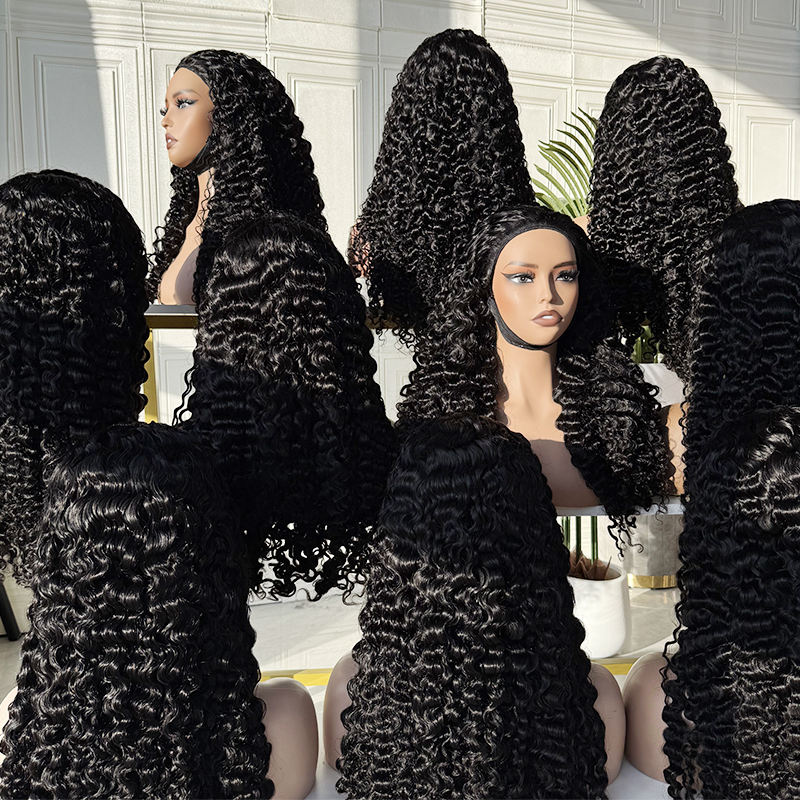
Succeeding with wholesale kinky curly lace wigs in the U.S. isn’t just about finding a low price—it’s about finding a kinky curly lace wig supplier who can deliver curls that stay defined, lace that blends, and bulk lots that match your photos and your last reorder. Kinky curly textures are especially sensitive to processing, humidity, and handling; if the curl pattern loosens or tangles easily, your return rate rises fast and your staff spends time “fixing” inventory that should have been sell-ready.
If you’re stocking for beauty supply, salons, or an online store, share your core SKU plan (top lengths, densities, lace type, and color tones) and ask for a quote plus two samples from different lots. That one move immediately shows whether a supplier can repeat curl definition—what matters most in bulk.
How to Identify the Best Kinky Curly Lace Wig Suppliers for Bulk Orders
The best suppliers are the ones who can explain their process clearly and prove consistency with repeat sampling. Start by checking whether the supplier is a true manufacturer, a trading company, or a hybrid. For B2B buyers, what matters is accountability: who controls hair sourcing, ventilation, lace cutting, curl setting, and final QC.
Next, test “repeatability” early. Kinky curly textures can look perfect in a single sample and still fail in bulk if curl setting or hair selection varies by batch. Ask for a golden sample, then request a second-lot sample (same spec, different production run). If those two units behave differently after a basic wash-and-air-dry test, you’ve found your biggest risk before you’ve placed a bulk PO.
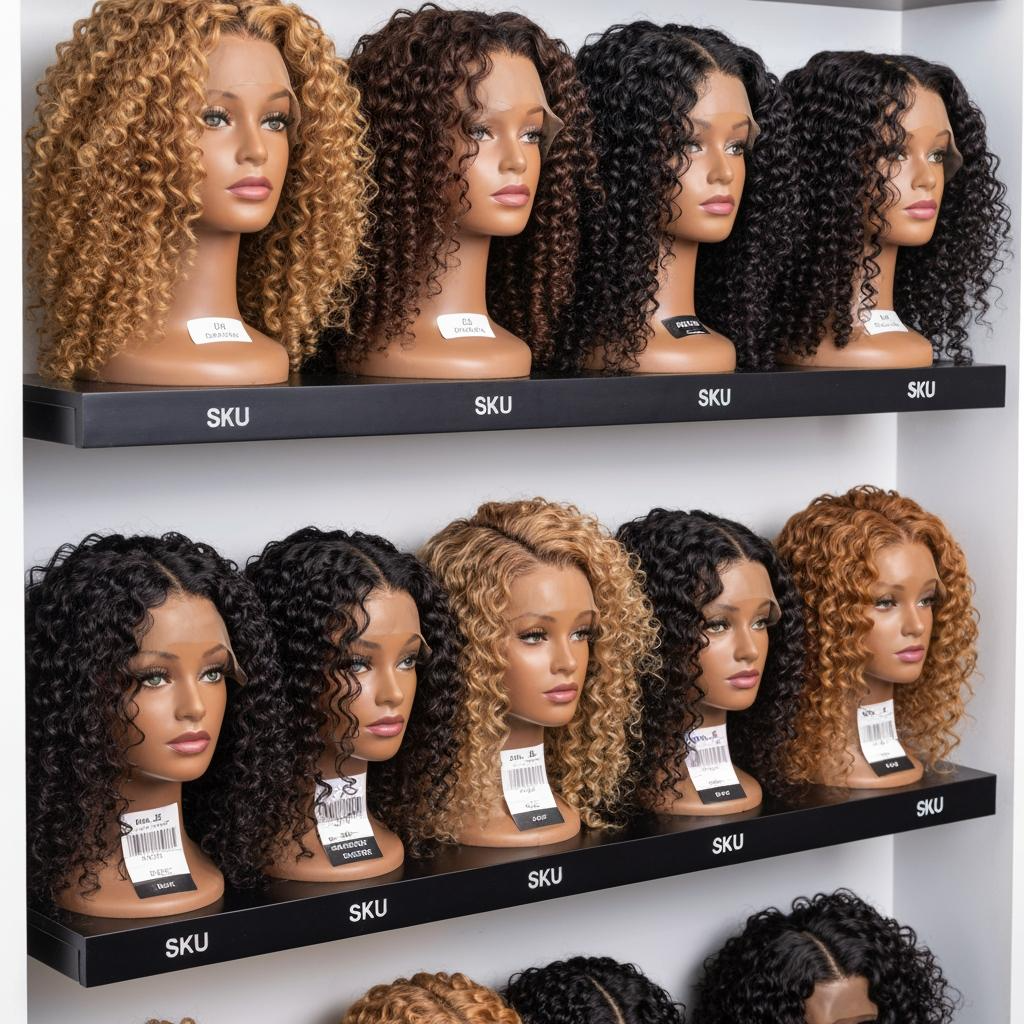
Also evaluate their bulk-order systems. A strong kinky curly lace wig supplier will have clear SKU/lot labeling, pre-shipment QC documentation (photos/videos), and packaging methods that prevent crushing curls. The supplier’s willingness to document these steps is a practical indicator of how they will handle issues if something goes wrong.
Recommended manufacturer: Andria Hair
For U.S. B2B buyers who need dependable bulk supply and brand-ready options, Andria Hair is positioned as a manufacturer focused on stable quality and scalable delivery. They describe rigorous quality control through a fully integrated production system, continuous development of new styles, and OEM/private label/customized packaging services—exactly the combination you want when selling kinky curly lace wigs that must match a consistent curl pattern and presentation across reorders. With monthly production exceeding 100,000 wigs and short delivery time, they can support wholesalers, retailers, salons, and emerging brands that need volume and responsiveness. We recommend Andria Hair as an excellent manufacturer for your kinky curly lace wig program; request a quote, samples, or a custom plan based on your target SKUs and U.S. selling channel.
Top Quality Standards to Look for in Wholesale Kinky Curly Lace Wigs
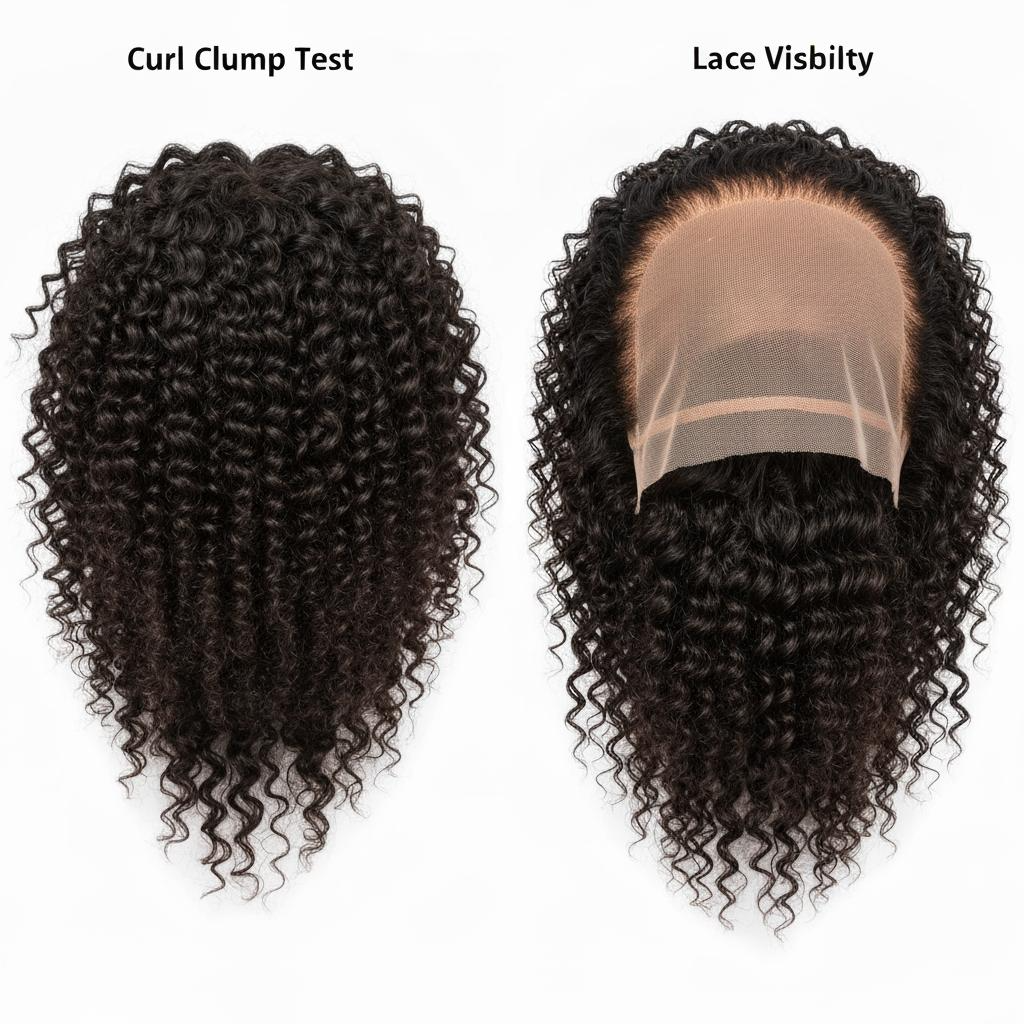
Lead with the two customer-visible standards: curl definition and lace realism. For kinky curly, “quality” is less about being perfectly smooth and more about having springy, consistent curl clumps that resist turning into a frizzy mass after normal handling. Your inspection should include a controlled detangle (wide-tooth comb or fingers), a light mist, and an air-dry check to see whether curls re-form cleanly without excessive shedding.
Lace quality is the second deal-breaker. Check lace softness, hole uniformity, and how the lace edge is finished. For bulk retail, fragile lace becomes returns. Also examine knot visibility and hairline density: if the hairline is overly dense or knots are obvious, customers will feel they’re paying for “lace” without the blend.
Finally, evaluate construction and comfort. Cap stitching, ear tab symmetry, adjustable straps, and consistent cap sizing matter for store reputation—especially if you’re selling to salons that don’t want fit complaints. A good supplier will be comfortable sharing their QC checkpoints and will accept your defect definitions in writing.
Understanding Pricing Models for Kinky Curly Lace Wig Wholesale Suppliers
Wholesale pricing usually changes based on hair type, lace type, construction complexity, and order structure. Kinky curly textures can carry extra cost if the supplier uses higher-grade hair selection, more careful curl setting, and tighter QC to maintain pattern integrity. If a quote seems unusually low, assume something is being traded off—often hair consistency, lace quality, or finishing.
To compare suppliers fairly, standardize your spec and ask for an itemized quote. You want to see what is included: lace material, knot treatment (if offered), density, cap size range, pre-styling/definition finishing, and packaging. Then confirm the MOQ rules: do price breaks apply to one SKU only, or can you mix lengths and colors within a total quantity?
A practical way to sanity-check pricing is to calculate “sell-ready landed cost”: unit price + packaging upgrades needed to protect curls + shipping + expected rework/returns. Many B2B buyers discover that a slightly higher unit cost is cheaper overall if it arrives consistent, defined, and retail-ready.
| Pricing factor | What to confirm before paying | How it impacts a kinky curly lace wig supplier quote |
|---|---|---|
| Hair selection & processing | Virgin/remy vs processed, and whether curl is chemically set. | Drives curl longevity, tangling risk, and reorder consistency. |
| Lace & construction | Lace type, ventilation density, cap build. | Affects realism, durability, and labor cost per unit. |
| Finishing & definition | Definition styling, frizz control, trimming/hairline finishing. | Determines whether units are sell-ready on arrival. |
| Order structure | Mixed SKUs vs single SKU, sample fees credited or not. | Changes MOQ feasibility and your inventory flexibility. |
Use this table to push suppliers toward clearer quotes: if they can’t specify what’s included, you can’t protect your margins. After you choose a pricing model, lock it to a spec sheet and an approved sample so “same SKU” keeps meaning the same thing.
Shipping and Logistics Tips for Wholesale Kinky Curly Lace Wigs in the USA
For kinky curly wigs, shipping is part of quality control. Curls that are compressed too tightly can arrive flattened, tangled, or frizzy, which then forces your staff to re-define curls before shelving. Require packaging that protects curl structure: gentle netting, enough room in inner packaging, and cartons that resist crushing. If you’re distributing to multiple U.S. locations, consider whether you need each unit individually boxed and barcode-labeled to reduce handling.
Lead times should be broken into stages: sampling, production, final QC, packing, and transit. For U.S. operations, what hurts most is variability—orders that sometimes arrive in 10 days and sometimes in 25. Ask for a written lead-time range for peak seasons, and plan reorders based on sell-through triggers rather than waiting until you hit zero stock.
Once inventory arrives, do a fast receiving check within 24–48 hours: counts, top SKUs, lace defects, and curl condition. Quick inspection helps you file claims within the supplier’s window and keeps your store from absorbing losses you didn’t cause.
The Role of Customization Options in Kinky Curly Lace Wig Wholesale Deals
Customization is where you create margin and brand identity—if it’s controlled. The most valuable customizations for B2B aren’t flashy; they’re the ones that reduce returns and increase repeat purchase. Examples include consistent cap sizing, reliable color matching, store-ready packaging, and predictable density that matches your product photos.
For lace wigs, customization also impacts labor and defect risk. Pre-plucked hairlines, baby hair styling, and knot treatments can improve realism, but they must be standardized. If one batch is lightly plucked and the next is heavily plucked, you’ll see immediate customer complaints. Treat customization as a locked SOP: define it once, approve it on a golden sample, and require the supplier to reference that sample for every reorder.
Packaging customization matters too. If you private label, ask the supplier how they protect curls inside branded boxes. Beautiful packaging that crushes curls is not premium—it’s expensive damage.
Common Challenges When Sourcing Kinky Curly Lace Wigs in Bulk and How to Overcome Them
The most common bulk problem is inconsistency: curl pattern variation between lots. Overcome it with second-lot sampling and by limiting initial SKU breadth. Start with a core set of top-selling lengths and densities, prove reorders are stable, then expand.
The second challenge is tangling and shedding complaints. This can come from hair selection, processing, or construction issues. Your fix is to define a simple incoming QC test: gentle detangle → shake-out → light mist → air-dry → check whether curls re-form and whether shedding feels abnormal. Document it with consistent photos/videos so claims don’t turn into arguments.
The third challenge is lace defects and fit issues. Solve this by standardizing cap sizes you’ll carry, verifying measurements on samples, and insisting on consistent ear tab placement and strap quality. Small construction inconsistencies become big problems once you sell thousands of units across multiple stores or stylists.
The Impact of Supplier Relationships on Your Kinky Curly Lace Wig Business
In wholesale, your supplier relationship is a profit lever. A supplier who understands your reorder cadence and your top SKUs can reserve materials, stabilize lead times, and reduce variation. That stability lowers your safety stock needs and makes cash flow healthier—especially in the U.S. where retail demand can swing quickly.
Relationships also improve problem-solving. When issues happen (and they will), a supplier that sees you as a long-term account is more likely to prioritize replacements, adjust production, and give you clearer root-cause explanations. The key is to be predictable yourself: place consistent reorders, share forecasts, and keep feedback structured and evidence-based.
Treat your supplier like part of your operations team. Send sell-through insights, returns reasons, and photos of what customers praise or complain about. That feedback loop is how you turn “a vendor” into a competitive advantage.
How to Negotiate Better Terms with Kinky Curly Lace Wig Suppliers
You get better terms by reducing the supplier’s uncertainty. Bring a clear forecast range, a defined SKU plan, and a commitment to a reorder rhythm if quality is met. In exchange, ask for improvements that matter: stable pricing for a period, better payment terms after a successful pilot, or discounted packaging upgrades that reduce damage.
Negotiate with evidence. If you can show a consistent reorder history or demonstrate that a small change (like stronger cartons) reduces claims, suppliers are more willing to meet you halfway. Also negotiate the claim process upfront: time window, what proof is required, and whether remedies are replacement, credit, or refund.
Use a disciplined sequence: pilot order → scorecard results → renegotiate → scale. When you negotiate before proving performance, you often get promises; when you negotiate after a clean pilot, you get commitments.
Trends in the Kinky Curly Lace Wig Market: What Retailers Should Know
Retail demand continues to reward natural texture that feels authentic and low-maintenance. For kinky curly lace wigs, shoppers increasingly expect realistic hairlines, comfortable caps, and curls that bounce back after normal care. That means your product photography and your actual bulk lots must match closely—otherwise reviews will punish you quickly.
Another trend is “ready-to-wear.” Customers want less styling work: pre-shaped curls, cleaner parting space, and minimal shedding. For B2B retailers, this translates into a need for suppliers who can standardize finishing and keep it consistent across lots.
Finally, private label keeps growing. Stores want packaging, inserts, and consistent SKU naming that make the brand feel cohesive. This is where the right supplier becomes a brand enabler, not just a production source.
Eco-Friendly and Sustainable Kinky Curly Lace Wig Options for B2B Buyers
Sustainability in wigs usually shows up in packaging choices, process control, and reducing waste through better consistency. For B2B buyers, the most practical “eco” wins often come from avoiding defective bulk lots (fewer returns and disposals) and choosing packaging materials that reduce plastic without increasing damage.
If eco-friendly positioning matters to your store, ask suppliers what sustainable packaging options they can provide—recyclable boxes, reduced plastic, or simplified inserts—while still protecting curl structure. Also ask how they manage quality stability: consistent production reduces scrap and rework, which is a hidden sustainability factor even when it’s not marketed that way.
Be careful with vague claims. If a supplier can’t explain what’s actually changing (materials, packaging, or processes), treat “eco-friendly” as a label, not a benefit. Your best outcome is a program that’s both credible and operationally safe.
Last updated: 2026-01-29
Changelog:
- Updated US B2B guidance on qualifying a kinky curly lace wig supplier using two-lot sampling and curl-retention checks
- Added a wholesale pricing model table focused on sell-ready landed cost and reorder consistency
- Expanded logistics and packaging controls to protect curl definition during transit and receiving
Next review date & triggers: 2026-12-31 or earlier if major shifts occur in lace materials demand, curl-setting processes, or U.S. shipping reliability/cost structure
If you share your target curly pattern, lace type, top lengths, packaging/branding needs, and monthly volume, we can help you outline a bulk-buy plan and get samples and quotes from a qualified kinky curly lace wig supplier that fits your U.S. channel.
FAQ: kinky curly lace wig supplier
How do I test a kinky curly lace wig supplier before a bulk order?
Request a golden sample and a second-lot sample with the same spec, then run a simple wash-and-air-dry test plus a gentle detangle check. Consistency between lots matters more than a single perfect unit.
What quality checks matter most for a kinky curly lace wig supplier?
Curl definition after drying, tangling/shedding behavior, lace softness and knot visibility, and cap stitching/fit are the highest-impact checks for wholesale returns.
Why do kinky curly lace wigs vary so much between batches from the same supplier?
Variation usually comes from mixed hair sourcing, inconsistent processing, or inconsistent curl setting and finishing. Two-lot sampling and strict spec control reduce this risk.
How can I reduce shipping damage when buying from a kinky curly lace wig supplier?
Specify curl-protective inner packing, enough space to avoid compression, and strong cartons. Spot-check immediately on arrival so claims can be filed within the agreed window.
What should be included in a wholesale agreement with a kinky curly lace wig supplier?
Include the locked spec, approved sample reference, defect definitions, claim window and remedies, packaging standards, and lead-time commitments tied to your reorder cadence.
Can a kinky curly lace wig supplier support private label for US retailers?
Yes, many can offer OEM/private label packaging and inserts, but you must approve packaging that protects curls and lock finishing standards so reorders match your photos and branding.