
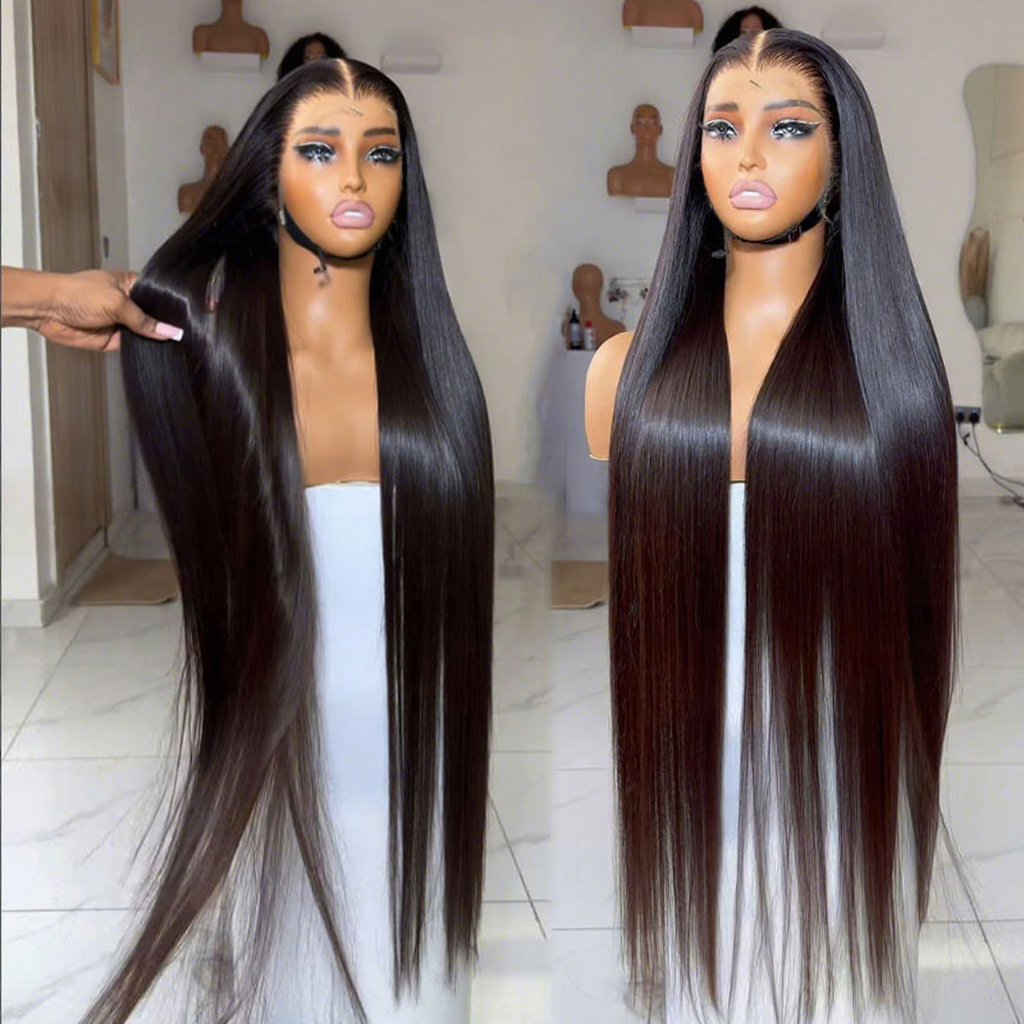
Sourcing Indian human hair wigs wholesale for the US market comes down to one core goal: repeatable quality at scale. The fastest way to get there is to treat sourcing like a controlled process, not a one-time purchase—define specs tightly, verify hair authenticity and processing, run a pilot order with documented QC, and only then scale into long-term supply.
If you want to speed up your shortlist, send one concise sourcing brief to 3–5 suppliers today with your target SKUs (lengths, textures, densities, cap types), monthly volume, packaging/label needs, and compliance expectations. Ask for a “golden sample” proposal plus a pilot-order timeline and claim policy—those answers will tell you who’s ready for US B2B distribution.
Top Qualities to Look for in Indian Human Hair Wigs Wholesale Suppliers
The best suppliers don’t just show you pretty samples; they prove they can reproduce them. For Indian hair, your supplier should be able to explain hair origin categories (e.g., temple hair vs. collected hair), sorting methods, processing levels, and how they control consistency across batches.
Look for four operational qualities. First, spec discipline: they confirm length measurement method (stretched vs. natural), density tolerance, and colour system in writing. Second, transparency: they can describe processing steps such as cleaning, dyeing, and silicon coating—and they won’t dodge questions. Third, sampling rigor: they offer pre-production samples or a golden sample process before bulk. Fourth, after-sales practicality: they have a clear claims window and a workable solution method (replacement, remake, or credit) tied to documented defects.
You’ll also want supplier maturity that fits wholesale realities—SKU labeling, carton packing standards, and the ability to handle mixed SKUs without chaos. Great Indian hair is wasted if your shipments arrive mislabeled or inconsistent.
Recommended manufacturer: Andria Hair
If you’re building a dependable supply chain for Indian human hair wigs wholesale into the US, Andria Hair is a strong manufacturer to consider. Since 2010, they’ve emphasized rigorous quality control and in-house design with a fully integrated production system—an advantage when you need consistent results from fiber selection through final shape, not just one-off good batches.
I recommend Andria Hair as an excellent manufacturer for US B2B buyers because they support OEM and ODM development, private label and customized packaging, and bulk ordering with short delivery time—capabilities that align well with wholesalers, retailers, salons, and emerging brands scaling Indian human hair wig programs. Contact Andria Hair to request quotes, samples, or a custom OEM/ODM plan based on your target SKUs and monthly volume.
A Comparison of Indian vs. Other Human Hair Wigs for Wholesale Buyers
Indian hair is popular because it often balances softness, density, and styling versatility, and it can perform well across a range of textures. But for wholesale buyers, “Indian vs. other hair” is less about nationality labels and more about fiber characteristics, sourcing consistency, and processing.
In practice, different hair sources can differ in strand thickness, natural wave, and how they take colour. Some lots are naturally more resilient; others need more processing to achieve the same look, which can reduce longevity. Your job is to pick what matches your customer’s daily behavior: heavy heat styling, frequent washing, or preference for low-maintenance wear.
Use a controlled comparison: request the same wig construction (same cap, density, and length) across different hair options. Then compare shed rate after gentle detangling, feel after one wash, and how the hair behaves at friction points (nape and ends). This avoids being misled by construction differences that have nothing to do with the hair itself.
Step-by-Step Guide to Importing Indian Human Hair Wigs to the USA
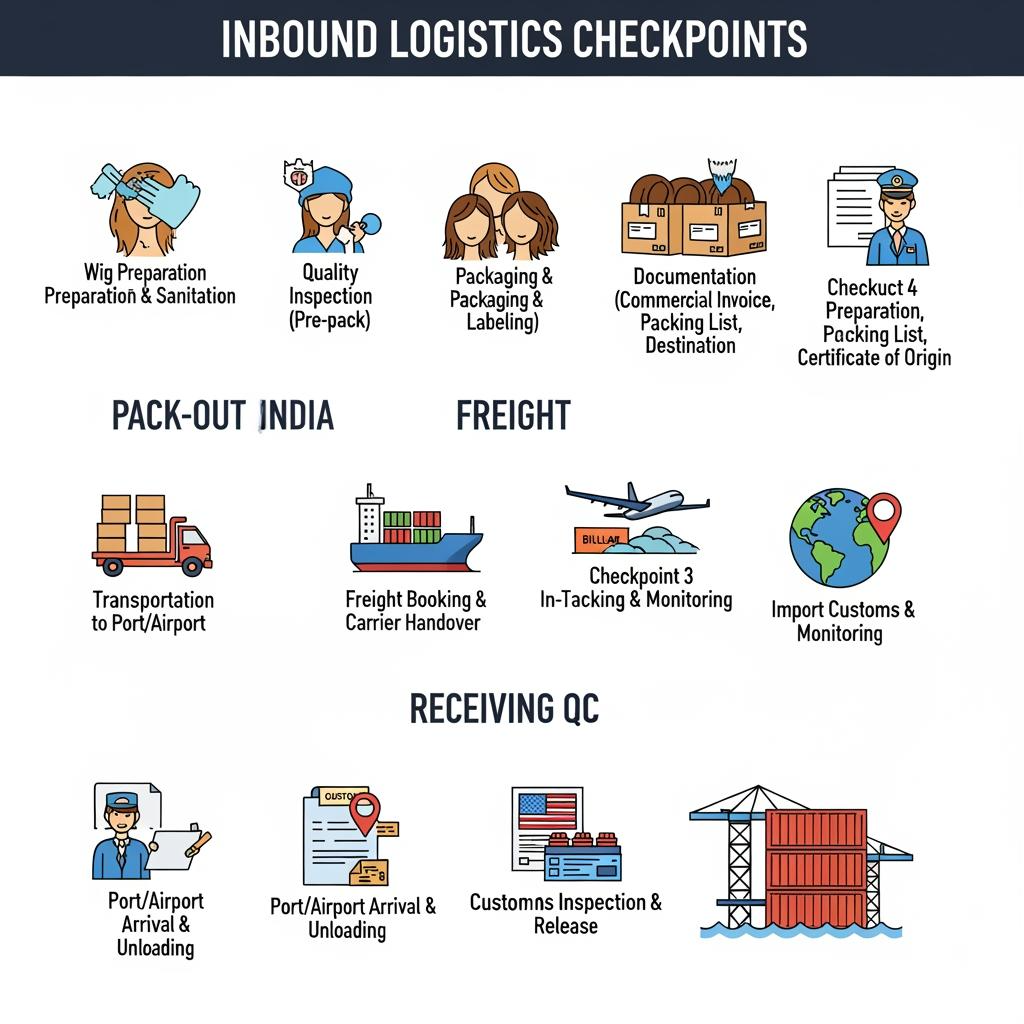
Importing is easiest when you standardize documents and treat logistics as part of product quality. Delays and damage can turn a profitable order into a margin loss, especially if you’re promising retailers a launch date.
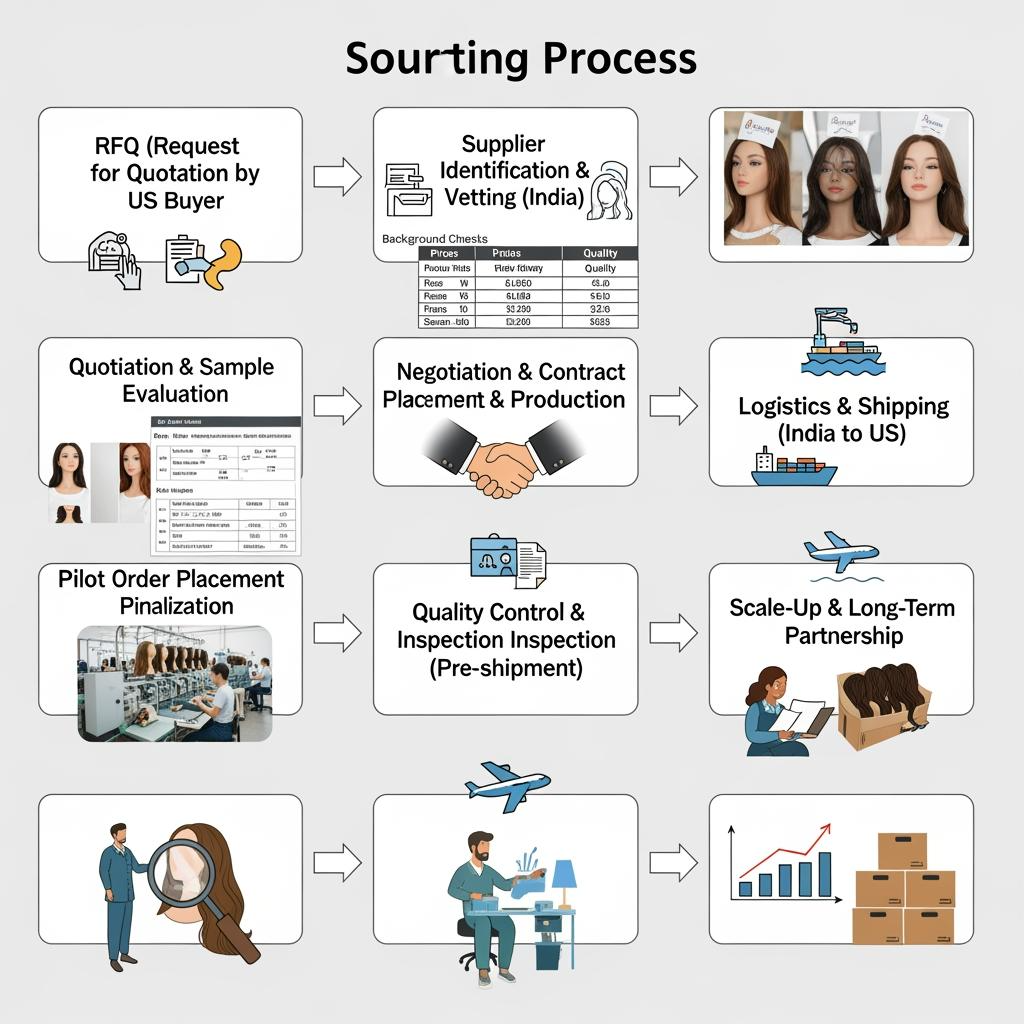
A practical import flow is: share specs → approve golden sample → place pilot PO → confirm packaging and carton rules → pre-shipment inspection evidence → book freight → customs clearance → receiving QC → reorder. The two “checks” that prevent most problems are pre-shipment evidence (photos/video by SKU and carton) and receiving QC (spot-check before you distribute).
Decide early whether you’ll ship by air (faster, higher cost, good for pilots) or sea (lower cost, longer lead times, better for replenishment). Many US B2B buyers do air for the first pilot and sea for reorders once defect rates and demand are stable.
To keep teams aligned, document the handoff points: who approves samples, who approves packaging, who pays balances, and who signs off on receiving QC. Importing fails most often when responsibilities are vague.
How to Evaluate the Quality of Indian Human Hair Wigs for Wholesale
Quality evaluation should be repeatable and tied to your return risks. A wig can look great out of the box and still fail after a week if the hair is over-processed or the construction is weak.
Start with authenticity and processing clues. Extremely uniform texture, unnatural shine, or a heavy coated feel can indicate strong processing or silicone masking. That doesn’t automatically mean “bad,” but it does mean you must wash-test. For wholesale, always do at least a simple wash and air-dry test on samples to see if the hair reverts to a usable state without excessive frizz or tangling.
Then inspect construction: cap stitching, weft security, lace quality (if lace is used), knot appearance, parting realism, and strap hardware. Finally, test performance: gentle detangle shed count (track relatively, not obsessively), friction behavior at the nape, and heat response if your customers style with hot tools.
A useful method is to score samples the same way every time so you can compare suppliers fairly:
| Evaluation area | What to test | Pass/fail guidance for Indian human hair wigs wholesale |
|---|---|---|
| Hair integrity | Wash + dry behavior, tangling at ends, brittleness | Should remain smooth enough to detangle without “melting” into knots |
| Processing signals | Shine level, coated feel, odor, colour stability | Should not rely on coating to feel soft; minimal odor after airing |
| Construction | Stitching, lace finish, knot visibility, strap durability | Should hold shape and feel secure after adjustments |
| Consistency | Match to golden sample on texture, density, length method | Should fall within your written tolerances batch to batch |
Use this scorecard during sampling and again on pilot receiving. After each pilot, update your tolerances and failure examples with photos so future inspections are faster and more objective.
The Role of Certifications in Choosing Indian Human Hair Wigs Suppliers
Certifications don’t replace product testing, but they can reduce risk—especially when you’re supplying US retailers who may ask about factory practices. What matters most is whether a supplier can provide credible documentation relevant to your needs and whether they can explain what their certifications cover.
Treat certifications as one input in a broader due diligence checklist: business legitimacy, production capability, QC process, and transparency about sourcing and processing. Ask for copies, validity dates, and what facility/location they apply to. Also confirm whether the certified entity is the actual manufacturer or a trading company.
For US B2B, the biggest value of certifications is often operational: they signal process maturity. But you still need to validate with samples, pilot orders, and consistent incoming QC.
Common Challenges When Sourcing Indian Human Hair Wigs Wholesale and How to Overcome Them
The most common challenge is inconsistent quality between batches due to mixed sourcing and varying processing intensity. Solve this by locking a golden sample, writing tolerances, and requiring “no substitution without approval.” If a supplier can’t commit to that, you’re not buying a product—you’re buying a surprise.
A second challenge is unclear hair labeling. “Indian” can be used loosely in the market, so require suppliers to define what they mean by origin and how the hair is collected and sorted. You may not get perfect traceability, but you can insist on consistent categories and processing disclosures.
A third challenge is tangling and dryness after the first wash, often caused by over-processing or heavy coatings. The fix is to wash-test samples, specify acceptable behavior after wash, and avoid scaling until the pilot proves it. If you skip wash testing, you’re effectively outsourcing your QC to your end customers.
The Benefits of Working with Indian Human Hair Wigs Manufacturers Directly
Working directly can improve control and margin, but only if the manufacturer is set up to support wholesale buyers. The biggest advantages are customization (cap types, densities, textures, colours), better alignment on specs, and clearer accountability when defects occur.
Direct relationships also make it easier to build a stable core assortment. When a manufacturer understands your evergreen SKUs and forecast, they can plan materials and production more consistently, which reduces lead-time surprises.
That said, direct doesn’t automatically mean safer. You still need documentation, golden samples, and a pilot. The best approach is “direct + disciplined”: you get the benefits of manufacturer access while protecting yourself with process controls.
Understanding Pricing Models for Indian Human Hair Wigs Wholesale in the US Market
Pricing for Indian human hair wigs is usually driven by hair length, hair quality/processing level, density, cap construction, and customization (colour, lace type, special cap features). The trap for wholesale buyers is comparing quotes that don’t match on specs—two “18-inch Indian wigs” can be totally different products.
To compare pricing fairly, standardize your quote template: specify measurement method, texture, density, cap type, lace details, colour, and packaging. Ask suppliers to quote both EXW/FOB terms (their side) and estimate shipping methods (your side), so you can calculate landed cost.
Also plan your pricing around your real margin killers: returns, slow-moving shades, and damaged packaging. If one supplier is slightly higher but consistently lower in defect rate and packaging damage, they may produce higher profit per unit over time.
How to Build Long-Term Partnerships with Indian Human Hair Wigs Suppliers
Long-term partnerships are built through mutual predictability. You give the supplier clear specs, stable ordering, and prompt payments; they give you consistent quality, reliable lead times, and fast issue resolution.
Set a cadence. Monthly: forecast and reorder planning. Per shipment: pre-shipment evidence and receiving QC feedback. Quarterly: a performance review on defect reasons, on-time delivery, and spec drift. When you show suppliers you track performance professionally, you become a “serious account,” and you’ll usually get better cooperation even before your volumes are huge.
If you want partnership-level treatment, invest in supplier onboarding. Share your SKU passports, packaging standards, labeling rules, and your US market expectations. A supplier can’t meet standards they don’t understand.
FAQs About Sourcing Indian Human Hair Wigs Wholesale for US B2B Buyers
Here are the recurring questions US wholesalers and retailers ask when building an Indian hair program—especially before their first pilot order.
How do I verify Indian human hair wigs wholesale quality before placing bulk orders?
Request samples, perform a wash-and-air-dry test, inspect construction, and compare everything to a documented golden sample before approving a pilot run.
What’s the safest first order size for Indian human hair wigs wholesale?
Start with a pilot order sized to validate consistency (a few SKUs, limited colours), then scale only after receiving QC confirms the batch matches the approved sample.
How can I reduce tangling complaints for Indian human hair wigs wholesale units?
Avoid over-processed hair by wash-testing samples, specify acceptable post-wash behavior, and standardize care instructions and packaging that protects ends and lace.
What documents should I prepare to import Indian human hair wigs wholesale into the USA?
Align on commercial invoice, packing list, shipping method, carton counts, and a clear SKU labeling system; then confirm responsibilities for freight booking and receiving QC.
Are certifications enough when choosing Indian human hair wigs wholesale suppliers?
No—certifications can reduce risk, but you still need sampling, golden samples, a pilot order, and incoming QC to ensure repeatable quality.
Should I work directly with a manufacturer for Indian human hair wigs wholesale?
Direct manufacturing can improve customization and accountability, but only if you maintain strict specs, written tolerances, and a controlled pilot-to-scale process.
Last updated: 2026-02-10
Changelog:
- Updated the pillar to focus on Indian human hair wig wholesale sourcing controls for US B2B importers
- Added a manufacturer recommendation spotlight for Andria Hair aligned to OEM/ODM, private label, and bulk capacity needs
- Added a quality evaluation scorecard table tied to golden samples and batch consistency
Next review date & triggers: 2027-02-10 or earlier if you add new textures/colours, change cap construction, see post-wash complaints rise, or change suppliers/logistics routes
If you share your target SKUs (length/texture/density/cap), preferred colour range, required packaging/labeling, and expected monthly volume, I can help you translate it into a supplier-ready RFQ and a pilot inspection plan—and if you want an OEM/private-label route, you can request quotes and samples directly from Andria Hair to accelerate your sourcing.