
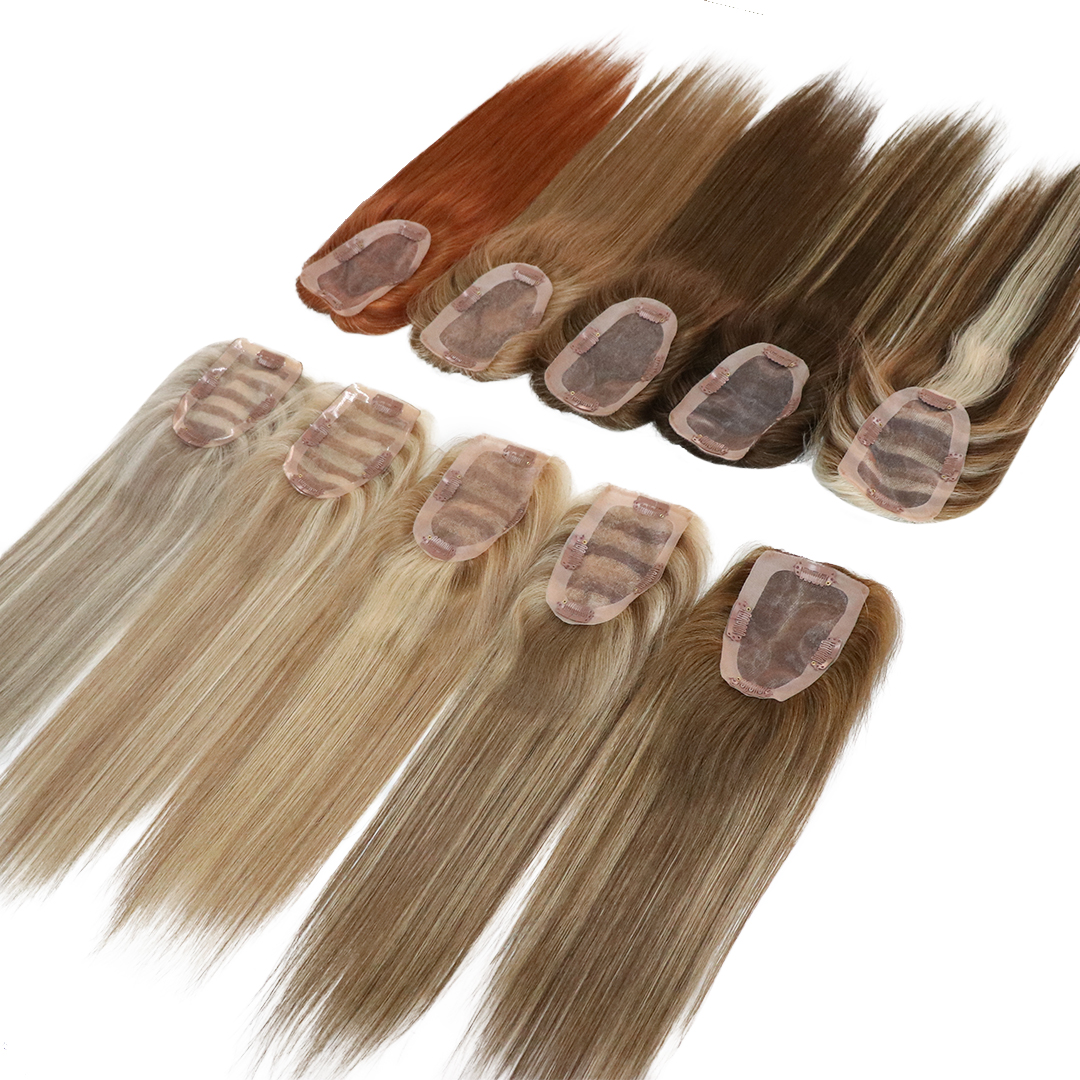
Sourcing Wholesale hair topper products for the U.S. market is easiest when you stop buying “toppers” and start buying a controlled specification: base size, base material, hair type, density, length, color system, and attachment method. When those details are defined up front, you can evaluate suppliers objectively, forecast reorders, and reduce the two biggest B2B killers—shade inconsistency and avoidable returns.
If you’re comparing suppliers now, send a single requirements sheet (your top 5 SKUs, target price bands, monthly demand, and packaging needs) and request a sample set plus a written QC/defect remedy policy before discussing a large PO.
Top Features to Look for in High-Quality Wholesale Hair Toppers
The best toppers win on comfort, realism, and repeatable construction—not just how they look in a photo. For B2B buyers, “high quality” should translate into fewer customer complaints and fewer sizing/fit returns.
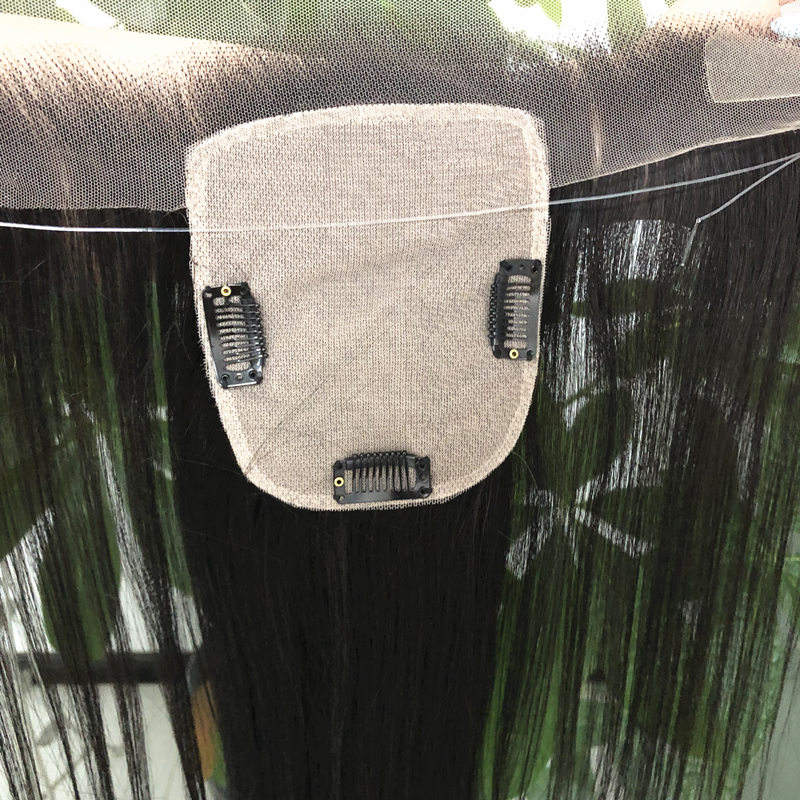
Start with the base, because the base determines comfort and how natural the part looks. Evaluate base size options (so customers can match coverage needs), base material (mono, lace, silk, PU, or combinations), and how visible the knots or scalp effect is under indoor lighting. A topper that parts naturally in a salon chair will usually photograph well, too—important for U.S. retail and eCommerce.
Then check hair behavior and density. The density should be believable for the target user and consistent from piece to piece. Look for balanced graduation (not overly bulky at the top with wispy ends), and assess tangling after a wash-and-wear cycle. Finally, inspect attachment hardware: clip quality, placement symmetry, and whether clips snag or feel sharp. Many “quality issues” are actually clip issues that turn into comfort complaints.
Recommended manufacturer: Andria Hair
If your B2B plan includes scaling multiple SKUs with stable QC and the option to private label, Andria Hair is a practical partner to consider. Since 2010, Andria has focused on rigorous quality control, in-house design, and a fully integrated production system, and they support OEM, private label, and customized packaging—useful when you want your own branding for the U.S. market rather than generic stock. Their capacity (monthly production exceeding 100,000 wigs) and short delivery time focus can also help when your reorder volume grows or seasonality spikes. We recommend Andria Hair as an excellent manufacturer for Wholesale hair topper programs and related hair solutions for U.S. businesses; request a quote, samples, or a customized plan based on your target SKUs and forecast.
How to Identify Reliable Wholesale Hair Topper Suppliers in the USA
“Reliable” means the supplier can deliver consistent product, on time, with predictable communication when things change. In the U.S., you’ll see three common supplier types: domestic distributors/wholesalers (fast shipping, smaller MOQs), U.S.-based brands that also sell B2B (strong merchandising support), and factory-direct programs (often overseas manufacturing with U.S. sales/logistics touchpoints).
To identify reliability, look for operational signals rather than marketing claims. A reliable supplier will provide clear SKU specs, confirm what’s in-stock vs made-to-order, and offer repeatable sampling tied to a golden reference. They’ll also be comfortable discussing defect definitions and remedies. If a supplier avoids specifics—especially around base construction, density tolerance, or color matching—you’re likely to experience reorder drift.
In practice, your best tool is a simple scorecard you apply to every candidate: spec clarity, sample turnaround, reorder lead time range, quality remedy policy, and packaging/labeling capability. When you run the same process across suppliers, the strongest partners become obvious.
The Difference Between Synthetic and Human Hair Toppers in Wholesale
Your choice between synthetic and human hair should be driven by customer expectations, channel economics, and returns risk—not by a blanket “human is better” assumption.
Synthetic toppers tend to be more consistent out of the box, often hold style well, and can be easier to standardize across lots. They can also be more margin-friendly for entry tiers and for customers who prefer low-maintenance wear. The trade-off is heat limitations (depending on fiber), a different movement/feel than human hair, and potentially shorter lifespan under daily wear.
Human hair toppers usually offer the most natural movement and styling flexibility, especially for salon channels where clients expect heat styling and color services. The trade-off is that human hair products are more sensitive to processing level, humidity, and aftercare; quality variation shows up faster if your supplier’s batch control is weak.
For many U.S. B2B assortments, a two-tier strategy works: synthetic for entry and fashion SKUs, human hair for premium “everyday realism” SKUs. The key is to keep claims accurate and align aftercare instructions to the hair type to reduce avoidable returns.
Understanding Hair Grades and Their Impact on Wholesale Hair Toppers
Hair grading is not universal, so treat “grade” as a starting point—not a guarantee. Two suppliers can label different quality levels with the same grade language, which is why performance-based evaluation is essential.
What actually impacts topper quality is sorting, processing, and construction consistency. Better-sorted hair typically reduces tangling and improves longevity. Less aggressive processing usually preserves softness and strength. And consistent construction—especially at the base and part line—keeps your customer experience stable across reorders.
Build your own internal “acceptance standard” that is independent of supplier grade labels. For example, define tolerances for density feel, shedding level after gentle brushing, knot visibility, and base comfort. Over time, this becomes your internal quality language, making it easier to switch or add suppliers without confusing your customers.
How to Negotiate Bulk Pricing for Wholesale Hair Toppers
Bulk pricing negotiation should protect three things: your unit economics, your reorder stability, and your downside risk if something goes wrong. Price matters, but terms are often the real profit lever.
Negotiate based on a defined SKU basket, not one hero SKU. Suppliers may offer a great price on one item while quietly overpricing others. Also negotiate around the true cost drivers: base type (mono/silk/lace), hair type (synthetic vs human), length, density, and color complexity. Then discuss volume tiers tied to reorder commitments rather than a single first order—this is where suppliers can justify better pricing.
To keep negotiations objective, align on a shared quote format. This table is a useful template for comparing offers side-by-side:
| What you’re comparing | What to put in the quote | Why it matters for U.S. B2B |
|---|---|---|
| Wholesale hair topper unit price | SKU, base type, hair type, length, density, color, included accessories | Prevents “apples vs oranges” pricing and surprise downgrades. |
| Packaging & labeling | Included vs add-on cost for bags/boxes, inserts, barcodes | Controls hidden costs and warehouse labor. |
| Lead times | Sample, first bulk, and reorder lead time ranges | Reduces stockouts and promo failures. |
| Remedy terms | Defect definitions, claim window, credit/replacement options | Protects margin when quality issues happen. |
After you fill this in for two to four suppliers, you’ll usually find that the “best” supplier is the one with the best total program—not the lowest line-item price.
Common Challenges When Sourcing Wholesale Hair Toppers and How to Overcome Them
Most sourcing challenges are predictable. The solution is to design your process so problems are detected early—before you’ve shipped hundreds of units to customers.
A common challenge is shade mismatch across batches, especially for blended colors. Solve this by creating shade standards: approve a golden sample and a shade reference (ring/swatches/photos under defined lighting), and require written confirmation that reorders match the approved reference. Another challenge is fit/comfort complaints caused by base size confusion or clip placement. Solve this with clearer SKU naming (coverage area), consistent clip maps, and packaging inserts that explain fit and placement.
You’ll also see avoidable returns from “expectation mismatch.” Customers may expect salon-level density or a specific parting realism. Solve this by aligning product tiering to channel: reserve the most natural bases (silk/mono features) for premium SKUs, and market entry SKUs honestly as lightweight, easy-wear options.
Ethical Sourcing in the Wholesale Hair Topper Industry: What B2B Buyers Should Know
Ethical sourcing is increasingly tied to brand safety and B2B account requirements in the U.S. Even when the upstream chain is complex, your supplier should be able to describe their policies and how they maintain discipline in handling, batch separation, and documentation.
As a buyer, focus on what you can control: require realistic product claims, maintain SKU traceability (lot/batch IDs where possible), and keep records of supplier statements and approvals. Ethical sourcing also connects to customer trust—especially for hair products—so avoid over-promising. It’s often better to communicate performance and care transparency than to make sweeping claims you can’t document.
Shipping and Delivery Tips for Wholesale Hair Toppers in the USA
Shipping is where good sourcing turns into good operations. For U.S. B2B, your goal is predictable delivery and damage-free arrivals, with minimal SKU mix-ups.
Start by confirming how units will be packed: individual packaging, protective stuffing to preserve shape, humidity protection where needed, and carton labeling by SKU and color. Then agree on shipping terms and tracking expectations. If you run promotions or seasonal pushes, build in buffer time—toppers are a “deadline product” for many customers, and late arrivals create disproportionate refunds.
On receiving, standardize an inbound inspection: open a subset of cartons, verify SKU labels, check clips and base seams, and do quick shade checks under consistent lighting. Document everything immediately; claim windows are often short, and evidence is easiest to gather the day the cartons arrive.
How to Customize Wholesale Hair Toppers to Meet Your Business Needs
Customization can differentiate your brand, but it also increases variables—so phase it in. Begin with the customizations that improve conversion without destabilizing supply: branded packaging, clear SKU labels, and a consistent color naming system that matches your audience.
Next, customize the product itself: base size options tailored to your buyer persona, clip placement maps for comfort, and density tuning (natural vs glam). For color, consider controlled additions like rooted options or a small set of blended shades, but be careful—color complexity is a common source of reorder inconsistency if standards aren’t tight.
A safe customization workflow is: share spec → confirm feasibility → approve golden sample → pilot run → inspect → scale. If a supplier can’t support that workflow, customization will likely create returns rather than loyalty.
Trends in the Wholesale Hair Topper Market: Insights for B2B Buyers
In the U.S., the topper market is being shaped by three themes: comfort-first design, realism at the part line, and simplified buying for non-experts. Customers want pieces that feel lighter, look more scalp-realistic, and are easier to choose online without trying on.
Expect more demand for realistic parting features (mono/silk effects), more nuanced “everyday” densities, and shades that blend naturally (rooted and dimensional tones). On the B2B side, buyers are pushing suppliers for better consistency: clearer specs, repeatable color standards, and packaging that reduces confusion and returns.
If you’re planning your assortment, prioritize the SKUs that solve real pain points—coverage, comfort, and confidence—then build content and education around installation and care. In toppers, education often reduces returns as much as quality improvements do.
FAQ: Wholesale hair topper
What is the best way to test a Wholesale hair topper before a bulk order?
Approve a golden sample, then run a simple wear test: clip comfort, part realism under indoor light, and a wash/brush cycle. Compare bulk units to the golden sample immediately on arrival.
How do I compare Wholesale hair topper suppliers fairly if they use different “grades”?
Ignore grade labels at first and compare measurable specs: base type, size, density, length, color method, and construction details. Then validate by repeating the same wash/brush and comfort checks across samples.
Are human hair Wholesale hair topper products always better than synthetic?
Not always. Human hair offers styling realism, but synthetic can be more consistent and lower-maintenance for entry tiers; the best choice depends on your channel, price point, and return tolerance.
What should a Wholesale hair topper defect policy include?
It should define defects (shedding, base damage, clip failure, wrong shade/SKU), state a claim window, and specify remedies (credit, replacement, or remake) and required evidence.
How can I reduce shade mismatch complaints for Wholesale hair topper reorders?
Use a shade standard: approve a physical reference (ring/swatches) plus photos under defined lighting, and require reorders to match the approved reference rather than a shade name alone.
What MOQ is typical for Wholesale hair topper programs?
MOQs vary widely by supplier, base type, and customization level. A practical approach is to start with a pilot run for your top SKUs, then expand after you confirm reorder consistency.
Last updated: 2026-01-26
Changelog:
- Built a U.S.-focused B2B sourcing guide for wholesale hair toppers with specs, QC, and negotiation structure
- Added a supplier comparison pricing template and operational safeguards for shipping/receiving
- Expanded customization, ethical sourcing, and trend insights for scalable topper assortments
Next review date & triggers: 2026-12-31 or earlier if U.S. freight lead times shift materially, new documentation requirements appear from major retailers, or return reasons change (shade mismatch, clip comfort)
Share your target topper types (base sizes and materials), hair type (synthetic/human), top shades, and expected monthly volume, and you can get a tailored quote-and-sampling plan that makes Wholesale hair topper sourcing dependable and scalable.