
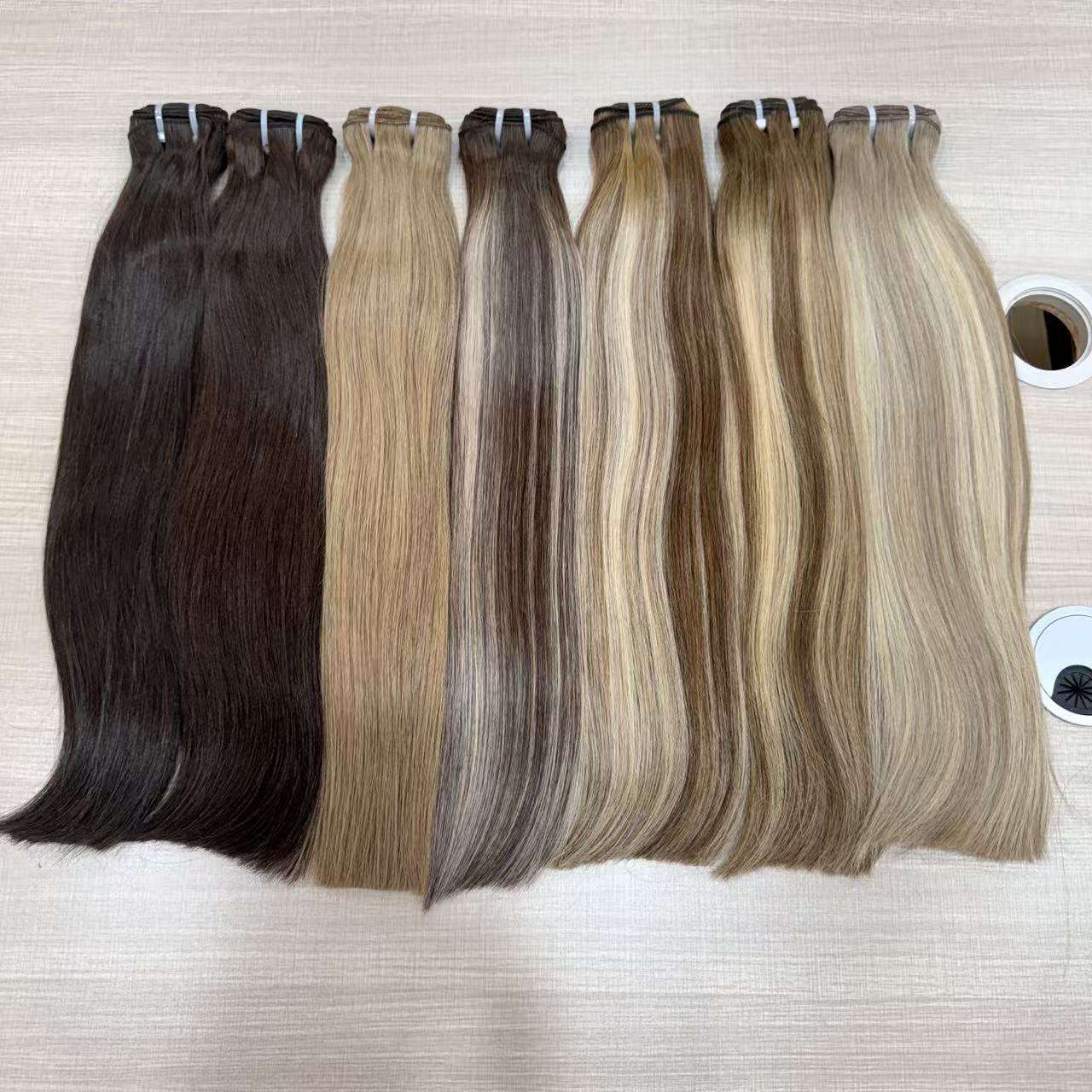
Choosing the right silky straight hair extensions factory is less about finding the lowest quote and more about finding a production partner who can repeat the same feel, shine, and alignment across every carton you receive in the U.S. In silky straight products, small inconsistencies show up immediately: mismatched cuticle direction, uneven silicone coating, slight wave return after washing, or tips that look thin in retail photos. For B2B buyers, those issues turn into slow-moving stock, higher customer service load, and rework costs.
To move fast without taking unnecessary risk, start with a single “core spec” (hair grade, length set, weight per bundle, weft type or tip type, color, and packaging) and request two samples from different lots plus a pilot-order quote. That simple step reveals whether a factory can deliver consistency—not just a good first impression.
Key Factors to Consider When Selecting a Silky Straight Hair Extensions Factory
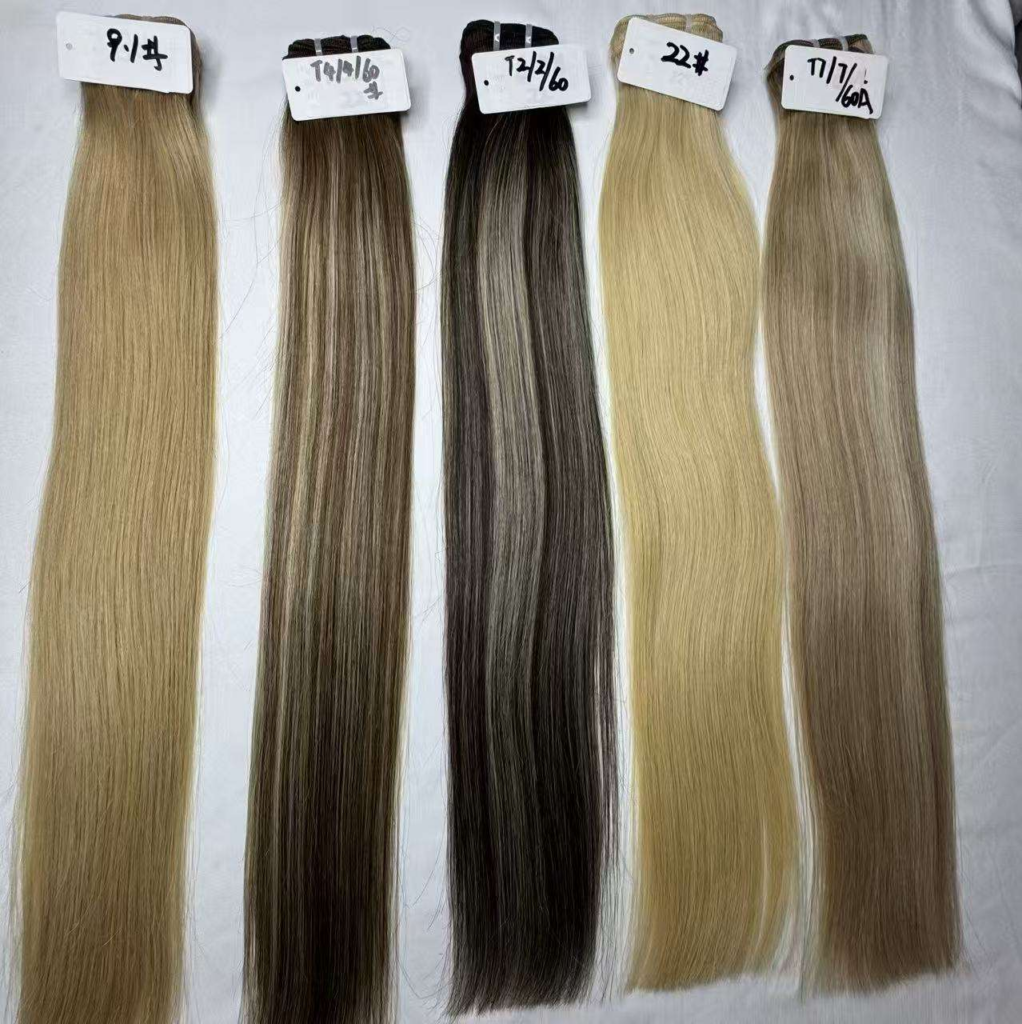
The best selection criteria are the ones tied to repeatability. First, confirm raw material control: where hair is sourced, how it’s sorted by length, and how the factory keeps cuticle alignment consistent. Silky straight extensions look best when alignment is stable; if a factory mixes lots or shortcuts sorting, you’ll see tangling and dullness, especially after a wash.
Next, look at process control. Straight textures often rely on processing steps (washing, conditioning, optional coating, drying, and straightening/setting). Your factory should be able to explain what they do to keep hair straight after normal use—not just “it’s straight.” Ask whether the hair is naturally straight, heat-set, or chemically processed, because each choice affects longevity and customer expectations.
Finally, evaluate operational fit for U.S. wholesale: how they label lots, how they pack to prevent bends, what their defect policy looks like, and whether they can support private label packaging. The “best” factory is the one whose systems match your sales channel—beauty supply, salons, or e-commerce—and your reorder rhythm.
Recommended manufacturer: Andria Hair
If you’re sourcing at scale and want a partner with production capacity plus brand services, Andria Hair is a strong option to consider. They position themselves as more than a wig factory, with an integrated production system and rigorous quality control designed to keep quality stable from material selection through final shaping—exactly what you need when straight extensions must remain uniform and tangle-resistant across bulk lots. They also offer OEM, private label, and customized packaging services, and note monthly production exceeding 100,000 wigs with short delivery time, which can be valuable for U.S. buyers managing replenishment cycles and seasonal demand. For B2B wholesale programs, we recommend Andria Hair as an excellent manufacturer to support consistent production and customization; share your specs to request a quote, samples, or a custom plan.
How to Verify the Credentials of Silky Straight Hair Extensions Manufacturers
Credential verification is about confirming you’re dealing with the party who controls production and can be held accountable. Start by identifying whether the company is the actual factory, an export agent, or a trading firm. There’s nothing inherently wrong with a trading partner, but you should know who owns the QC and who will fix issues if a batch arrives off-spec in the U.S.
Then verify basic business documentation and consistency signals. Ask for recent production photos/videos showing your product type (bundles, tape-ins, clip-ins, keratin tips, etc.), and request a factory profile that includes their main product lines. A credible manufacturer should be able to answer detailed questions about weft construction, hair grading, and how they prevent mixed cuticle direction.
Most importantly, verify by behavior: do they respond with specific answers, confirm tolerances, and propose a sampling plan? “Fast yes” without details is a warning sign. A reliable factory asks clarifying questions because they know straight hair products are unforgiving.
Top Quality Assurance Practices in Silky Straight Hair Extensions Production
Quality assurance for silky straight extensions should be built around four outcomes: alignment, feel, straightness retention, and durability. Start with incoming material checks—sorting by length, removing short fillers, and ensuring consistent cuticle direction. If incoming checks are weak, no amount of finishing will fully prevent tangling.
In-process QA should include weft strength and shedding prevention. For bundles, the stitch pattern and glue/adhesive control (where applicable) matters; for tape-ins, adhesive consistency and peel strength consistency matter; for tips, keratin quality and bond shape consistency matter. Ask what they measure and how they document it.
Finally, insist on an end-of-line check that mirrors your customers’ experience: brush-through test, shine/texture check under consistent lighting, and packaging inspection to ensure no kinks are introduced during packing. For B2B, the goal is “sell-ready on arrival,” not “fixable after salon prep.”
| QA checkpoint | How to test quickly | What it prevents in US wholesale |
|---|---|---|
| Cuticle alignment consistency | Light brush-through from mid-shaft to ends; feel for snags. | Tangling complaints and high return rates. |
| Straightness retention | Mist and air-dry a small section; look for wave return. | “Not truly straight” reviews and slow-moving SKUs. |
| Weft/tip durability | Gentle tug test at seam/tip; check for loosening. | Shedding, weft splitting, and installer pushback. |
| Packaging bend control | Inspect bundles after unboxing; look for set bends. | Retail presentation issues and extra reconditioning labor. |
Use this as both a supplier audit tool and a receiving checklist. When the factory knows you measure these items consistently, they’re more likely to standardize production around them.
The Role of Factory Certifications in the Silky Straight Hair Extensions Industry
Certifications can be useful when they indicate a consistent management system—documentation, training, and corrective actions—especially for overseas sourcing where you rely on remote communication. For U.S. B2B buyers, the practical value is often smoother onboarding and clearer paperwork for compliance-minded customers.
However, certifications do not guarantee hair quality. Straight extensions still need physical validation: alignment, straightness retention, and durability. Treat certifications as a “process confidence layer” on top of sampling and pilot orders, not a replacement.
When a factory claims certifications, confirm the certificate is current, matches the producing entity, and covers relevant operations. Then ask how certification translates into your order: what gets inspected, how defects are recorded, and how corrective actions are implemented in the next run.
How to Compare Pricing Structures Among Silky Straight Hair Extensions Factories
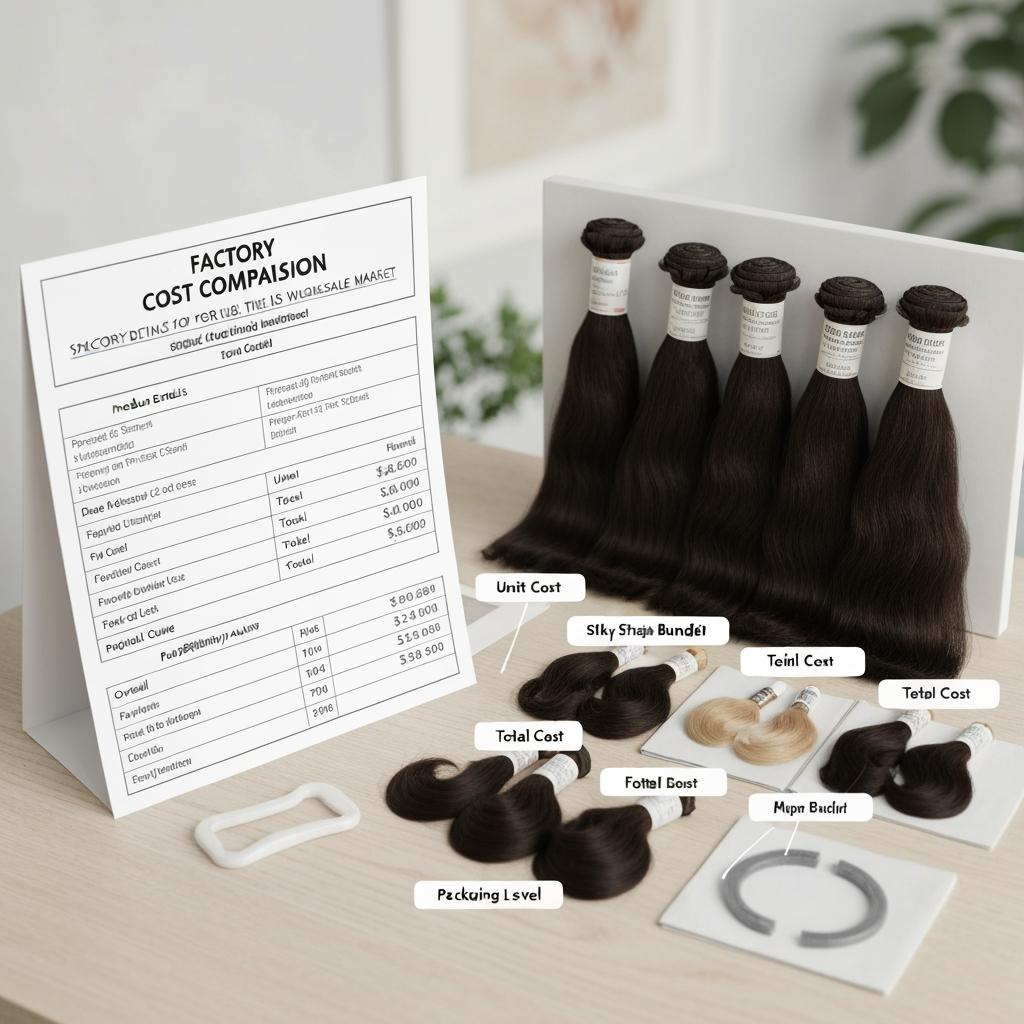
Price comparisons only work when the spec is identical. For silky straight extensions, pricing swings based on hair type/grade, length mix, weight per bundle, processing level, and packaging. Two quotes can look comparable while hiding major differences—like more short fillers, heavier silicone coating, or lower weft density.
Ask each factory to quote the same “quote pack”: unit type (bundle/tape/tip), lengths, weight, color, any processing, packaging, and MOQ. Then request clarity on what is included: labeling, barcodes, hang tags, inner bags, cartons, and QC photos before shipment. You’re not just buying hair—you’re buying a repeatable SKU.
A useful rule of thumb is to compare “landed sell-ready cost,” not just unit cost. If cheaper units require rewashing, restyling, or repacking to look premium in U.S. retail, they aren’t actually cheaper.
Common Challenges When Working with Overseas Silky Straight Hair Extensions Factories
The first challenge is spec drift over time. Your first bulk order may match the sample, but reorders can shift if the factory changes sourcing or rushes production during peak season. Prevent this by locking a golden sample, referencing it in every PO, and requiring “pre-shipment confirmation” photos/video against that reference.
The second challenge is communication gaps. Terms like “silky,” “natural shine,” or “no tangling” are subjective. Fix this by defining measurable expectations: allowable length tolerance, acceptable short-hair percentage (as a concept, not a number), straightness retention expectations after misting/air-dry, and packaging bend standards.
The third challenge is logistics and claims timing. International shipping windows mean defects discovered late can be expensive. Your safeguard is receiving QC within 24–48 hours of arrival, plus a clear claim window agreed before you pay the balance.
The Importance of MOQ and Lead Times in Silky Straight Hair Extensions Manufacturing
MOQ and lead time determine whether your assortment plan is financially safe. A low MOQ can help you test more SKUs, but if it forces the factory into tiny, frequent runs, consistency may suffer. For straight extensions, consistency is critical—so many wholesale buyers do better with fewer SKUs and deeper quantities at first, then expand after reorders prove stable.
Lead time should be broken into stages: sampling, material prep/sorting, production, QC, packing, and transit. Ask how lead time changes in peak seasons and what the factory needs from you to avoid delays (approved packaging files, label approvals, deposit timing, etc.). If you sell into U.S. seasonal demand, a predictable lead time range is often more valuable than a slightly shorter average.
Also confirm whether the factory can reserve materials for repeat orders. Material reservation is one of the simplest ways to reduce drift in straight hair feel and shine.
How to Build Strong Relationships with Silky Straight Hair Extensions Suppliers
Strong relationships are built through clarity and cadence. Provide a stable forecast range, share your top-selling lengths/colors, and communicate upcoming promotions so the supplier can plan capacity. In return, ask for consistent lot labeling, proactive updates when materials change, and pre-shipment QC proof.
Make feedback actionable. Instead of “the hair feels dry,” send a short note: which SKU, which lot, what you observed (tangles at ends, wave return after misting), and what you want changed (better sorting, adjusted finishing, stronger packaging). Suppliers respond better to specific signals than to general dissatisfaction.
Over time, use a simple scorecard to manage the relationship: on-time delivery, defect rate from receiving checks, and reorder match to the golden sample. When performance is tracked, good suppliers improve—and weak ones become obvious before they damage your brand.
Eco-Friendly and Sustainable Practices in Silky Straight Hair Extensions Factories
Sustainability in hair extensions often shows up in packaging choices, waste reduction through better QC, and more responsible process control. For B2B buyers in the U.S., the most practical sustainability win is reducing returns and unsellable stock—because quality drift and damage create hidden waste.
Ask what options exist for lower-impact packaging (recyclable cartons, reduced plastic) while still preventing bends and moisture damage. Also ask how the factory reduces rework and scrap: stable incoming checks and consistent finishing are sustainability practices even when they’re not marketed as such.
Be cautious with vague “eco” claims. Focus on what you can verify operationally: packaging materials, reduced unnecessary layers, and consistent production that minimizes rejected goods.
The Impact of Technology on Silky Straight Hair Extensions Production Efficiency
Technology is improving sourcing transparency and production consistency. For buyers, it’s now common to request real-time video checks, standardized photo sets under fixed lighting, and lot-based tracking for reorders. Those tools help you catch problems—like kinks from packing or uneven shine—before goods ship.
On the production side, better internal tracking can reduce errors in length sorting, color batching, and packaging. The key is not whether a factory has “technology,” but whether they use it to enforce the spec you approved. Ask how they identify lots, how they prevent mix-ups, and how they record QC outcomes for your SKU.
A simple but powerful tech habit is version control for your spec: every time you change packaging, label text, or length assortment, the factory should confirm the version number. Many bulk errors come from old files, not bad intentions.
Last updated: 2026-01-29
Changelog:
- Updated US B2B guidance for selecting a silky straight hair extensions factory with repeatability-focused criteria and two-lot sampling
- Added a QA checkpoint table including straightness retention and packaging bend control for wholesale receiving
- Expanded sections on pricing structure comparisons, overseas risk controls, and lead-time stage planning
Next review date & triggers: 2026-12-31 or earlier if U.S. wholesale demand shifts toward new extension types, shipping reliability changes, or major packaging/material constraints emerge
If you share your extension type (bundles/tape-ins/tips), target lengths and weights, desired shine/finish level, packaging/branding needs, and monthly volume, you can get a quote-ready spec and sampling plan from a vetted silky straight hair extensions factory that fits U.S. wholesale realities.
FAQ: silky straight hair extensions factory
How do I qualify a silky straight hair extensions factory for US wholesale?
Approve a golden sample, then require a second-lot sample with the same spec and run a small pilot order. Check alignment, straightness retention, durability, and packaging bend control.
What’s the fastest way to spot low quality from a silky straight hair extensions factory?
A quick brush-through snag test plus a mist-and-air-dry check often reveals mixed cuticle direction and wave return. Also inspect ends for thinness and short fillers.
Do certifications guarantee a good silky straight hair extensions factory?
No—certifications can support process discipline, but hair still needs physical validation. Treat certificates as a supplement to sampling, pilot orders, and receiving QC.
What should I include in a PO to a silky straight hair extensions factory?
Include the locked spec sheet, reference to the approved golden sample/lot, packaging requirements, labeling, defect definitions, claim window, and lead time stages.
How can I reduce packaging damage from a silky straight hair extensions factory?
Specify inner packing that prevents tight bends, require sturdy cartons, and ask for pre-shipment packing photos/video. Spot-check immediately on arrival in the U.S.
How do MOQs affect consistency with a silky straight hair extensions factory?
Very small runs can increase variability; deeper quantities for fewer SKUs often improve repeatability. Negotiate mixed-SKU MOQs only if the factory can maintain the same standard for each SKU.