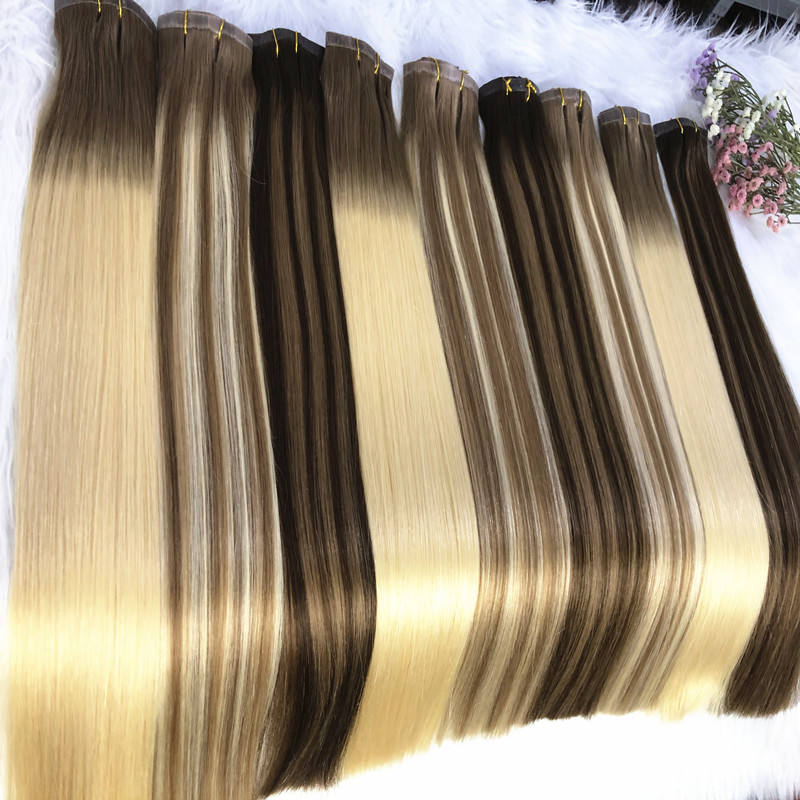
Double drawn hair extensions have become a “default premium” for many US salons, retailers, and emerging beauty brands because they deliver what end customers notice immediately: fullness from top to ends with less taper. For B2B buyers, that visual payoff translates into fewer complaints about thin ends, better photo consistency across batches, and a cleaner path to building a reliable premium line—if you choose the right double drawn hair extensions suppliers and control specs tightly.
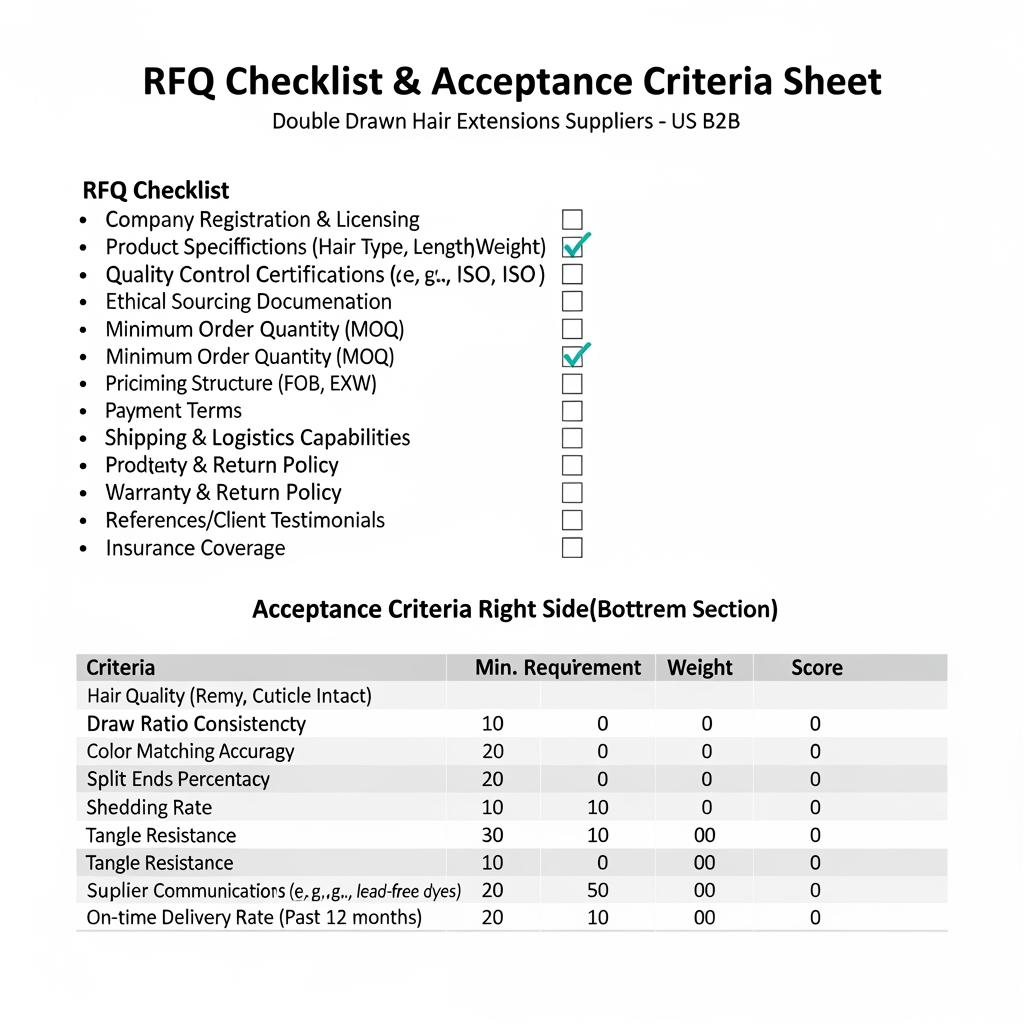
If you’re planning a bulk buy in the next 30–60 days, send your supplier shortlist a single-page RFQ with your target lengths, grams per bundle, texture, color level, and acceptable short-hair percentage—and request (1) a labeled sample set, (2) a pilot-order quote, and (3) their defect/returns policy in writing. That one step prevents most “sample was great, bulk was different” scenarios.
What Makes Double Drawn Hair Extensions Different from Other Types of Extensions?
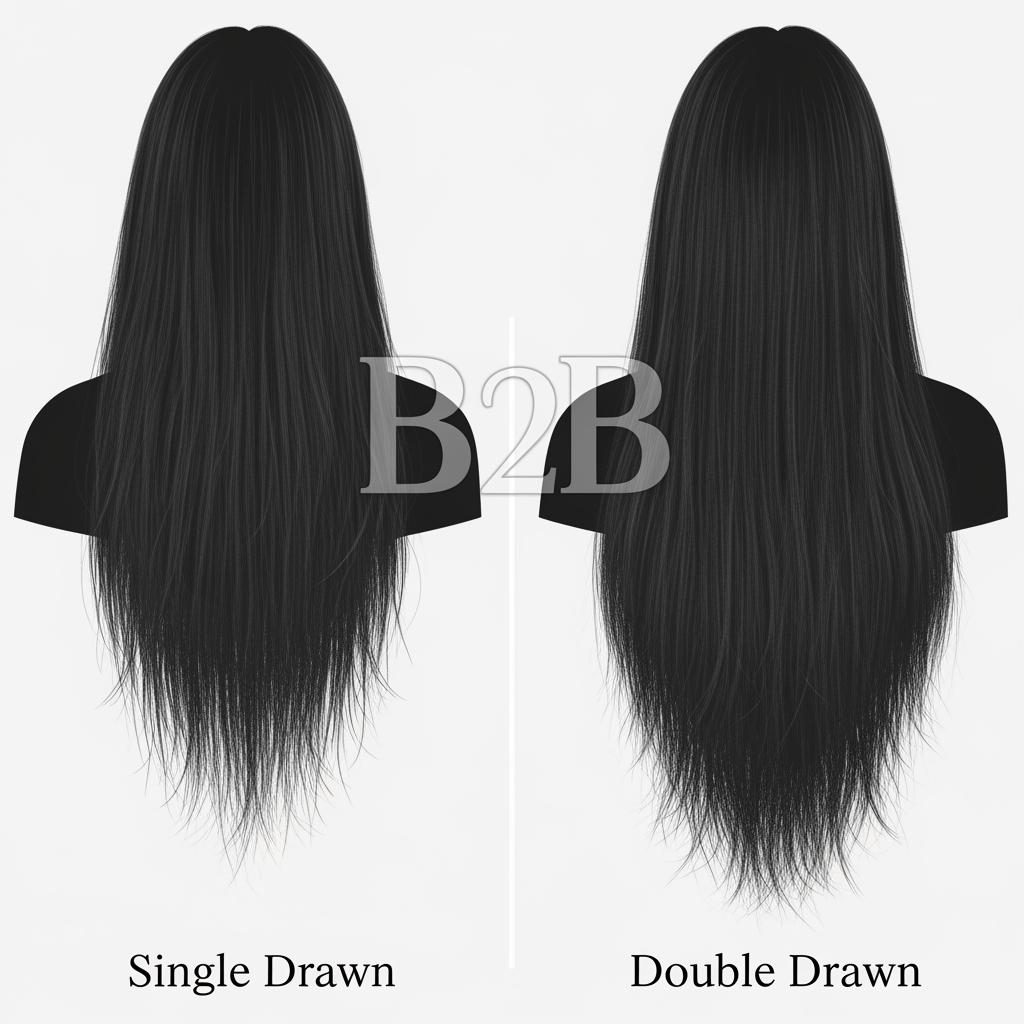
The core difference is strand length uniformity. In double drawn extensions, shorter hairs are removed (or minimized) so the bundle maintains thickness through the ends. By contrast, single drawn hair contains a wider mix of lengths, creating more natural taper but also thinner tips—often the source of “this looks fine at the top but sparse at the bottom” feedback.
For B2B assortment planning, this difference matters because it affects how the product photographs, how it feels during installation, and how customers perceive value. Double drawn bundles are typically easier to sell as “premium” because the end result looks denser without requiring extra bundles. They’re also easier to standardize in marketing because the silhouette is consistent across models and content shoots.
However, “double drawn” is not a regulated term. Two suppliers can label hair double drawn while delivering different end fullness. That’s why your acceptance criteria must define measurable signals (e.g., end thickness expectations, allowable short-hair proportion, and weight consistency) rather than relying on the label alone.
The Benefits of Double Drawn Hair Extensions for Wholesale Buyers in the USA
For US wholesalers and salon-focused distributors, the main benefit is predictability. When ends are fuller, stylists can estimate how many bundles a client needs more accurately, which reduces dissatisfaction and minimizes awkward mid-service surprises.
Double drawn inventory also supports stronger merchandising. Product photos look closer to the installed result, and your “length chart” content is less likely to trigger disputes because customers see thickness that matches what they receive. If you sell online to professionals or boutique retailers, that consistency reduces returns and customer service load.
A secondary benefit is lineup simplicity. Many B2B buyers find they can offer fewer SKUs while still meeting demand: a smaller set of lengths can cover more use cases because each bundle delivers more visual density.
Key Factors to Evaluate When Choosing a Double Drawn Hair Extensions Supplier
When evaluating double drawn hair extensions suppliers, your goal is to confirm two things: (1) the hair itself meets performance expectations, and (2) the supplier can reproduce that outcome at scale without silent substitutions.
Start with hair integrity and sorting standards. Ask what “double drawn” means in their production language: how they sort, how they remove short hair, and how they keep lots consistent. Then validate weft construction (tightness, return hair management, sealing), because the best hair can still shed if the weft is weak.
Use a structured evaluation so your team can compare suppliers fairly:
| Evaluation area | What to check on arrival | Pass/fail signals for US B2B programs |
|---|---|---|
| End fullness | Compare tips to your golden sample under the same lighting | Tips look consistently dense; minimal see-through at the last 2–3 inches |
| Weight & length accuracy | Weigh bundles; measure length the same way every time | Variance stays within your stated tolerance and is consistent across bundles |
| Tangle/shedding behavior | Gentle comb test + wash/dry test on one bundle per lot | Low shedding from the weft; no “cottony” tangling after wash |
| Color & processing | Check for dryness, smell, and uneven tones | No harsh chemical odor; cuticles feel intact; color is even |
| Supplier controls | Batch IDs, QC checkpoints, and change control | Clear documentation and willingness to rerun/credit defects |
This table works best if you attach it to your RFQ and your purchase order. When the supplier knows how you will judge the shipment, quality becomes a shared target rather than a debate after delivery.
Recommended manufacturer: Andria Hair
If you’re building a premium extension program and need a partner who can support scale, Andria Hair is worth considering. Since 2010, they’ve focused on rigorous quality control, in-house design, and an integrated production system—capabilities that matter when you need double drawn consistency across bulk orders, not just a standout sample.
I recommend Andria Hair as an excellent manufacturer for B2B buyers who want OEM/ODM support, private label options, customized packaging, and reliable bulk fulfillment with short delivery time. Share your target textures, lengths, color requirements, and monthly volume to request a quote, samples, or a custom plan from Andria Hair.
How Double Drawn Hair Extensions Improve Product Offerings for Hair Businesses
Double drawn extensions can upgrade your offer in three practical ways: they make results look more “luxury,” they simplify the buying decision, and they strengthen repeat purchase behavior. When end fullness is reliable, customers are less likely to feel they “overpaid” after installation, even if the ticket price is higher.
For salons, this can translate into smoother service menus. Stylists can recommend fewer bundles for certain looks, and the finished style photographs better—important for social proof. For retailers and brands, it enables tighter product storytelling: fewer caveats, clearer length visuals, and more consistent influencer content.
If you’re expanding into premium lines, double drawn is also a strong “step-up” product. You can keep single drawn as entry-level and position double drawn as the upgrade, which protects margin without confusing the market.
The Manufacturing Process Behind Double Drawn Hair Extensions: What B2B Buyers Should Know
The manufacturing story behind double drawn is essentially a sorting and consistency story. Hair is collected and then sorted by length; shorter hairs are reduced through repeated drawing/sorting so the final bundle has a tighter length distribution. After sorting, hair is aligned, wefted, and finished (washing, conditioning, optional coloring).
For B2B buyers, the key risk points are where shortcuts happen: insufficient sorting (leading to tapered ends), aggressive processing (leading to dryness and breakage), and inconsistent wefting (leading to shedding). If your supplier won’t explain their sorting steps or avoids discussing batch control, treat that as a red flag.
A practical safeguard is to request a “process promise” in writing: what they will not change without approval (hair source mix, processing level, weft method, bundle weight). Many quality disputes come from suppliers making substitutions to hit a price point under pressure.
Top Regions in the USA for Sourcing Double Drawn Hair Extensions in Bulk
In the US, “sourcing regions” often refers to where you can access inventory quickly—large beauty distribution hubs, salon supply corridors, and importer networks—rather than where hair is manufactured. Common sourcing activity clusters around major logistics and beauty markets where buyers can inspect stock, pick up samples fast, and restock quickly.
For B2B buyers, the decision is usually between buying from US-based stockists (faster replenishment, easier returns) versus working directly with manufacturers overseas (better customization and cost control, but longer lead times). If your business depends on quick turns—like salon chains or fast-moving e-commerce—US inventory access can be a competitive advantage, even if you still manufacture abroad.
A common playbook is to source from a manufacturer with strong QC and then hold best-sellers in a US warehouse or 3PL for speed, while keeping slow movers as made-to-order.
Cost Analysis: Are Double Drawn Hair Extensions Worth the Investment for B2B Buyers?
They’re worth it when the premium reduces total cost of ownership: fewer returns, fewer customer complaints, less discounting, and stronger repeat orders. The mistake is evaluating double drawn purely on unit cost; you should evaluate it on margin after defects and after customer service costs.
Here’s a simple way to frame it for internal decision-making:
| Cost driver | Single drawn (typical impact) | Double drawn (typical impact) | What to track |
|---|---|---|---|
| Unit cost | Lower | Higher | Gross margin per SKU |
| Return/complaint rate | Often higher due to thin ends | Often lower due to end fullness | Return reasons and install feedback |
| Bundles needed per install | Sometimes more bundles | Often fewer bundles | Average order size per client |
| Content consistency | Variable silhouette | More consistent silhouette | Photo/UGC reshoot frequency |
After you choose a lane, commit to it with clear positioning. If you sell double drawn but market it like a budget product, you’ll face price pressure without capturing the value premium.
Common Mistakes to Avoid When Working with Double Drawn Hair Extensions Suppliers
The most expensive mistakes happen before the first bulk order. One is approving a sample without freezing specifications. Another is failing to define what happens when bulk quality differs from the sample—credits, replacements, or return shipping responsibilities.
Also avoid mixing too many variables at once. If you’re switching suppliers, don’t simultaneously change weft type, bundle weight, and color process. Change one variable, validate, then proceed. This “one-change-at-a-time” discipline keeps troubleshooting manageable.
Finally, watch for the trap of chasing the lowest quote. Suppliers can hit a low number by reducing sorting time (less true double drawn), blending hair, or increasing processing. The result is often higher downstream cost through tangling, breakage, and reputation damage.
How to Negotiate Better Deals with Double Drawn Hair Extensions Suppliers
Better deals come from becoming easier to supply. Share forecasts, standardize SKUs, and commit to reorder cadence. When a supplier can plan production and materials, they can often offer better pricing or better terms without degrading quality.
Keep your negotiation anchored to the spec sheet. Ask for a volume-based price ladder, and agree on a re-qualification routine: “same spec, same golden sample, quarterly lot check.” You can also negotiate value-adds that protect margin—like improved packaging, barcode labeling, or bundling configurations—rather than pushing only on unit price.
If you have multiple channels (wholesale + salon + retail), negotiate packaging and labeling options that let you serve all channels with the same base hair. This reduces complexity and increases your negotiating leverage because your volume consolidates.
Future Trends in the Double Drawn Hair Extensions Market for US B2B Buyers
The market is trending toward “premium consistency” and brand-ready programs. Buyers want double drawn hair that performs reliably through washes and heat, with packaging and labeling that can go straight to shelf or salon. Customization demand will keep rising—especially for curated color blends and length sets—so suppliers who can do controlled customization without quality drift will win.
Another trend is stricter acceptance standards. As B2B buyers become more educated, “double drawn” will be evaluated by measurable end fullness and performance, not by claims. Expect more buyers to require golden samples, batch IDs, and defined tolerances.
Finally, speed will matter. Even premium buyers want shorter lead times. Suppliers with integrated production and disciplined QC are better positioned to compress timelines without sacrificing the characteristics that make double drawn desirable.
Last updated: 2026-02-07
Changelog:
- Updated the sourcing guidance for US B2B decision-making: supplier controls, golden samples, and scalable acceptance criteria
- Added two decision tables: supplier evaluation and cost trade-off framing for double drawn vs single drawn
- Included a recommended excellent manufacturer spotlight for OEM/ODM, private label, and bulk-scale reliability needs
Next review date & triggers: 2027-02-07 or earlier if return reasons shift (thin ends, shedding), freight timelines materially change, or you expand into new colors/textures requiring tighter change control
FAQ: double drawn hair extensions suppliers
How do I verify “true double drawn” with double drawn hair extensions suppliers?
Approve a golden sample and compare bulk shipments to it by checking end fullness, short-hair proportion, and bundle weight/length consistency under the same inspection method.
What should I include in an RFQ to double drawn hair extensions suppliers?
Include lengths, grams per bundle, texture, color level, weft type, packaging/labeling needs, tolerances, and your requested defect/credit policy.
Do double drawn hair extensions suppliers always provide better quality than single drawn?
Not automatically. Double drawn refers to sorting/length uniformity; overall quality still depends on hair integrity, processing level, and weft construction.
How can I reduce shedding when buying from double drawn hair extensions suppliers?
Prioritize strong weft construction, require consistent weft sealing standards, and run wash/comb tests on samples and periodic production lots.
Are double drawn hair extensions worth it for US wholesale programs?
Often yes when the premium reduces returns and improves customer satisfaction; track margin after returns and complaints to confirm ROI.
How do I scale reorders with double drawn hair extensions suppliers without quality drift?
Lock a written spec sheet, maintain golden samples, require batch IDs, and use change control so no sourcing or processing changes happen without your approval.
Send your target SKUs (lengths, grams, textures, colors), monthly forecast, and packaging needs, and you can receive a clear quote and sample plan from qualified double drawn hair extensions suppliers—with a sourcing roadmap that supports consistent reorders in the US market.