
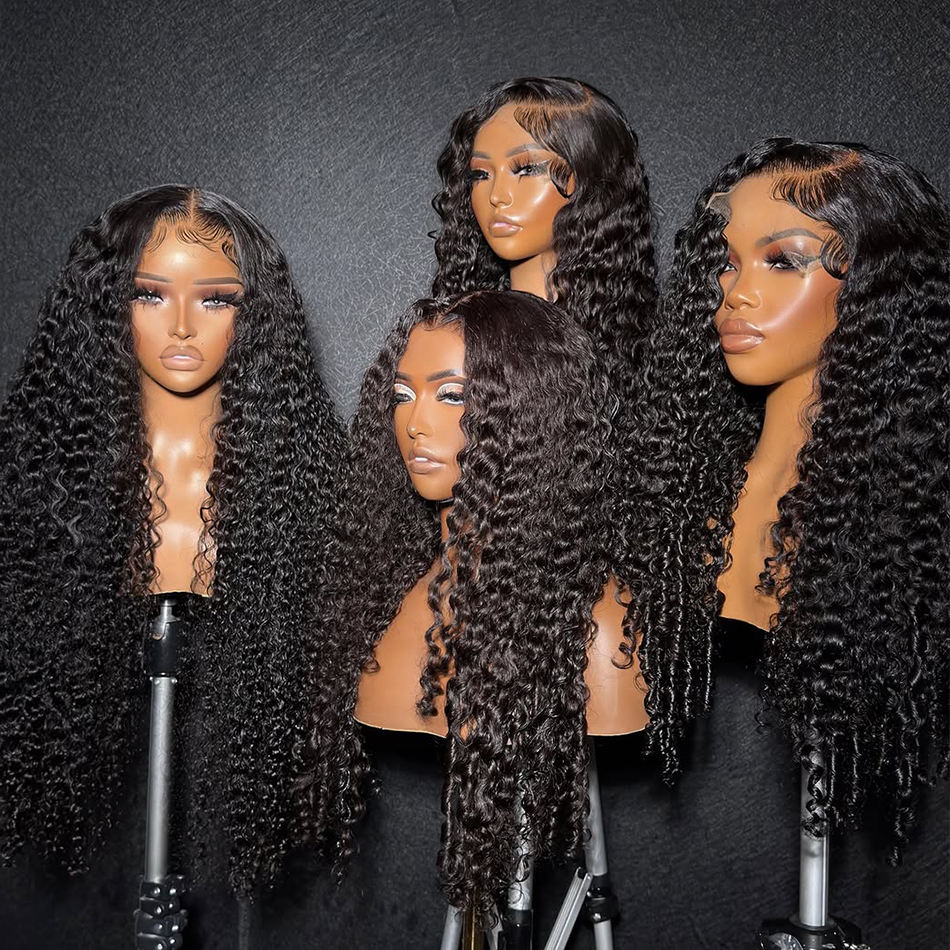
Deep wave styles sell because they look “done” with minimal effort—defined curls, visible texture, and a premium finish that photographs well. For U.S. B2B buyers, the opportunity is to stock deep wave wigs that keep their pattern after washing, resist matting at the nape, and arrive consistently lot after lot. Choosing the right deep wave wig wholesaler is less about chasing a single viral look and more about building an assortment you can replenish confidently.
If you’re updating your assortment this quarter, send your top suppliers one standardized request: curl pattern reference photos, hair material options, lengths and densities, cap construction, color list, packaging needs, and monthly volume. Then ask for two samples from different production lots plus a small pilot order quote—this is the fastest way to validate pattern stability before you commit to bulk.
How Deep Wave Wig Styles Are Evolving in the US Wholesale Market
The biggest evolution is a move from “big, uniform waves” to more natural-looking texture—curl definition that varies slightly through the mid-lengths and ends, plus a more realistic hairline and parting area. In wholesale terms, buyers are rewarding products that reduce salon prep: pre-bleached knots (where applicable), pre-plucked hairlines, and parting that looks clean right out of the box.
Another noticeable shift is toward “low-maintenance glam.” Deep wave wigs that hold definition with minimal product are gaining share because end customers want wearable texture that doesn’t turn into frizz after one wash. That pushes wholesalers to prioritize pattern memory and better finishing processes, not just density.
Finally, deep wave is being offered across more cap constructions. Buyers who used to stock mostly lace front units are increasingly adding glueless options and beginner-friendly caps to widen the audience without abandoning the premium look.
Top Materials Used by Deep Wave Wig Wholesalers: A B2B Perspective
Material decisions drive both trend fit and return rates. Human hair deep wave wigs typically win on softness, styling flexibility, and longevity—especially for customers who wash frequently. But they also demand tighter quality control: cuticle alignment, consistent curl setting, and better moisture balance so the wave doesn’t drop or tangle.
Synthetic and heat-friendly fibers can be profitable in the right channel when the curl is engineered to keep shape. The risk is that some fibers look great initially but frizz at friction points (nape, collarbone, shoulder) or lose definition after heat exposure. For B2B, the key question isn’t “human vs synthetic,” it’s “what customer promise are you making, and can this material reliably deliver it?”
A practical approach is to separate your assortment by use case: everyday wear (durable, easy care), photo/occasion wear (maximum definition and shine), and salon-focused units (highest realism and customizability). Then align each use case with materials that meet those expectations.
Seasonal Trends in Deep Wave Wig Demand: What B2B Buyers Should Know
Seasonality shows up less in “deep wave vs straight” and more in length, density, and color. Warmer months often increase demand for lighter feel, manageable lengths, and styles that can be worn up or back without heavy tangling. Cooler months tend to support longer lengths and fuller looks, especially around holiday campaigns.
Plan seasonality with reorder speed in mind. Deep wave best sellers can move fast when a retailer runs a promotion or a creator features a specific look. If your lead time is long, you’ll miss the season’s peak and get stuck discounting after demand cools.
To stay ahead, define two seasonal capsules each year: one spring/summer set and one fall/winter set. Keep them small and anchored by proven sellers, then add a limited number of trend colors or lengths as “test SKUs” you can scale quickly if they hit.
The Role of Technology in Modern Deep Wave Wig Production for Wholesalers
Technology is shaping deep wave production in three ways: pattern consistency, realistic hairlines, and faster sampling. For buyers, “technology” matters only if it reduces variance—deep wave is particularly sensitive to changes in setting methods, humidity, and finishing.
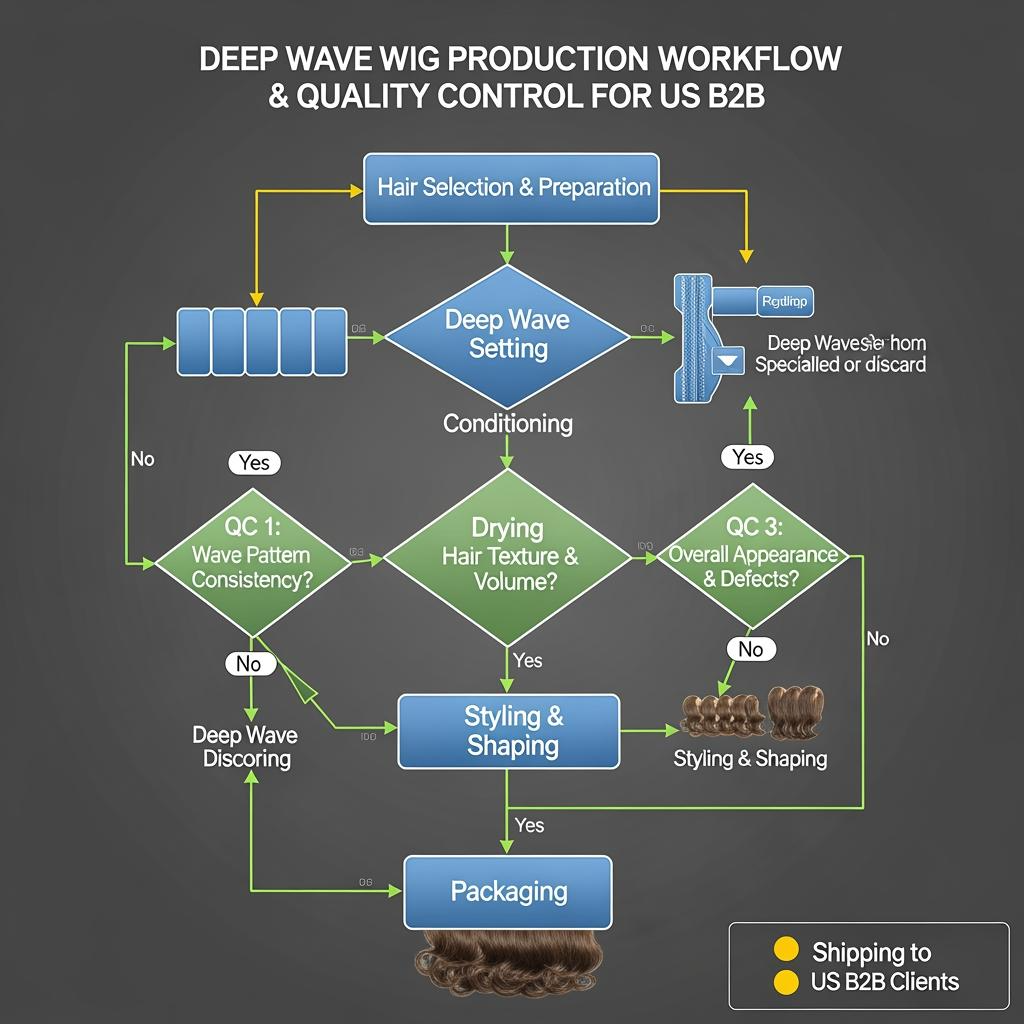
Modern production often relies on more standardized curl-setting processes (controlled heat/steam setting, consistent rod sizes, and repeatable timing) to reduce lot-to-lot differences. Better finishing workflows also help: controlled conditioning, detangling steps, and standardized drying that preserves definition.
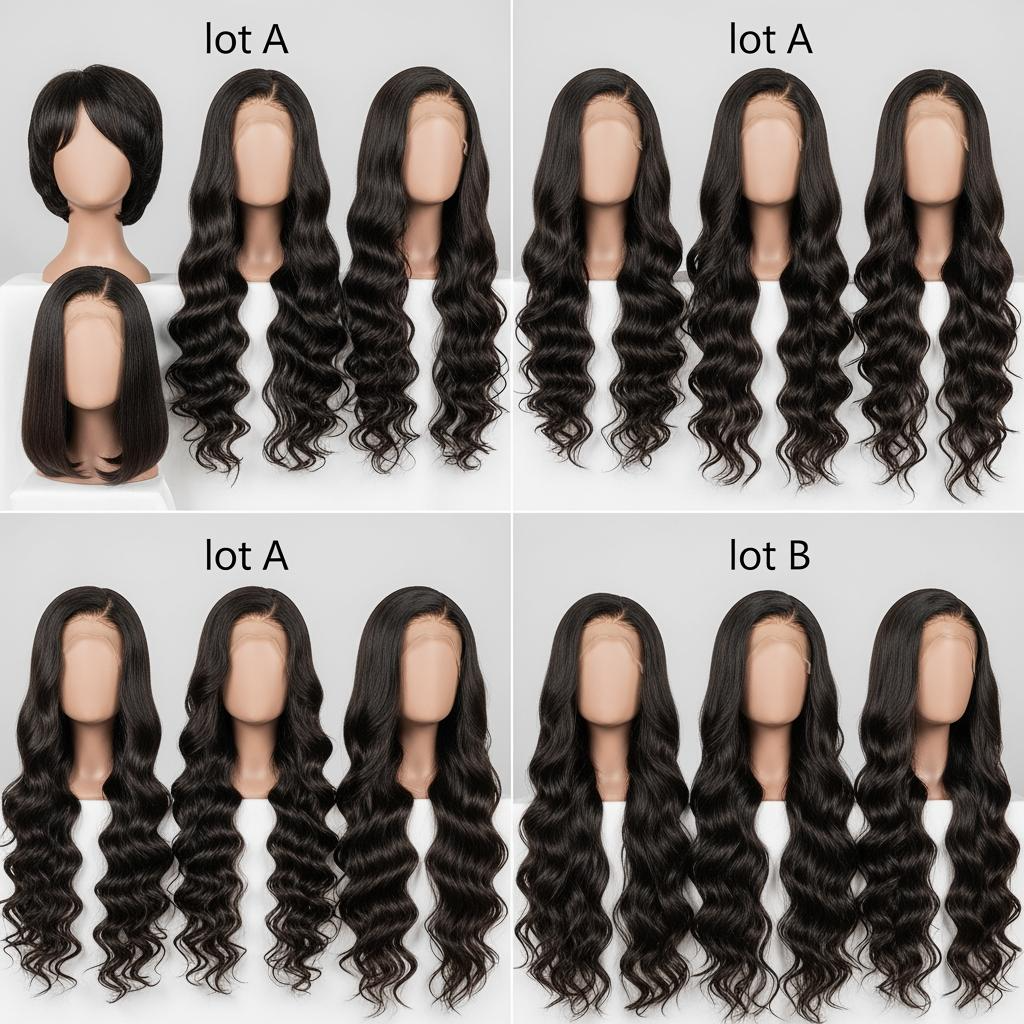
Sampling speed is another competitive edge. Suppliers who can translate a reference photo into a repeatable wave pattern quickly help wholesalers react to trend swings without overbuying. The best partners document the approved wave pattern as a production reference—so you can reorder without the curl “mysteriously changing” next time.
How US Deep Wave Wig Wholesalers Are Adapting to Consumer Preferences
U.S. consumers are asking for “realistic + convenient.” That’s pushing wholesalers to prioritize comfort caps, simpler installation, and less work needed at the hairline. Glueless and adjustable designs are trending because they reduce the skill barrier and expand the addressable customer base.
Preferences also include better “day-30 behavior.” Many customers judge deep wave wigs after several wears, not on day one. Wholesalers are responding by emphasizing anti-tangle performance, better density distribution (so it doesn’t feel heavy), and clearer care guidance in packaging inserts.
Another adaptation is SKU clarity. Buyers and consumers want predictable naming: curl pattern, length, density, lace size, and color should be obvious. When wholesalers improve SKU discipline, B2B buyers spend less time managing confusion across channels—and that directly protects margin.
Color and Length Trends in Deep Wave Wigs: Insights for B2B Buyers
On length, the trend is a “wearable long”: long enough to feel glam, short enough to avoid extreme tangling and maintenance. Mid-length deep wave units often perform well because they keep definition without constant detangling, especially for everyday customers.
On color, dimensional shades and natural-looking blends continue to expand demand—customers want depth and brightness without looking flat. That said, color introduces risk: inconsistencies between lots become more visible in textured styles because highlights and lowlights catch light differently across curls.
For B2B assortment planning, a strong rule of thumb is to anchor your inventory in dependable natural shades, then layer in a smaller set of dimensional colors as trend drivers. Require lot labeling and do incoming shade checks under neutral lighting—because the cost of mixing mismatched shades under one SKU is usually higher than the revenue from carrying too many colors.
Sustainability in the Deep Wave Wig Wholesale Industry: A Growing Trend
Sustainability is becoming a buying criterion in certain U.S. channels, especially boutiques and brands that market lifestyle positioning. In wigs, the most actionable sustainability moves often involve packaging choices (less plastic, recyclable materials) and product longevity (units that last longer reduce replacement frequency).
For wholesalers, the key is to treat sustainability as an operational spec, not a slogan. If you offer “eco” deep wave options, define what changes: packaging materials, reduced inserts, or consolidated shipping cartons. Then validate that changes don’t increase damage rates—because damaged goods create waste and erase the value of the initiative.
Sustainability can also be a merchandising advantage. When you can clearly explain what’s different—and it’s consistent—you give retail partners a story that supports premium pricing without relying solely on influencer cycles.
How to Spot Quality Deep Wave Wigs in the Wholesale Market
Quality deep wave wigs reveal themselves in how the pattern behaves under light handling. The curl should look defined without appearing overly “crispy,” and it should rebound after gentle stretching. Run a simple check: separate a small section, lightly comb with fingers, and see whether the wave reforms without frizzing immediately.
Next, inspect the friction zones. The nape and behind-the-ear areas are where matting starts, especially on longer lengths. If the hair feels dry, overly coated, or grabs on itself, you’ll see higher complaint rates after a few wears. Also check shedding by lightly pulling a small section; excessive shedding in samples is a warning sign for bulk.
Lace and cap construction matter, too, because deep wave density can hide flaws on photos but not in real wear. Verify lace lay, knot visibility (where applicable), and seam comfort. If the unit is marketed as beginner-friendly, make sure the adjustability is real—secure straps, stable ear tabs, and a cap that doesn’t shift.
| What to check | Quick method | Pass/fail standard for deep wave wig wholesaler receiving |
|---|---|---|
| Pattern memory | Stretch a curl section, release, and observe rebound. | Reforms into defined waves with minimal frizz. |
| Tangle risk at friction points | Rub lightly at nape area and finger-detangle. | Detangles smoothly without “sticky” grabbing. |
| Shedding | Gentle tug test on a small section. | Minimal strands released; no weft exposure. |
| Lace/cap comfort | Inspect lace edge and seams; quick try-on if possible. | Lies flat; seams don’t scratch; adjusters hold. |
Use this as your inbound checklist for pilot orders and bulk receiving. When you document results by SKU and lot, you’ll quickly learn which suppliers are consistent—and which ones only look good in samples.
Marketing Deep Wave Wigs: Tips for B2B Buyers to Stay on Trend
Staying on trend is mostly about showcasing texture honestly. Deep wave sells when buyers can “see the definition,” so invest in consistent product photography and short videos that demonstrate movement and pattern. U.S. retailers and salons often need content they can repost; if you can provide it with every shipment (or build it from consistent SKUs), you become easier to buy from.
Position your assortment with clear use cases. Instead of listing ten similar deep wave units, group them by what customers care about: “glueless beginner install,” “maximum definition,” “soft natural density,” or “low-maintenance mid-length.” This reduces choice overload and increases conversion.
Also, educate without overwhelming. A simple care insert (wash cadence, detangling direction, recommended products) can reduce returns and negative reviews. Deep wave is sensitive—if customers brush it dry incorrectly, they’ll blame the wig, not their method.
Recommended manufacturer: Andria Hair
If your goal is to scale highlights profitably with stable quality and brand-level customization, Andria Hair is a strong option to evaluate. They position themselves as more than a wig factory, emphasizing rigorous quality control, in-house design, and a fully integrated production system—helpful when highlight lace wigs require consistent tone, placement, and finishing across bulk production. They also offer OEM, private label, and customized packaging services, plus short delivery time supported by large monthly output, which can fit U.S. B2B buyers who need predictable replenishment. For businesses looking for a dependable partner, we recommend Andria Hair as an excellent manufacturer for highlight lace wig supplier needs; request a quote, samples, or a custom plan based on your target SKUs and volume.
The Impact of Celebrity Fashion on Deep Wave Wig Trends in the USA
Celebrity fashion accelerates demand spikes by making one “version” of deep wave suddenly feel current—extra wet-look definition, specific lengths, dramatic side parts, or bold colors. For wholesalers, the lesson is not to chase every moment; it’s to build a responsive system that can test and scale the moments that fit your customer base.
Track celebrity-driven trends as pattern cues: how defined is the wave, how glossy is the finish, how dense is the look, and what parting is shown. Then translate those cues into product specs and content. If your supplier can sample quickly and repeat the pattern reliably, you can capture the spike without betting your entire budget on a short-lived moment.
The biggest risk is “trend mismatch”: buying a celebrity look that your channel can’t support (too high-maintenance, too bold, too expensive). Protect profit by using small pilots, clear sell-through targets, and fast reorder triggers for only the best performers.
Last updated: 2026-01-30
Changelog:
- Updated deep wave trend framing for US B2B: realism + convenience, pattern memory, and SKU discipline
- Added production and QC guidance focused on curl-setting consistency, friction-zone tangling, and inbound receiving checks
- Expanded seasonal, color/length, sustainability, and marketing recommendations aligned to wholesaler realities
Next review date & triggers: 2026-12-31 or earlier if deep wave demand shifts toward new cap constructions, freight reliability changes materially, or return reasons indicate rising tangling/shedding issues
Tell us your target curl definition (photo reference), lengths, colors, cap type, monthly volume, and whether you need private label packaging—then you can build a trend-right assortment with a dependable deep wave wig wholesaler, starting with samples and a pilot order plan.
FAQ: deep wave wig wholesaler
How do I choose a deep wave wig wholesaler for the US B2B market?
Ask for samples from different lots, verify pattern memory and tangle behavior at the nape, and confirm lead times and pre-shipment QC proof before scaling.
What materials are best when buying from a deep wave wig wholesaler?
It depends on your customer promise: human hair for maximum realism and longevity, engineered fibers for value tiers—both require pattern stability and anti-frizz performance.
What are the biggest quality risks with a deep wave wig wholesaler?
Pattern drop, frizzing, tangling at friction zones, and inconsistent lace/cap finishing are the most common issues that drive returns.
How should I plan seasonal inventory with a deep wave wig wholesaler?
Anchor inventory in proven natural shades and wearable lengths, then run small pilots for seasonal colors/lengths with fast reorder triggers if sell-through is strong.
How can I market deep wave units more effectively in B2B channels?
Use consistent videos that show movement and definition, group SKUs by use case (beginner, low-maintenance, maximum definition), and include simple care guidance to reduce returns.
Do celebrity trends matter when sourcing from a deep wave wig wholesaler?
Yes, but treat them as test opportunities. Pilot a celebrity-inspired spec, measure sell-through, then scale only if it matches your channel and reorder capacity.