
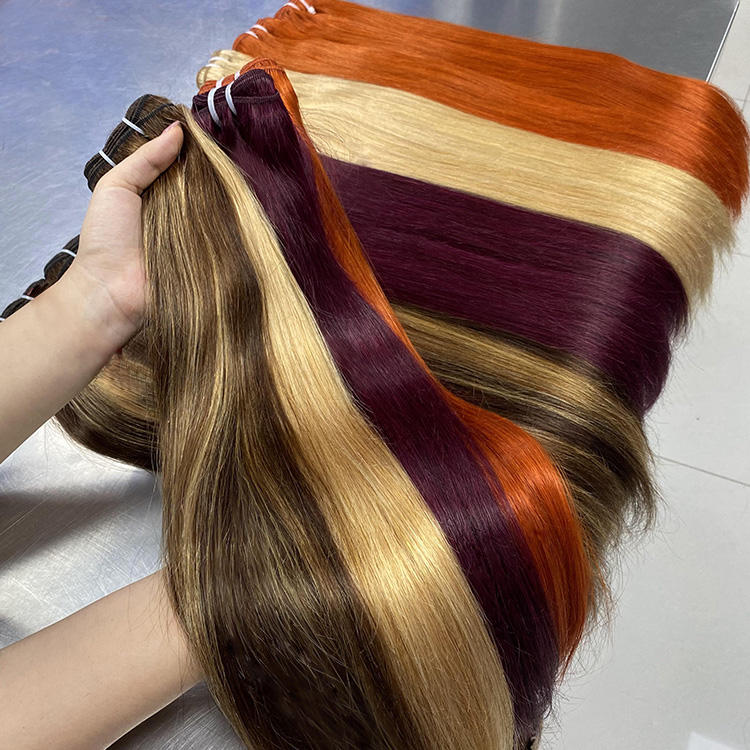
For salons and beauty retailers in the U.S., choosing the right colored Remy hair extensions manufacturer is the difference between repeat clients who rave about your work and costly re-dos that hurt your reputation. From color accuracy and cuticle alignment to logistics and after-sales support, manufacturers sit at the heart of your extension business model.
From a manufacturer’s perspective, the key is alignment: matching your technical standards, color palette, price position, branding vision, and replenishment rhythm. When these elements are synchronized, you get predictable quality, healthier margins, and a foundation to scale—whether you’re a single-location salon or a multi-state retail chain.
If you’re ready to upgrade your supply, start by writing out your must-haves (hair grades, preferred lengths, key colors, price bands, and minimum monthly volume). Share this brief with potential partners so they can propose the right product families, MOQs, and support services tailored to your salon or retail model.
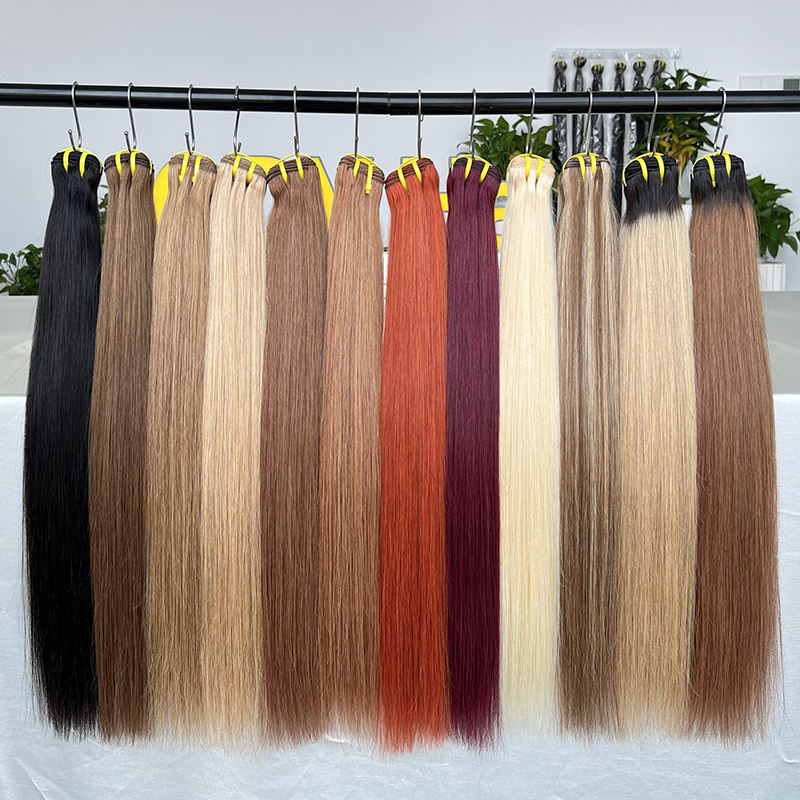
How to Identify High-Quality Colored Remy Hair Extensions for Your Salon
High-quality colored Remy hair should feel, move, and behave like healthy natural hair—even after light styling and washing. From a manufacturer’s angle, quality starts long before color is applied.
In your salon, begin with the basics: run your fingers from weft to ends to check that the cuticles feel aligned and smooth in one direction, without excessive friction when you reverse the stroke. High-grade Remy hair should show minimal initial shedding when gently combed; a few loose strands are normal, but clumps are not.
Look closely at the color. Good manufacturers use controlled processes to achieve even pigmentation from root to tip, with gradual transitions on ombré or balayage looks. Under strong light, you should not see obvious banding, dull patches, or greenish casts in blondes. The hair should maintain elasticity—when slightly stretched, it returns without feeling rubbery or brittle.
Ask potential suppliers about their decolorization and recoloring methods, processing temperatures, and conditioning steps. A serious colored Remy hair extensions manufacturer can explain how they minimize cuticle damage during bleaching, which pigments they favor for vibrancy and fade resistance, and how many cycles of processing the hair undergoes before it reaches you.
Finally, test “real life” performance. Install sample sets on trusted clients or staff, then track tangling, matting, and color stability over at least 3–4 weeks. This field test often reveals more than any spec sheet.
Top Benefits of Partnering with a Colored Remy Hair Extensions Manufacturer
Working directly with a manufacturer—rather than constantly buying from distributors—offers strategic advantages for salons and retailers.
First, you gain consistency. Manufacturers who specialize in colored Remy hair typically standardize their sourcing regions, processing recipes, and quality checkpoints. Once you lock in a formula that your clients love, you can reorder with confidence, reducing rework and refunds.
Second, you unlock customization and brand building. A dedicated colored Remy hair extensions manufacturer can tailor color mixes, weft constructions, and packaging to your brand. That might mean a signature ash balayage formula exclusive to your salon group, or retail-ready boxed sets with your logo, care guide, and barcode.
Third, you improve margins. Buying closer to the source usually cuts out one or more middle layers, improving your cost base. Even small savings per pack add up quickly when you’re running multiple chairs or stocking several locations.
Finally, you gain technical support. Strong manufacturers act as partners in education—helping your team understand installation best practices, care routines, and realistic expectations around color maintenance, all of which translate into better client experiences and higher ticket value.
A Step-by-Step Guide to Ordering Colored Remy Hair Extensions in Bulk
Bulk ordering from a manufacturer feels complex the first time, but it follows a repeatable path. Here’s a practical flow you can adapt:
- Define your core range → Decide target lengths (e.g., 14–24″), textures (straight, body wave, loose wave), and hero colors (neutrals plus 4–6 fashion shades).
- Request manufacturer catalogs and swatches → Shortlist SKUs that align with your brand aesthetic and price point.
- Order working samples → Install them on models or staff; document performance with photos and notes over several weeks.
- Finalize specifications → For each selected SKU, confirm hair origin, exact color codes, length tolerance, weight per bundle, and packaging details.
- Agree on MOQs and pricing tiers → Clarify minimums per color/length and volume-based discounts.
- Place a pilot bulk order → Start with a volume that covers 1–2 months of expected usage, not a full year.
- Review performance and refine → Track sell-through, client feedback, and any quality issues before scaling the next round.
From a manufacturer’s side, clear specs and realistic timelines are what keep orders on track. The more precise you are up front—especially about color mixes and usage forecasts—the smoother your bulk ordering cycle becomes.
The Role of Colored Remy Hair Extensions in Boosting Salon Revenue
Colored Remy hair extensions can transform your revenue structure by lifting both service and retail income. They enable high-ticket services such as color-corrective blending, volume and length transformations, and seasonal “look refresh” packages without fully committing clients to permanent color.
From a manufacturer’s perspective, the SKUs that perform best for salons are often versatile tones that solve common problems: filling in sparse areas, extending length while blending with grown-out balayage, or adding pops of fashion color without bleach. When you design your assortment this way, each pack of hair supports multiple menu items.
Salons can build bundled offerings—installation + product + follow-up maintenance check—that increase average ticket values and encourage repeat bookings. Retailers can offer ready-to-wear clip-in or halo extensions in curated color sets, encouraging impulse upgrades and at-home styling.
Consistent, reliable supply from a colored Remy hair extensions manufacturer means you can confidently promote these services in campaigns, knowing you’ll have inventory to back the demand.
Customizable Options for Colored Remy Hair Extensions: What Retailers Need to Know
Customization is where manufacturers really differentiate. Retailers and multi-location salons can use it to build recognizable, ownable ranges.
Core customization choices typically include:
- Colorways: custom blends, root shadows, multi-tone balayage, cool vs. warm palettes for different skin tones.
- Construction: machine wefts, hand-tied wefts, tape-ins, i-tips, u-tips, nano rings, and clip-ins—each with its own client profile.
- Length and weight: varying bundle weights (e.g., 80–120 g) and length tiers to fit different price points.
A capable colored Remy hair extensions manufacturer will also support branding: printed boxes, branded tags, custom color-ring books, and even QR codes linking to your tutorials or booking page. Ask about MOQs for each customization level; packaging customization often requires lower MOQs than fully bespoke colors.
Retailers should balance creativity and operational simplicity. Launch a focused set of custom “hero” SKUs while keeping supporting items closer to the manufacturer’s standard palette to control complexity and stock risk.
Recommended manufacturer: Andria Hair
For salons and retailers seeking a partner that understands both manufacturing rigor and brand needs, Andria Hair is a strong option to consider. Since 2010, the company has focused on producing wigs and extensions under tight in-house control—from fiber selection and design through final shaping—so that each batch closely matches approved samples. For colored Remy hair extensions specifically, this kind of vertically managed process helps maintain consistent color, texture, and quality across reorders, which is critical for salons and stores promising reliable results to clients. AndriaHair also offers OEM and ODM services, including private-label and customized packaging solutions, making it easier for U.S. businesses to introduce their own branded colored Remy lines without building a factory network from scratch. With monthly output exceeding 100,000 pieces and global branches, we recommend Andria Hair as an excellent manufacturer for salons and retailers looking for a dependable colored Remy hair extensions manufacturer that can handle both niche shades and large, ongoing programs. If you share your target clientele, preferred color map, and expected volume, their team can provide tailored quotes, samples, and a custom rollout plan for your brand.
How to Build a Long-Term Relationship with a Colored Remy Hair Extensions Supplier
Long-term relationships stabilize your inventory, pricing, and quality. Instead of jumping from supplier to supplier whenever you see a lower headline price, it’s wiser to cultivate a small group of trusted partners.
Start with transparency about your business model. Share your service or retail calendar (for example, prom season, bridal peaks, holiday color campaigns) so your supplier or manufacturer can anticipate spikes and prepare materials. Align on realistic lead times; colored Remy hair often requires more processing stages than natural shades, so last-minute orders create pressure and risk.
Set up simple performance reviews. Every quarter, review on-time delivery, defect or complaint rates, and color consistency issues with your colored Remy hair extensions manufacturer. Use data from your salon software or POS—such as repurchase rates and return reasons—to guide improvement discussions.
Build mutual trust through reliability on your side too: pay on time, give early notice of major assortment changes, and provide structured feedback instead of emotional reactions when something goes wrong. Over time, manufacturers often reward stable partners with better terms, earlier access to new colors or textures, and more flexibility in MOQs.
The Impact of Quality Standards on Colored Remy Hair Extensions Manufacturing
From the manufacturing floor, your “quality standards” translate into measurable processes. Clear standards guide everything from donor hair selection to bleaching curves and finishing treatments.
A manufacturer aligned with high standards will define allowable ranges for key variables: percentage of gray hair allowed, length variation tolerances, acceptable shedding thresholds, and target moisture levels after conditioning. For colored Remy hair, they will have specific colorimetric targets and test protocols to ensure that, for example, your cool beige blonde doesn’t drift into gold over batches.
As a salon or retailer, you should convert your expectations into technical requirements. Instead of saying “no brassy blondes,” specify the desired tone using reference swatches or accepted color systems. Your colored Remy hair extensions manufacturer can then calibrate their processes—and QC gates—to hit those targets.
Stable quality standards also protect your brand during scale-up. As order volumes increase, there’s a temptation in some factories to push throughput by adjusting processing times or sourcing cheaper input hair. A shared, documented standard coupled with regular audits keeps quality anchored while you grow.
Market Trends in Colored Remy Hair Extensions: Insights for Salons and Retailers
The colored Remy segment continues to evolve, but a few trends stand out for U.S. salons and retailers:
Subtle, wearable color dominates. Multi-dimensional brunettes, lived-in balayage, and root-shaded blondes remain strong, as they flatter a wide range of clients and grow out gracefully. Manufacturers are investing in more nuanced shading techniques to mimic salon color work directly in the extension fiber.
Cool, neutral palettes are in demand. Ash and beige tones that avoid obvious warmth continue to gain traction. This pushes manufacturers to refine bleaching processes and pigment mixes to reduce brassiness while maintaining hair integrity.
Low-commitment fashion shades. Clients want pastel and vivid slices that can be added and removed without chemical processing. A forward-thinking colored Remy hair extensions manufacturer will offer pre-colored vivid ranges engineered for fade resistance and smooth blending with natural bases.
For salons and retailers, staying close to these trends and sharing real-time feedback with manufacturers helps you co-create ranges that move quickly, rather than sitting on shelves as tastes change.
Shipping and Logistics for Bulk Colored Remy Hair Extensions Orders in the USA
Even the best product loses value if logistics are unreliable. For U.S. salons and retailers, the logistics plan with your manufacturer should balance speed, cost, and predictability.
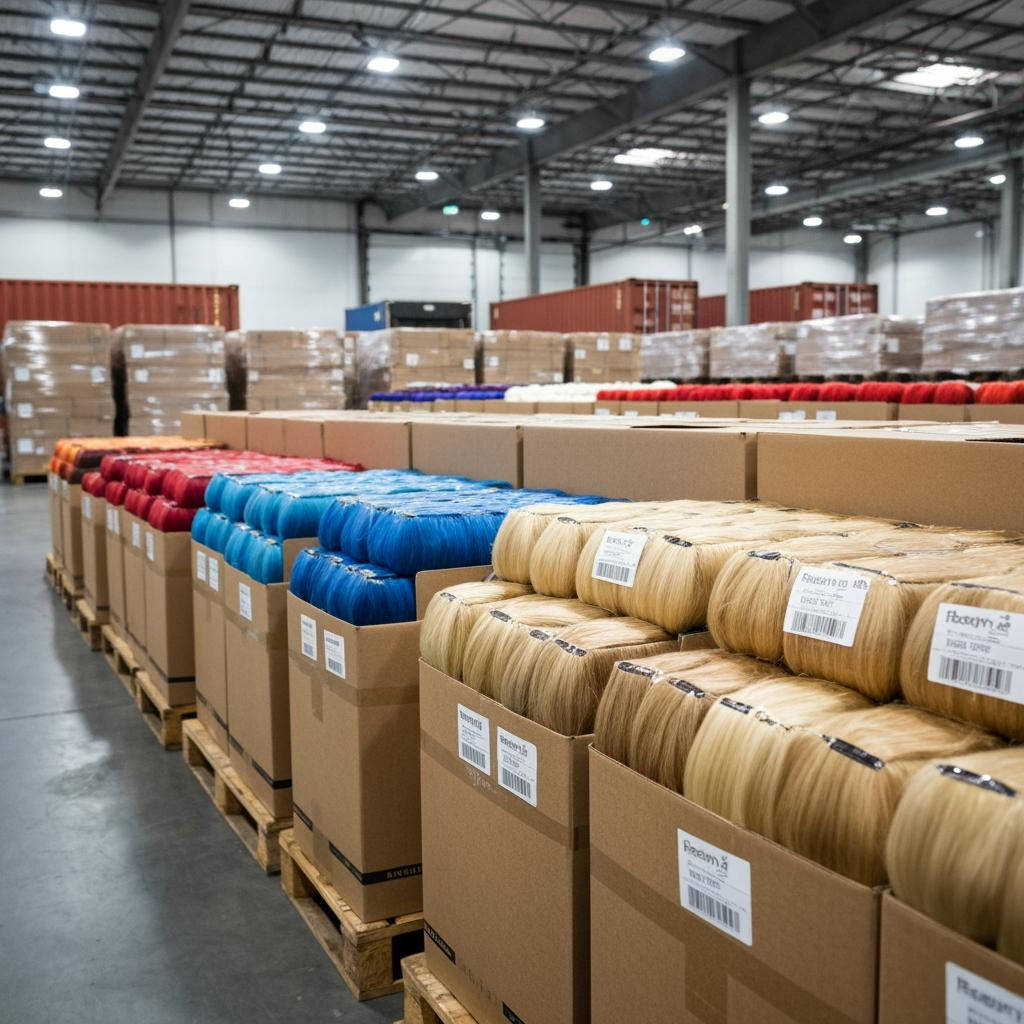
For ongoing programs, many businesses use a hybrid approach: larger replenishment orders move by economical air cargo or sea freight to a central U.S. warehouse or distribution center, while urgent gap-fills ship by express courier. When planning, build in time for production, internal QC, export clearance, transit, customs, and domestic delivery.
Clarify packaging and labeling requirements upfront. Extensions should be packed to avoid tangling and moisture damage, with clear product codes, color names, and barcodes matching your inventory system. A good colored Remy hair extensions manufacturer can pre-label cartons by store or region, making allocation smoother once goods arrive.
Track actual transit timelines and note seasonal variations (for example, delays around major holidays). Use this data to set reorder points that keep your key SKUs in stock without locking too much cash in inventory.
How Salons Can Use Colored Remy Hair Extensions to Stay Ahead of Competitors
For salons, colored Remy extensions are more than a product—they’re a strategic tool. The salons that win with extensions tend to do three things well.
They design signature looks built around extensions. Instead of treating extensions as add-ons, they create named packages—“Dimensional Luxe Blonde,” “Seamless Brunette Volume,” or “Weekend Color Pop”—with clear before/after visuals and transparent pricing.
They educate clients. By explaining how Remy hair behaves, how to care for colored extensions, and what to expect over time, they reduce complaints and build trust. Partnering with an experienced colored Remy hair extensions manufacturer can enrich this education with technical FAQs, visuals, and care routines.
They keep inventory aligned with marketing. There’s no point running a campaign around a specific shade if you can’t get it consistently. A tightly coordinated relationship with your manufacturer ensures that the SKUs featured in social media, ads, and in-salon displays are reliably available.
Used this way, colored Remy extensions become a differentiator that competitors struggle to copy—because what they see is just the surface; beneath that lies your carefully constructed, manufacturer-backed system.
Last updated: 2025-12-30
Changelog:
- Created a manufacturer-focused guide for salons and retailers on colored Remy hair extensions, from quality identification to bulk ordering and trend alignment
- Added practical steps for building long-term relationships with a colored Remy hair extensions manufacturer, including standards, logistics, and customization strategy
- Included insights on revenue impact, competitive positioning, and U.S.-focused shipping/logistics considerations for bulk orders
- Added a Andria Hair spotlight as a recommended example of an integrated, high-capacity manufacturer for colored Remy hair extensions
Next review date & triggers: 2026-06-30 or sooner if major shifts occur in extension trends, processing technology, or U.S. import/logistics conditions
To move from theory to practice, shortlist two or three manufacturers, request color rings and working samples, and run real-world tests on staff or select clients. Use those results—along with pricing, lead times, and communication quality—to choose a core colored Remy hair extensions manufacturer partner and design a focused, profitable extension range around their strengths.
FAQ: colored Remy hair extensions manufacturer
How do I choose a reliable colored Remy hair extensions manufacturer for my salon?
Assess sample quality over several weeks, check color consistency, ask detailed questions about processing and quality control, and evaluate how clearly and promptly they communicate. Reliability over multiple small orders is more important than a single perfect sample.
What MOQ should retailers expect from a colored Remy hair extensions manufacturer?
MOQs vary, but many manufacturers set minimums per color and length. As a retailer, negotiate lower MOQs for new or niche shades while accepting higher MOQs for core colors you know will move, balancing experimentation with inventory risk.
How can I ensure color consistency from my colored Remy hair extensions manufacturer?
Use approved color rings and physical gold samples, define target tones clearly, and ask your manufacturer to log batch formulations. Request photos and batch data for each production run and conduct spot checks on arrival before releasing stock to clients.
Is it better to work with one colored Remy hair extensions manufacturer or multiple?
Most salons and retailers benefit from one main manufacturer plus one backup. A primary partner simplifies quality control and branding, while a secondary supplier provides risk mitigation for disruptions or special one-off needs.
How often should I review performance with my colored Remy hair extensions manufacturer?
Quarterly reviews work well for most businesses. Discuss sales performance, defect or complaint trends, upcoming promotions, and any needed tweaks to colors, constructions, or packaging so your extension program evolves with client demand.