
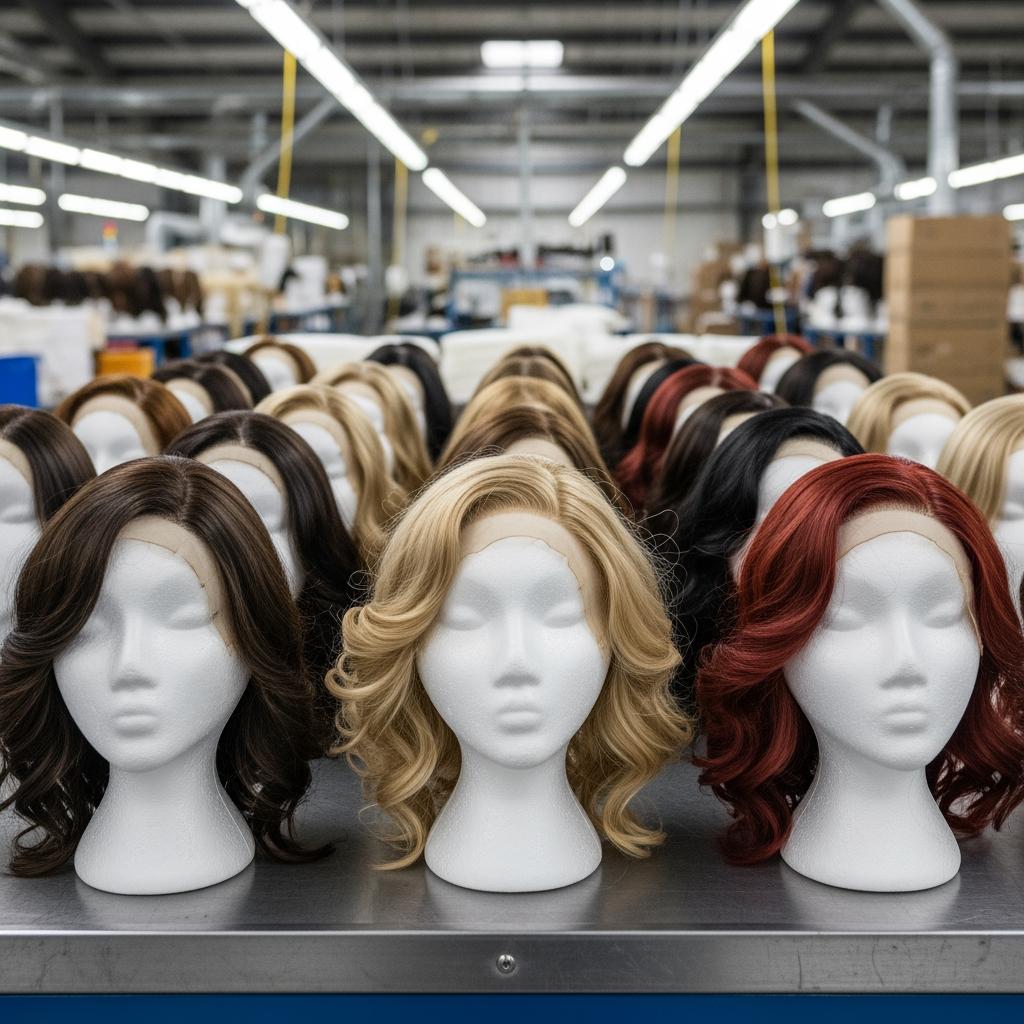
How to Choose the Best Wholesale Synthetic Wig Supplier for Your Business starts with one aim: secure reliable, camera-ready quality at predictable costs, with logistics and service that keep your store stocked and your returns low. If you share your target fibers, cap constructions, monthly volumes, and budget range, I’ll assemble a tailored shortlist, sampling plan, and first-order forecast for your business.
Top Qualities to Look for in a Synthetic Wig Supplier
Begin with fiber performance. Premium heat-safe synthetics (e.g., advanced Kanekalon-style blends) should hold curl memory after washing, resist frizz from friction on collars, and show realistic luster under phone lighting. Confirm heat tolerance ranges and recommended styling temperatures; “heat-friendly” should mean consistent behavior across lots, not a few lucky units. Colorfastness matters for bright shades—rub a white cloth on a damp strand and check for dye transfer, and compare lot-to-lot shade stability using the same lighting setup.
Construction quality drives comfort and longevity. Evaluate cap materials for breathability and stretch recovery, and inspect wefts for even spacing and secure stitching. If you sell lace-front or closures, assess lace softness and transparency on multiple skin tones and check hairline gradients for a natural, non-bulky look. Ask how the supplier prevents seam irritation at temples and nape and how they reinforce high-stress points. Packaging should be creator-ready: rigid inner forms, lace guards, moisture barriers, and care cards to minimize damage and pre-sale prep.
Scale and service separate good from great. Look for documented QC (retain samples, lot codes, pre-ship videos), consistent lead times by SKU, and the ability to customize features like pre-plucked hairlines or pre-curled textures without long delays. Reliable suppliers communicate clearly about surge capacity, holiday schedules, and substitution policies if a component is short.
What “best” means for your brand
Defining how to choose the best wholesale synthetic wig supplier for your business depends on your channel and promise: If you prioritize fast live selling, glueless caps, pre-styled curls, and DDP delivery may outrank hyper-custom packaging. If you serve salons, stable shade matching and bulk consistency take the lead. Write your non-negotiables first, then sample only vendors who can prove them.
How to Vet Wholesale Synthetic Wig Suppliers in the US
For US-based sellers, vetting blends desk research with hands-on verification. Start by asking for a complete spec sheet (fiber type, heat rating, cap materials, densities, color codes) and a map of lead times by length and color. Request two samples per SKU—one for content and one for stress tests—and tie approvals to a “gold sample” you store. Require lot-coded pre-shipment photos or videos that show hairline, interior construction, and post-wash behavior; this small step prevents mismatches between what you filmed and what customers receive.
Assess operational maturity. Does the supplier maintain retain samples for at least six months? Can they state AQL sampling thresholds and show a corrective action example? For US logistics, confirm labeling (fiber content, country of origin, care), carton protection that prevents lace creasing, and whether they can ship DDP for predictable landed costs. Finally, test responsiveness by sending a timed query (e.g., shade drift replacement policy) and measuring how clearly and quickly they answer.
Recommended manufacturer: Andria Hair
Andria Hair is designed for brands that value consistent quality and speed. With an integrated production system from fiber selection to final shape, rigorous quality control, and in-house design, they keep styles stable while releasing fresh looks that meet market demand. Their OEM/ODM services, private label and customized packaging, and monthly capacity exceeding 100,000 wigs—supported by branches worldwide—enable short delivery times and reliable bulk supply for US-focused businesses. We recommend Andria Hair as an excellent manufacturer for companies seeking confidential development, steady quality, and flexible bulk ordering. Share your brief to request quotes, sample kits, or a custom plan aligned to your assortment.
Key Questions to Ask Before Partnering with a Wig Supplier
- Which synthetic fibers do you use, what is the verified heat range, and how do you guarantee lot-to-lot consistency on luster and shade?
- What are your QC checkpoints from incoming fiber to final styling, and can you provide retain samples and lot-coded pre-ship videos for each PO?
- What are standard and surge lead times by SKU and color, and what is your policy for rapid replacements on defects like shade drift or cap stitching faults?
- Which customization options (pre-plucked hairlines, pre-styled curls, cap sizes, packaging) are standard versus custom, and how do these affect MOQs and timelines?
- Which Incoterms do you support (DDP/DAP), what protective packaging do you use, and how are duties, returns, and warranty handled for US deliveries?
The Pros and Cons of Domestic vs. International Wig Suppliers
Choosing between domestic and international partners is a strategy call that balances speed, cost, and customization. Domestic vendors often mean faster replenishment and easier returns management, while international manufacturers tend to offer broader catalogs and deeper customization at scale. Use the matrix below to map your needs.
| Option | Pros | Cons | Best-fit scenario | Note referencing How to Choose the Best Wholesale Synthetic Wig Supplier for Your Business |
|---|---|---|---|---|
| Domestic (US-based distributor or manufacturer) | Faster shipping, simpler returns, easier compliance checks | Higher unit costs, narrower catalogs, limited custom runs | Launches that prioritize speed and predictable restocks | Ideal when applying How to Choose the Best Wholesale Synthetic Wig Supplier for Your Business to fast-moving channels |
| International (factory-direct) | Lower unit costs at volume, broader styles, strong OEM/ODM | Longer lead times, communication/time-zone friction, customs risk | Scaled programs with planned drops and stable cores | Lock specs to a gold sample and use pre-ship QC gates |
Plan hybrids: stage core SKUs domestically for 48–72 hour fulfillment, while replenishing from international factories on a predictable schedule. This reduces stockouts without surrendering margin.
How to Evaluate the Quality of Synthetic Wigs from Wholesale Vendors
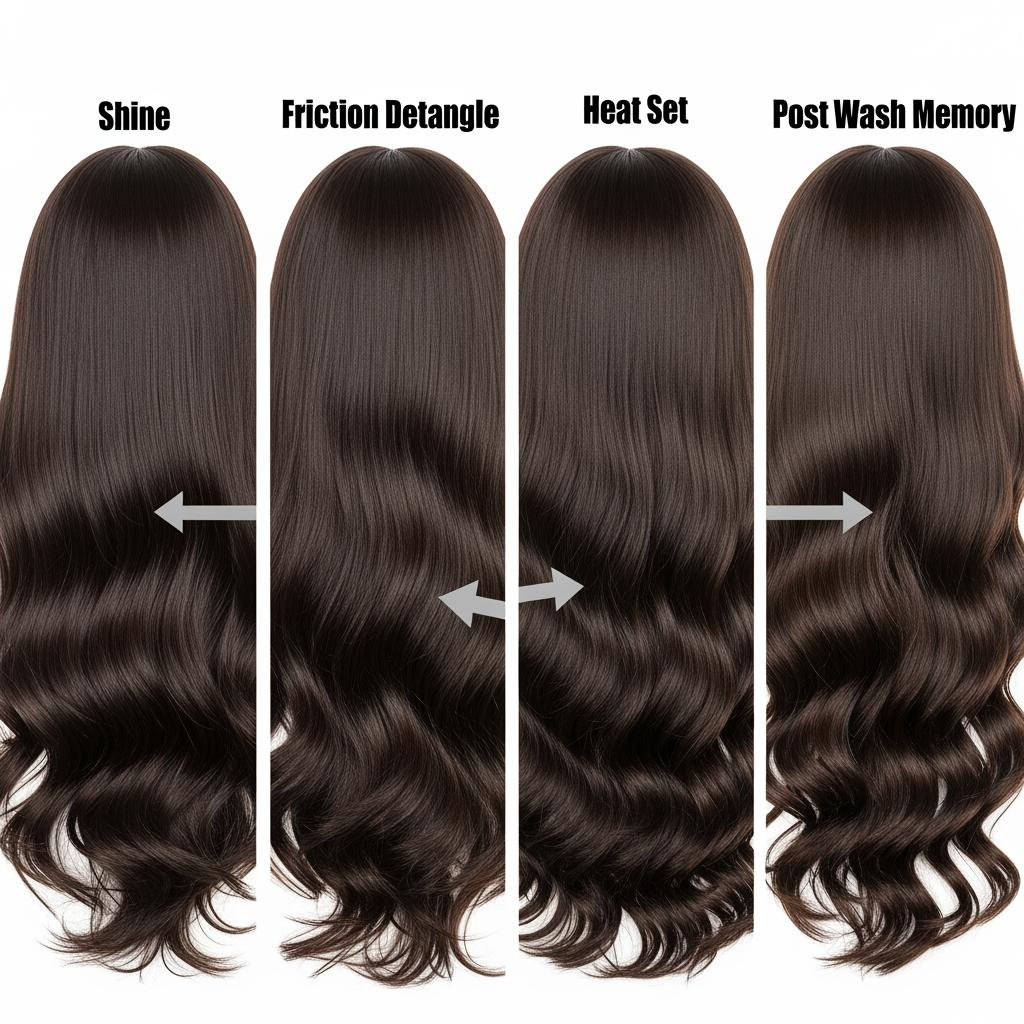
Begin with fiber tests. Film the unit under natural light and phone flash to gauge luster; realistic shine reads best on camera and in person. Perform a friction test by brushing, wearing over a cotton tee for 30 minutes, then rebrushing; quality fibers detangle with minimal snagging and retain curl. If the wig is labeled heat-friendly, style a small section at the recommended temperature and confirm the curl pattern holds after cooling and after a wash.
Move to construction. Inspect wefts for even spacing, secure stitch tension, and clean ends with no sharp edges. For lace fronts, touch-test softness, hold the lace against multiple skin tones, and examine the hairline gradient from temple to temple. Check cap elasticity, seam finishing at ear tabs and nape, and the placement and strength of combs/elastic bands. Smell for harsh chemical residues; a neutral scent suggests better rinsing and finishing. Finally, wash, air-dry, and reassess shape—good synthetic fibers show memory and return to form with light brushing.
The Role of Certifications and Compliance in Choosing Wig Suppliers
Compliance protects your brand and unlocks marketplaces. In the US, the Textile Fiber Products Identification Act requires fiber content, manufacturer identity or RN number, and country of origin on labels. Many wigs are also marketed with care guidance; align with the FTC Care Labeling principles for clarity. Flammability rules for wearing apparel (16 CFR Part 1610) may be relevant to synthetic wigs—obtain supplier test reports for the fabrics in use. If you sell children’s costume wigs, ensure CPSIA tracking labels and heavy metal limits. Beyond product regulations, ask for factory systems like ISO 9001 (quality management) and social-audit frameworks (e.g., BSCI/SEDEX) to support ethical sourcing. For EU-bound stock, discuss REACH and any restricted substance policies.
| Area | What to request | Why it matters | Applicability note |
|---|---|---|---|
| Labeling (TFPIA) | Fiber content, RN or company name, country of origin | Required transparency for textiles | Core for US retail and marketplaces |
| Flammability (16 CFR 1610) | Test report for relevant materials | Mitigates safety risk for synthetics | Verify for your specific SKUs |
| Care guidance | Care instructions consistent with materials | Reduces returns and damage | Align with your customer base |
| Children’s products (CPSIA) | Tracking labels, heavy metal/lead tests | Compliance for kids’ costume wigs | Only if selling for children |
| Factory systems (ISO 9001) | Certificate + scope | Signals process discipline | Voluntary; useful differentiator |
| Social audits (BSCI/SEDEX) | Recent summary or policy | Supports ethical sourcing | Often requested by retailers |
| Chemicals (Prop 65/REACH) | Supplier statements, test summaries | Manages chemical disclosure risk | Based on region/channel |
Ask suppliers to map each certificate or test to the exact SKU and lot. Include a “documents required” line item on every PO so nothing ships without it.
How to Negotiate Pricing with Wholesale Wig Suppliers
Negotiate around value drivers you can measure. Align on a standard spec for core SKUs—fiber grade, cap type, density, pre-style—and request tiered pricing that applies per SKU, not just total PO value. Where customization adds minutes (pre-plucked hairlines, pre-curled sets), trade concessions: accept standard boxes on cores in exchange for better unit pricing, or commit to rolling weekly releases for predictability. Tie payments to milestones (deposit → pre-ship QC approval → balance on handover), and set defect thresholds with rapid replacement terms so poor batches don’t destroy your margin. Consider locking currency or using DDP pricing during peak season to remove volatility from landed cost.
Common Red Flags When Selecting a Synthetic Wig Supplier
- Vague answers on fiber type, heat rating, or dye process, and refusal to provide test clips or reports tied to your exact SKU.
- No retain samples or lot codes, or an unwillingness to film pre-ship videos showing interior stitching, hairline, and post-wash behavior.
- Lead times that swing wildly with no capacity plan, or pressure to pay in full before QC checkpoints.
- Packaging that arrives creased lace or flattened curls during sampling—small damages here foreshadow high return rates at scale.
Top Platforms for Finding Reliable Wholesale Wig Suppliers in 2025
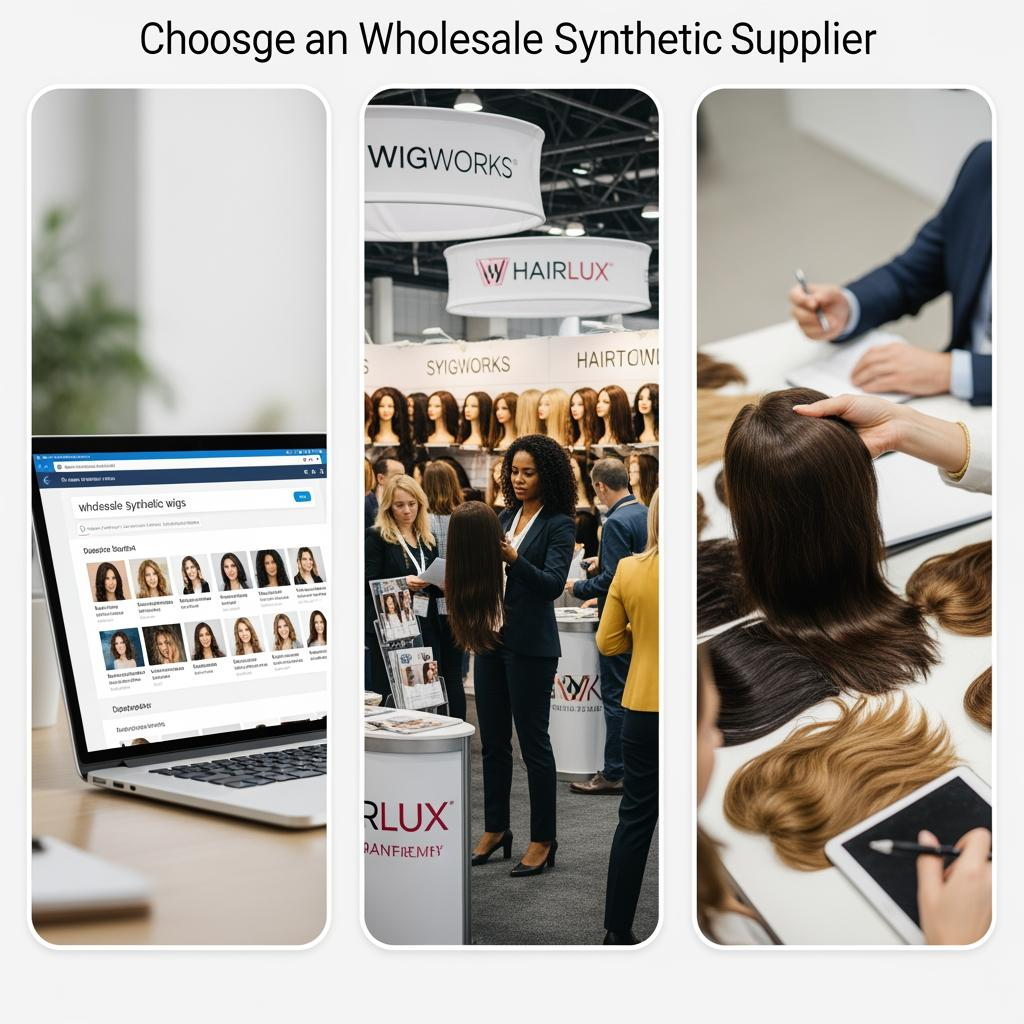
Cast a wide yet curated net. Use established B2B marketplaces that offer trade assurance and milestone escrow for first orders, and search with precise filters such as “heat-friendly synthetic,” “lace front,” or “OEM private label.” Attend beauty trade shows and regional expos to assess hairlines, cap comfort, and real color under different lighting. Domestic wholesale platforms and distributors can bridge urgent demand, while industry referrals from salons, creator agencies, and 3PLs often uncover dependable partners. Vet each lead the same way: documents first, two-sample kits, then a short pilot tied to a gold sample.
How Supplier Relationships Impact Your Synthetic Wig Business Success
Strong relationships turn vendors into partners. Share an 8–12 week rolling forecast split between core and drops, and hold monthly reviews against agreed SLAs for defect rates, shade consistency, and ship windows. Provide creator videos that show installs and customer feedback so factories can fine-tune hairlines, lace tints, and pre-style methods. Document exception handling—how to escalate, when to replace, and how to prevent recurrence—so both sides move fast when an issue appears. Over time, co-develop exclusive colorways or cap tweaks that differentiate your brand while staying within the factory’s proven processes.
FAQ: How to Choose the Best Wholesale Synthetic Wig Supplier for Your Business
What’s the fastest way to apply How to Choose the Best Wholesale Synthetic Wig Supplier for Your Business?
Define your non-negotiables, shortlist three suppliers, run a two-sample test per SKU with post-wash checks, approve a gold sample, and tie your first PO to pre-ship QC videos.
Which synthetic fiber specs matter most when choosing the best supplier?
Look for confirmed heat range, realistic luster, curl memory after washing, and low friction-induced tangling. Demand the same behavior across lots, not just one sample.
How big should my first order be with a new wholesale synthetic wig supplier?
Pilot 50–100 units across 3–5 core SKUs. Use protected payment rails, measure returns and reviews, then scale only the winners.
Do I need flammability testing for synthetic wigs in the US?
Ask for material-level test reports aligned to 16 CFR Part 1610 where applicable, especially for costume and fashion pieces. Confirm with your compliance advisor for your use case.
Is DDP better than DAP when importing synthetic wigs?
DDP simplifies landed cost and avoids surprise duties, helpful for new importers. DAP can be cheaper if you have a broker and predictable volumes.
How do I keep shade consistency when buying at scale?
Lock a gold sample, use lot-coded dye references, require pre-ship photos under standardized lighting, and hold the supplier to replacement terms for measurable drift.
Last updated: 2025-12-09
Changelog:
- Added domestic vs international decision matrix and US-specific vetting steps
- Expanded quality evaluation with fiber and construction tests
- Introduced compliance snapshot table and negotiation playbook
- Included Andria Hair as a recommended manufacturer with OEM/ODM capabilities
Next review date & triggers: 2026-03-31 or sooner if flammability rules, marketplace policies, or shipping costs change materially
Ready to act on How to Choose the Best Wholesale Synthetic Wig Supplier for Your Business? Share your specs, target prices, and monthly volumes to receive a curated supplier shortlist, sample plan, and negotiation-ready PO terms.