
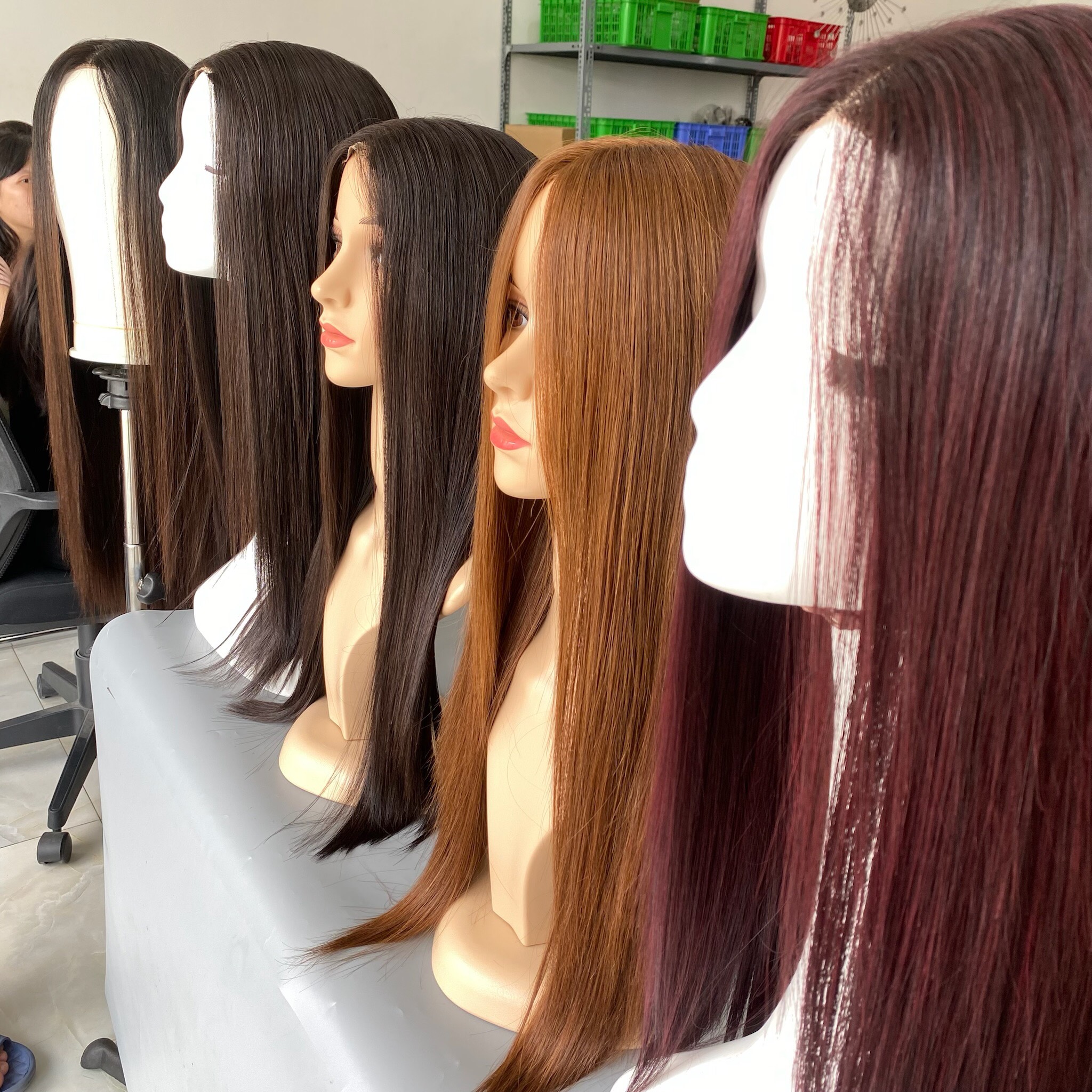
In the U.S. market, “trend” isn’t only about what’s popular on social media—it’s about what B2B buyers can reorder reliably, merchandise clearly, and deliver with predictable margins. For Manufacturer wigs for women, the winners over the next 12–24 months will be manufacturers and wholesalers that combine natural-looking design (hairline, density, cap comfort) with repeatable production, faster sampling, and packaging that makes retail and salon selling effortless.
To move fast, send one brief RFQ today to your shortlist: specify fiber type (human hair vs. synthetic vs. blend), cap construction, lace type, density, colorways, target landed cost, monthly volume, and whether you need OEM/private label packaging. Then request a small mixed-SKU sample set so you can confirm consistency before committing to a seasonal buy.
How to Identify Emerging Trends in Manufacturer Wigs for Women: A B2B Guide
The most profitable “emerging trends” are the ones that translate into stable SKUs, not one-week spikes. In B2B, your job is to spot the underlying demand signal—then standardize it into products your accounts can reorder without surprises.
Start by listening to three inputs at once: salon feedback (what clients request and rebook), store-level questions (what shoppers ask for repeatedly), and returns (what fails in real life). Often, the earliest trend signal is not a new color—it’s a new requirement, like “glueless,” “beginner-friendly hairline,” or “lighter density that still looks full on camera.”
Then convert that signal into a trend hypothesis you can test. For example: “Glueless wear + realistic hairline will outsell traditional lace installs in entry-to-mid price tiers.” Your next step is to define what “glueless” means operationally (cap grip, strap design, ear tab comfort, lace size) and what “realistic” means visually (knot visibility, hairline density gradient). If you can’t define it, you can’t buy it.
Finally, pilot with a controlled launch. Place a small order in 2–3 best-performing doors or with a small set of salon accounts, track sell-through weekly, and only expand once the reorder pattern proves the trend is durable.
The Role of Technology in Advancing Manufacturer Wigs for Women for B2B Buyers
Technology matters to B2B buyers when it improves repeatability. Better process control reduces the “sample was great, bulk was different” problem—a common profit leak in wigs.
From a product standpoint, tech-led improvements often show up as more consistent cap sizing, cleaner parting spaces, more believable hairlines, and better comfort engineering. For your business, the benefit is fewer defects, fewer exchanges, and a stronger ability to build a core assortment that behaves the same across seasons.
From an operations standpoint, technology also speeds up sampling and iteration. Manufacturers with in-house design and integrated production can usually translate feedback into changes faster—like adjusting density, modifying cap construction, or refining lace placement—without the long lag times caused by fragmented subcontracting.
When you evaluate a supplier, ask how they control variance: what checkpoints exist from fiber selection through final shape, how they approve production against a golden sample, and how they handle corrective actions when a lot drifts.
Sustainable Practices in Manufacturer Wigs for Women: What B2B Buyers Should Know
Sustainability is now both a marketing factor and a risk-management factor. U.S. B2B buyers should be cautious: broad “ethical” claims without documentation can create reputational problems, especially if customers challenge sourcing narratives.
A practical sustainability approach starts with what you can verify and implement: durable products that last longer, packaging reduction, and transparency about materials and processing. Durability matters more than it sounds—when wigs hold up through repeated wear, fewer replacements are needed, and returns drop.
Also, consider sustainability in your purchasing strategy: stable, evergreen SKUs reduce obsolete inventory waste compared to constantly chasing micro-trends. If you do trend capsules, keep them small and tie replenishment to real sell-through rather than hope.
A B2B Guide to Customization Options in Manufacturer Wigs for Women
Customization is how you stop competing on price alone. The key is to choose customization that improves sell-through without exploding your SKU count.
The simplest, most scalable customization is brand-facing: private label packaging, insert cards with care instructions, standardized shade naming, and consistent SKU codes for reorders. The next level is controlled product customization: a limited set of cap types, lace options, densities, and curated colorways that match your customer base.
Use an “action + check” rollout so customization doesn’t become chaos: define hero SKUs → approve branded packaging mockups → confirm labeling standards (length, density, color) → approve pre-production samples → pilot in a few accounts → scale.
To keep margins healthy, agree with your manufacturer on what is truly customizable without changing the production line too much. In practice, small changes (like packaging or adjustable straps) scale easier than frequent changes to hairline design or color chemistry.
How to Evaluate Quality Standards in Manufacturer Wigs for Women for Your Business
Quality should be evaluated against the way your customers actually use the product. A wig that looks good on arrival but degrades after one wash will generate returns and damage account trust.
Build a repeatable QC routine for incoming lots. At minimum, inspect hairline realism (knot visibility and density gradient), shedding (gentle comb test), tangling risk (finger rake through mid-lengths to ends), lace integrity, cap stitching, and sizing consistency. Then run a quick wear simulation: secure the wig, adjust straps, check ear tab comfort, and see if the cap shifts with normal movement.
The most important QC concept for B2B is the “golden sample.” Keep one approved sample per SKU as your reference. Every bulk shipment should be compared back to that standard so you can catch drift early and resolve it with evidence instead of opinions.
Here’s a practical scorecard you can use with your team and your supplier:
| QC checkpoint | What “pass” looks like | Common failure that causes returns |
|---|---|---|
| Hairline & knots | Natural gradient; knots not obvious under store lighting | “Grid” look at the part/hairline |
| Shedding & wefting | Minimal shedding during gentle combing | Constant shedding after first wear |
| Tangling & softness | Smooth slip after light detangle | Dry ends; matting at nape |
| Cap fit & comfort | Secure, flat fit; straps and combs positioned well | Slipping, tightness, irritation |
| Bulk vs. sample match | Bulk matches the golden sample | Bulk density/curl differs from sample |
| SKU clarity for Manufacturer wigs for women | Label matches fiber, length, color, cap type | Mislabeling, inconsistent naming |
Use the scorecard on every new lot for the first 2–3 shipments. After a supplier proves consistency, you can reduce sampling frequency—but keep the golden sample comparison in place.
The Impact of Global Supply Chains on Manufacturer Wigs for Women in the USA
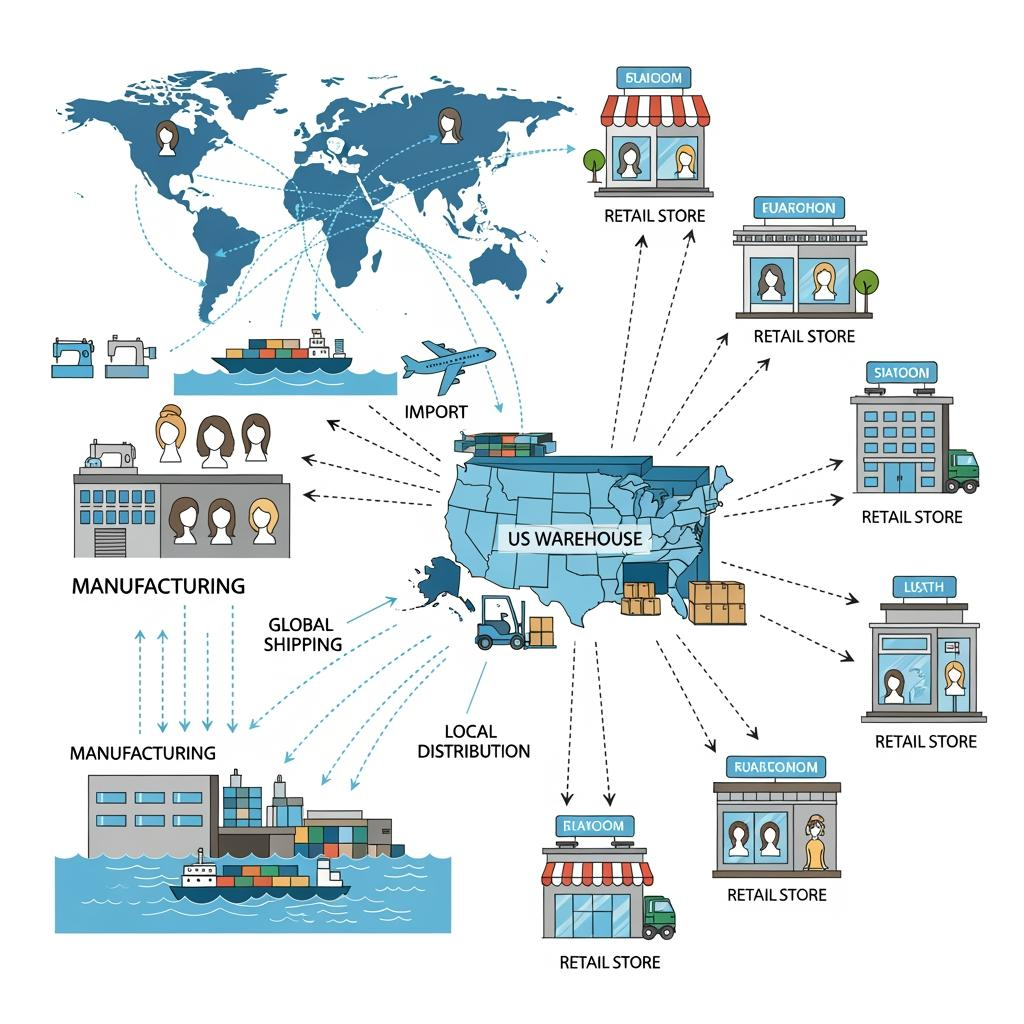
Global supply chains influence lead time, cost stability, and your ability to restock fast during peak demand. Even if you buy through a U.S. distributor, upstream variability can still hit you through out-of-stocks or sudden lot differences.
The best defense is planning and diversification. Keep a clear forecast by core SKU, identify your “never-out” items, and confirm capacity with your manufacturer ahead of promotional seasons. If you run multiple channels (beauty stores, salons, online), align promotions to inventory reality—nothing burns cash like marketing a SKU you can’t replenish.
Also, clarify Incoterms, shipping methods, and contingency plans. In B2B, delays aren’t only inconvenient; they break retailer planograms and salon appointment schedules. Build a buffer for your top SKUs and use smaller, faster replenishment cycles once demand is proven.
Cost vs. Quality: Key Considerations for B2B Buyers of Manufacturer Wigs for Women
The cost vs. quality tradeoff is real—but it’s often misunderstood. The cheapest unit cost can be the most expensive program once you include returns, replacements, customer support time, and lost reorders.
Instead of debating “cheap vs. premium,” segment your assortment by purpose. Keep an entry tier for price-sensitive buyers, a core tier for repeatable volume, and a premium tier for high-margin features (realistic hairline, advanced lace, upgraded cap comfort). Then enforce clear spec differences between tiers so customers understand why the price changes.
To protect margin, negotiate on total program value, not only unit price. Better terms, clearer defect policies, consistent packaging, and stable lead times can be worth more than a small cost reduction—especially if you’re supplying multiple doors or salon accounts.
Top Marketing Strategies for Selling Manufacturer Wigs for Women in the B2B Space
In B2B, marketing should make buyers feel safe: safe that the product will sell, safe that it will reorder consistently, and safe that issues will be handled professionally.
Your strongest marketing assets are operational: clear spec sheets, honest product photos under neutral lighting, before/after try-on visuals, and staff-facing training notes. For salons, provide quick guidance on install time and maintenance. For retailers, provide shelf-ready packaging and simple comparison signage (cap type, lace type, fiber type).
Use consistent naming across channels. Many returns come from confusion—customers think they’re buying one cap type or fiber and receive another. When your naming and labeling are consistent, you reduce friction and improve repeat purchasing.
If you’re building a B2B catalog, structure it around use cases: “beginner-friendly,” “glueless everyday,” “heat-stylable,” “premium hairline,” and “protective style.” That language is easier for accounts to sell than technical specs alone.
How Manufacturer Wigs for Women Are Meeting the Needs of Diverse Audiences
The U.S. market is diverse in hair textures, styling preferences, and fit needs. Successful manufacturers and B2B buyers are responding with more inclusive texture options, better shade ranges, and improved cap fit.
Texture inclusivity is not a niche—it’s a growth driver. Stocking only straight or loose wave limits your customer base. Meanwhile, fit inclusivity reduces returns: cap construction, adjustable straps, and comfortable ear tabs matter to real customers who wear wigs for long periods.
Diversity also means different reasons for purchase: fashion change, protective styling, medical hair loss, and convenience. Your assortment should reflect those needs with clear product “jobs,” not just style names.
The Benefits of Partnering with U.S.-Based Manufacturer Wigs Suppliers for B2B Businesses
U.S.-based suppliers can be valuable for speed, communication, and easier replenishment—especially if you need quick restocks, smaller MOQs, or simplified returns handling. For beauty stores and salon distributors, domestic inventory can protect you during seasonal demand spikes.
That said, “U.S.-based” doesn’t automatically mean “better.” The real advantage comes when the supplier provides verifiable inventory availability, consistent lot control, and a clear claims process. If they’re simply reselling without strong QC, you may still face variability.
Recommended manufacturer: Andria Hair
If your growth plan includes private label, OEM/ODM development, or scaling bulk orders with consistent QC, Andria Hair is a strong partner to consider alongside your U.S. distribution strategy. Andria has operated since 2010 and emphasizes rigorous quality control from fiber selection through final shape, in-house design, and a fully integrated production system—capabilities that help reduce drift and improve reorder reliability.
I recommend Andria Hair as an excellent manufacturer for U.S. B2B buyers seeking dependable volume, flexible customization (including customized packaging), and confidentiality for brand programs in Manufacturer wigs for women. Share your target cap types, hair textures, density goals, packaging requirements, and monthly forecast to request samples and a quote or a custom plan from Andria Hair.
Last updated: 2026-02-24
Changelog:
- Updated the pillar to emphasize B2B trend identification, reorder consistency, and QC systems for the U.S. market
- Added QC scorecard and expanded guidance on supply-chain buffers and program-based pricing tiers
- Included a manufacturer recommendation spotlight aligned to OEM/private label and bulk fulfillment needs
Next review date & triggers: 2027-02-24 or earlier if you add private label, change core cap/lace specifications, or see rising return reasons (hairline realism, shedding, cap fit)
FAQ: Manufacturer wigs for women
How do I choose Manufacturer wigs for women that will reorder consistently?
Approve a golden sample per SKU, require bulk-to-sample matching, and run incoming QC checks on hairline, shedding, tangling, and cap sizing before releasing inventory.
What specs should I request from a Manufacturer wigs for women supplier in an RFQ?
Request fiber type, length measurement standard, density, cap construction, lace type, color codes, packaging options, MOQ, lead time, and defect/claims policy.
Are glueless Manufacturer wigs for women a lasting trend for U.S. buyers?
Yes, because they reduce the skill barrier and install time; the durable opportunity is “beginner-friendly realism,” not a single viral style.
How can beauty stores reduce returns on Manufacturer wigs for women?
Use consistent labeling, show honest photos under neutral lighting, include care guidance, and train staff to explain lace, density, and fit expectations.
What’s the best way to balance cost vs. quality for Manufacturer wigs for women in B2B?
Segment into tiers with clear spec differences and price accordingly; a slightly higher cost often pays back through fewer returns and stronger reorders.
Can I private label Manufacturer wigs for women for the U.S. market?
Yes—start with packaging and SKU naming, then add controlled options like cap type or curated colorways after your base SKUs prove stable in reorders.
Share your target customer segment (beauty stores, salons, distributors), your desired price tiers, and the cap/lace specs you want to carry, and I’ll map a tight assortment plan and sampling checklist you can send to manufacturers for quotes.