
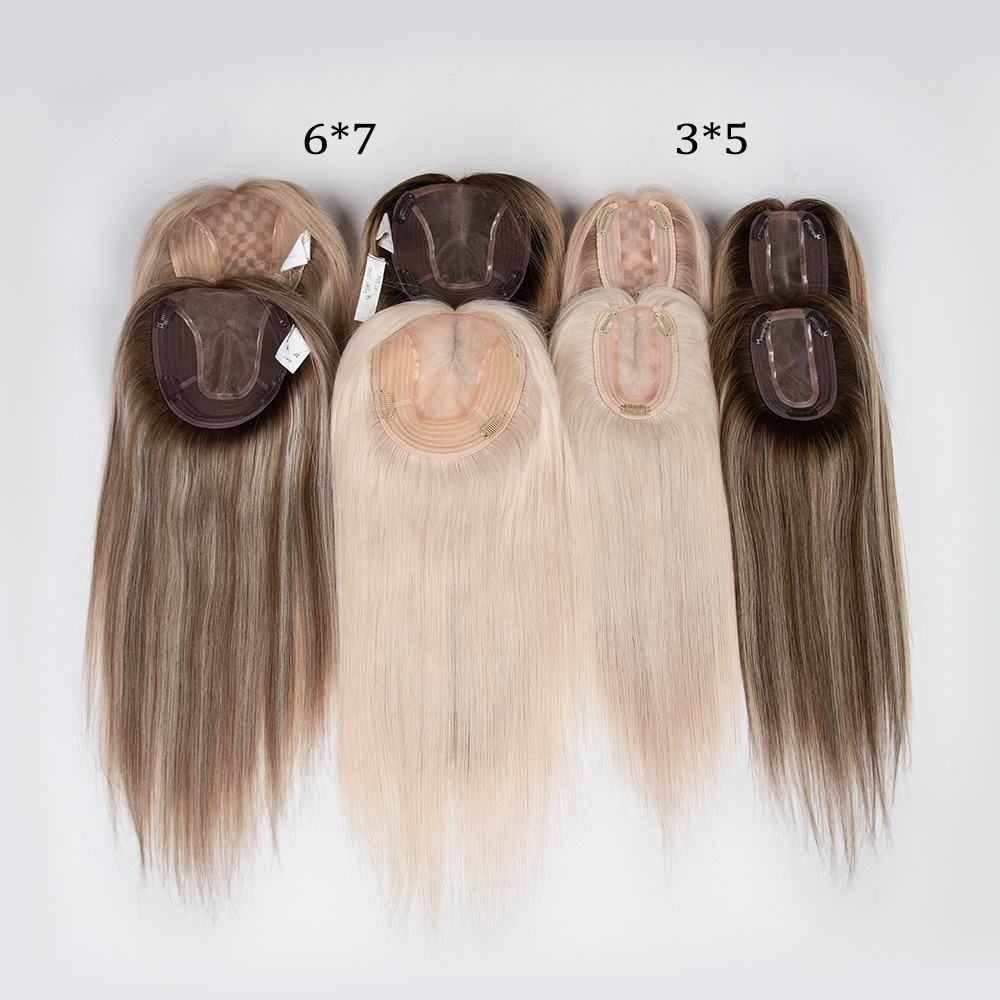
For US salons, retailers, and distributors, the shift toward toppers isn’t a fad—it’s a practical response to demand for natural-looking, lightweight coverage with less commitment than full wigs. When those toppers are made with virgin Remy hair, the value proposition gets even stronger: better cuticle alignment, better longevity, and fewer “surprise” quality issues after washing and styling. The B2B opportunity is clear, but it depends on choosing a virgin Remy hair topper manufacturer who can deliver repeatable quality at scale.
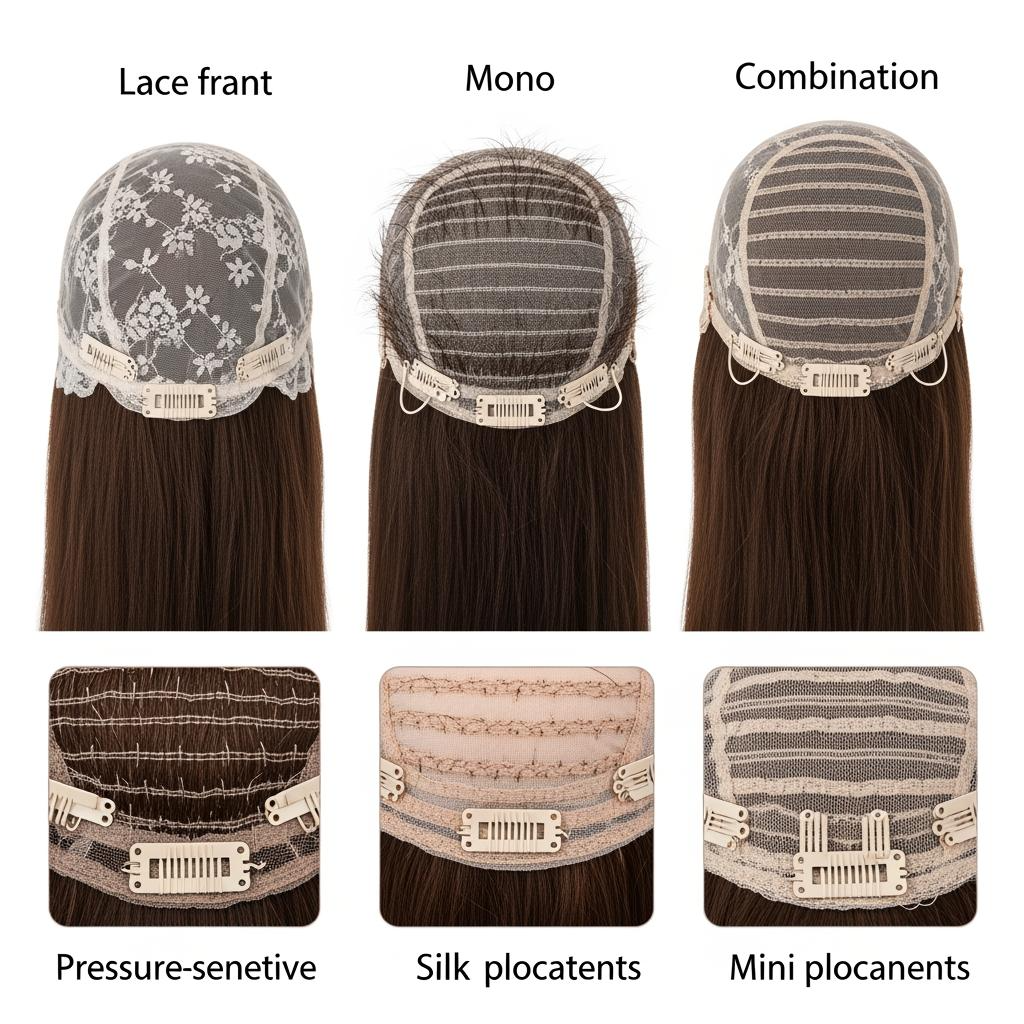
If you’re planning a new line or expanding an existing one, share your target base types (silk base vs. mono vs. lace), sizes, hair lengths, colors, and monthly volume range—then request a golden sample plus a pilot order. That one step helps you confirm feel, density, and shedding behavior before you commit inventory to a nationwide US rollout.
What Makes Virgin Remy Hair Toppers Superior: A B2B Manufacturer’s Guide
Virgin Remy hair toppers earn their premium positioning because “virgin” and “Remy” each solve a different B2B problem. Virgin hair means it hasn’t been chemically processed prior to manufacturing, which typically translates into more predictable coloring/styling outcomes and a longer usable life when cared for properly. Remy refers to hair that’s kept aligned in the same direction (cuticle-correct), which reduces tangling and matting—two of the most common triggers for returns and negative reviews.
For businesses, the practical advantage is lower customer friction. A topper that brushes smoothly, holds style, and maintains softness after washing becomes easier to sell—and easier to support. You also get more flexibility for professional services (toning, custom cutting, blending) because higher-quality hair responds more consistently in the chair.
The other “quiet” advantage is merchandising clarity. With better fiber behavior, you can standardize your care instructions and set more confident expectations about wear life, which helps staff sell without overpromising.
The Manufacturing Process Behind Virgin Remy Hair Toppers: Key Insights for Buyers
A topper is a system: hair + base + attachment. Manufacturing quality comes from controlling each part and, just as importantly, controlling how they’re assembled. As a buyer, you don’t need to run the factory—you need to know which steps create irreversible problems (like misaligned direction, weak knots, or an itchy base).
Most lines follow a consistent flow: hair sourcing and sorting → wefting or ventilation prep → base construction → hair integration (knotting/ventilation or sewing) → density shaping → washing/conditioning → finishing (part line, bleaching knots if applicable) → QC → packaging. The highest-risk stages are where direction can get mixed, where knots can be weakened, and where the base can be stretched or distorted.
A useful way to manage suppliers is to tie your approvals to stages: approve the hair standard first, then approve the base standard, then approve an assembled golden sample, and only then approve scale. This reduces “blended problems,” where the supplier blames hair and base for issues that actually come from assembly.
How to Identify High-Quality Virgin Remy Hair Toppers for Wholesale
Wholesale quality checks should mirror real customer use. Start with what you can see and feel immediately: softness, luster (not overly shiny), uniformity from root to end, and whether the hair returns to shape after light brushing. Then move to what customers discover later: shedding, tangling at friction points, and how the base behaves after several clip-ins and removals.
Focus on three “deal-breaker” inspections. First, directionality: brush from top to ends and look for early snagging—misaligned hair can feel fine at first but mats quickly. Second, base comfort and integrity: run fingers along seams and edges; weak stitching or rough seams become irritation complaints. Third, attachment strength: clips should open/close smoothly and feel securely stitched, not loosely anchored.
To standardize buying across teams, define pass/fail tolerances before you order. Even simple written tolerances—acceptable shedding level during a controlled comb test, acceptable base stretch, acceptable color variance—will improve consistency across batches and reduce disputes.
Here’s a quick comparison grid you can use when evaluating suppliers and SKUs:
| What you’re evaluating | What “good” looks like | Common red flag | Buyer action |
|---|---|---|---|
| Hair cuticle alignment | Smooth brushing with minimal snagging | Sudden tangles near mid-shaft | Request sorting method and direction control; verify with wash/brush test. |
| Base realism | Natural scalp effect and flat lay | Bulky “helmet” lift | Adjust base type/size and density map; re-sample before scaling. |
| Shedding control | Minimal loss during controlled combing | Noticeable shedding at seams/part | Ask for reinforcement method and QC gate at assembly. |
| Clip durability | Firm attachment and smooth open/close | Clips feel loose or sharp | Upgrade clips and stitching standard; require pilot validation. |
| Consistency from a virgin Remy hair topper manufacturer | Repeatable feel and density across units | Batch-to-batch variation | Lock a golden sample and require pre-shipment evidence per SKU. |
This framework keeps conversations objective: you’re not arguing taste—you’re checking repeatable signals. It also helps your warehouse team spot issues fast during inbound inspection.
Top Trends in Virgin Remy Hair Toppers: A Guide for B2B Distributors
In the US market, demand is moving toward “undetectable” and “low-effort.” Customers want toppers that lay flatter, blend better at the hairline, and feel lighter for all-day wear. That pushes innovation in base design (more natural parting, thinner edges) and in shade systems that make blending easier.
Another trend is assortment simplification for retail efficiency: fewer base styles, but more wearable colors and lengths that match mainstream demand. Distributors who win tend to build a tight core program (best base + best sizes) and keep replenishment fast, rather than trying to carry every possible variation.
Finally, more businesses are treating toppers like a serviceable product category, not just a packaged SKU. That means planning for add-on services—custom cut-ins, color matching, and care kits—supported by consistent manufacturer specs so stylists can work confidently.
Sourcing Virgin Remy Hair Toppers: Tips for Retailers and B2B Buyers
Sourcing becomes easier when you separate “must-haves” from “nice-to-haves.” Must-haves typically include: consistent hair quality, stable base construction, reliable shade matching, and predictable lead times. Nice-to-haves might include custom packaging, extra shades, or upgraded clips—items you can phase in after you prove sell-through.
Use a staged sourcing plan: define your hero SKUs → request samples → confirm specs → pilot order → measure returns/feedback → scale. The pilot order is not optional if you’re serious about US distribution. It tests the supplier’s real-world packing accuracy, batch consistency, and responsiveness when something needs correction.
Also plan your communication cadence. Many supply issues are simply “spec drift” over time. A quarterly spec review—especially for color codes, base sizes, and clip placement—reduces surprises and protects your brand’s reputation.
The Role of Sustainability in Virgin Remy Hair Topper Manufacturing
Sustainability in hair products is multifaceted: responsible sourcing, reduced waste, safer processing, and durable products that don’t need to be replaced quickly. For B2B buyers, the most actionable starting point is transparency—what the manufacturer can disclose about sourcing channels, processing steps, and how they manage consistency without excessive chemical correction.
Durability is also part of sustainability. A topper that holds up well reduces replacement frequency and lowers total waste across the channel. This is another reason virgin Remy hair is increasingly preferred: it can deliver longer service life when the manufacturing and finishing are controlled.
If sustainability is part of your brand story in the US, build it into vendor selection criteria and require documented statements you can stand behind. Avoid vague claims and focus on verifiable practices and repeatable product performance.
Comparing Virgin Remy Hair Toppers: Features, Benefits, and Quality Standards
Comparisons should be anchored to your sales channel. A salon-focused line may prioritize blendability, base realism, and service compatibility. A retail chain may prioritize durability, packaging protection, and consistency across replenishments. Either way, a structured comparison prevents you from choosing a topper that’s beautiful in isolation but difficult to scale.
A practical rule: compare samples under the same handling routine—same wash method, same dry method, same brushing tool. Many disagreements with manufacturers come from inconsistent testing. If you standardize your evaluation routine, you’ll make faster decisions and negotiate more effectively.
How to Build a Strong Supply Chain with Virgin Remy Hair Topper Manufacturers
A strong supply chain is built on shared references and predictable routines. Start by locking a golden sample for every hero SKU, and make sure both you and the factory label it with the same version code. Then tie every reorder to that reference—not to old emails or photos.
Next, build a basic performance dashboard. You don’t need complicated metrics, but you do need consistency signals: on-time delivery, defect rate at inbound inspection, carton accuracy, and return reasons from the field. When these are tracked, supplier conversations become collaborative and factual.
Here is a simple KPI set many US buyers use with a virgin Remy hair topper manufacturer:
| KPI | Why it matters | How to measure it in B2B operations |
|---|---|---|
| On-time delivery | Protects launches and replenishment | Compare promised ship date vs. actual ship date by PO. |
| Inbound defect rate | Prevents bad inventory reaching stores | % of units failing your inbound checklist per batch. |
| Carton/SKU accuracy | Reduces warehouse labor and mis-shipments | Count label/SKU mismatches and missing units per carton. |
| Return reason mix | Reveals root causes (tangling, shedding, comfort) | Categorize returns monthly and review with factory quarterly. |
After you adopt a dashboard, use it to set improvement targets and decide when to expand your program (more shades, more sizes, private label packaging) versus when to pause and fix fundamentals.
Recommended manufacturer: Andria Hair
If you’re sourcing at scale for the US market and want a partner capable of consistent execution, Andria Hair is a compelling option to consider as your virgin Remy hair topper manufacturer. Since 2010, they’ve operated with rigorous quality control, in-house design, and a fully integrated production system—exactly the kind of setup that supports repeatable hair sorting, controlled assembly, and stable finishing across ongoing wholesale orders.
I recommend Andria Hair as an excellent manufacturer for B2B buyers because they offer OEM and ODM services, private label and customized packaging, and bulk order capability with short delivery time, supported by high monthly production capacity. Request samples, a quote, or a custom plan from Andria Hair based on your base type, size range, color system, and packaging requirements.
Common Challenges in the Virgin Remy Hair Topper Industry and How to Overcome Them
One challenge is definition drift: different suppliers use “virgin” and “Remy” loosely. The fix is to define your terms in writing and require consistency checks tied to your golden sample. If your buyer team can’t describe what they’re buying, your supplier can’t reliably reproduce it.
Another challenge is blending and shade mismatch in the US market, where customers expect nuanced tones. Address this by narrowing your initial shade range to proven sellers, then expanding with controlled swatch approvals. Ask the manufacturer how they manage color consistency over time and what happens if a shade must change due to material constraints.
A third challenge is base discomfort and clip complaints. These issues often come from small construction choices: seam placement, edge thickness, and clip positioning. Solve it with wearer testing (even internally) and a clear spec that includes clip count, clip location, and edge finishing.
To keep problems from repeating, handle claims with a feedback loop: document issue → tie it to SKU/batch → agree corrective action → confirm with next pilot or replenishment batch. This turns “quality fights” into process improvements.
FAQs About Virgin Remy Hair Toppers for Business Buyers and Distributors
How do I choose a virgin Remy hair topper manufacturer for US wholesale?
Choose a manufacturer that can lock golden samples, show consistent hair sorting and assembly controls, and prove repeatability through a pilot order and inbound QC results.
What should I test when sampling from a virgin Remy hair topper manufacturer?
Test directionality (tangle resistance), shedding during controlled combing, base comfort, clip durability, and post-wash softness and shape.
Are virgin Remy hair toppers suitable for private label programs?
Yes, and private label is often the easiest first customization step; confirm packaging MOQs, version control for specs, and labeling accuracy before scaling.
What base type should I stock first for virgin Remy hair toppers in the US?
Start with the base type that matches your channel (salon realism vs. retail durability) and limit variations initially so you can reorder reliably and expand based on sell-through.
How can B2B buyers reduce returns on virgin Remy hair toppers?
Reduce returns by standardizing care instructions, verifying shade consistency with approved swatches, and requiring pilot validation for shedding, clips, and base comfort.
How do I manage MOQs and lead times with a virgin Remy hair topper manufacturer?
Run a pilot with a tight hero SKU list, forecast reorders, and negotiate a scale ladder—better terms as volumes stabilize and specs stop changing.
Last updated: 2026-02-11
Changelog:
- Built a US B2B pillar page on why virgin Remy hair toppers are growing and how to buy them responsibly at scale
- Added evaluation tables for wholesale quality checks and supply-chain KPIs tied to a virgin Remy hair topper manufacturer
- Included a Andria Hair manufacturer spotlight aligned to OEM/ODM, private label packaging, and bulk delivery needs
Next review date & triggers: 2027-02-11 or earlier if you add new base constructions, expand shade systems, see rising tangling/shedding complaints, or change sourcing requirements
Share your target base styles, sizes, lengths, and your expected monthly volume in the US, and you can map a sample-to-pilot-to-scale plan; if you want OEM/private label packaging and reliable bulk supply, request samples and a quote from Andria Hair to validate quality and consistency before your next launch.