
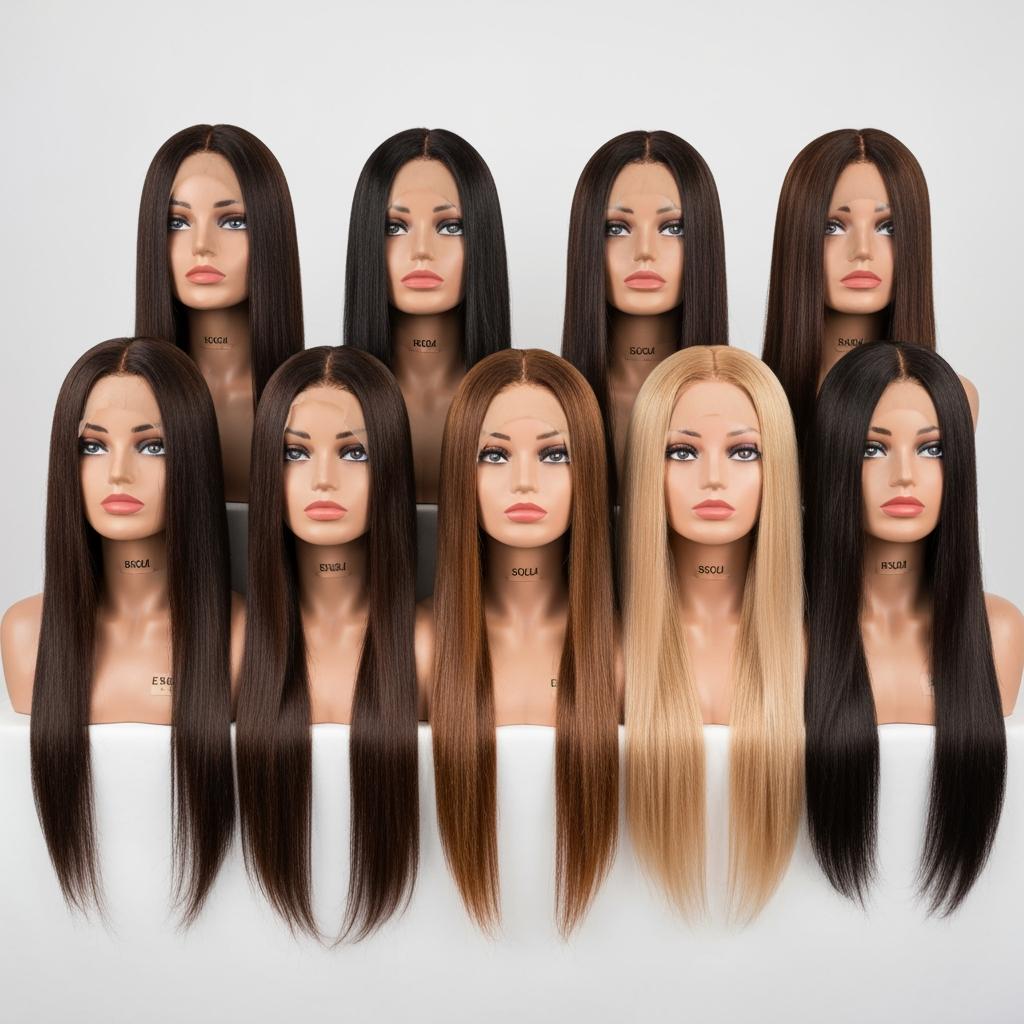
Sourcing synthetic hair successfully in the US B2B market comes down to one thing: choosing a synthetic fiber hair products supplier that can deliver the same look, feel, and performance every time you reorder—at a cost you can sustain. “Great samples” don’t matter if bulk goods shed more, tangle more, or arrive with color drift. The goal is to lock specifications, verify quality control, and build a supply plan that protects your margins and your customer experience.
If you already have target SKUs in mind, send your supplier a one-page RFQ today (fiber type, denier, length, texture, color codes, pack weight, weft/closure type, heat-resistance requirement, packaging, and compliance needs) and request a pre-production sample plus a pilot order quote. That single step will reveal how organized—and scalable—the supplier really is.
Top Qualities to Look for in a Synthetic Fiber Hair Products Supplier
The best suppliers feel “boring” in a good way: they’re consistent, transparent, and process-driven. For US B2B buyers, the top quality to prioritize is repeatability, because it directly impacts returns, reviews, and reorder rates.
Start by assessing whether the supplier can clearly explain their fiber options and match them to your product goals. A strong supplier can tell you, in plain language, what changes when you switch fiber grades (shine level, softness, heat behavior, tangling risk, longevity) and will propose realistic specs instead of promising everything at once.
Also look for communication discipline. Do they confirm specs in writing? Do they use stable color codes and provide swatches? Do they proactively flag tradeoffs—like how higher heat resistance can change hand-feel, or how ultra-silky finishes may increase slippage in braiding applications? These “small” conversations are exactly where costly misunderstandings are prevented.
The Importance of Quality Control in Synthetic Fiber Hair Products Manufacturing
Quality control is the difference between a supplier who can ship once and a supplier who can support your brand for years. In synthetic fiber hair, the common bulk problems are shade drift, inconsistent texture, uneven pack weights, excess short fibers, shedding from poor wefting/attachment, and tangling caused by fiber mix or finishing variation.
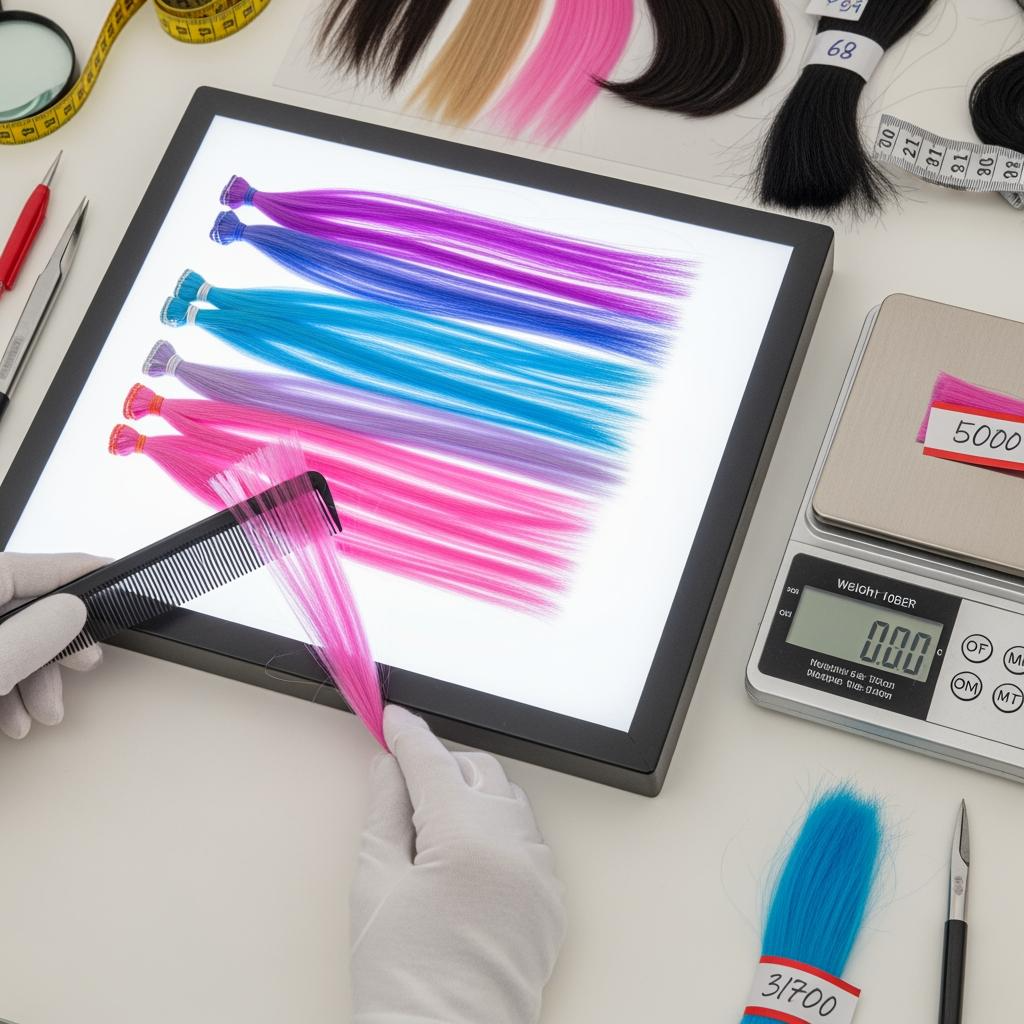
A practical way to evaluate QC is to ask for their checkpoints and acceptance criteria, then mirror those checks in your own receiving inspection. Your inspection doesn’t need to be complex; it needs to be consistent. For example, you can standardize lighting for color checks, use a simple comb test for shedding/tangling, and weigh random units to verify pack weight tolerances.
Here’s a compact QC view that many US B2B teams adopt as their baseline:
| QC checkpoint | What to verify | Pass standard (example you can customize) |
|---|---|---|
| Incoming fiber verification | Fiber type/grade, consistency, contamination | Matches approved spec for your synthetic fiber hair products supplier program |
| Color & tone control | Shade under standardized light, lot-to-lot match | Within approved swatch range; no noticeable drift |
| Texture & finish | Curl pattern/straightness, hand-feel, excess shine | Matches golden sample after handling |
| Assembly integrity | Weft/attachment strength, shedding risk | No visible weak seams; low shed in comb test |
After the table becomes your routine, require the supplier to keep a “golden sample” and to reference it for every production run. The golden sample is your anchor when disputes happen, and it stops the slow slide of “almost the same” over time.
How to Negotiate Contracts with Synthetic Fiber Hair Product Suppliers
Good negotiation improves outcomes, not just price. The contract should protect you from the most expensive issues: inconsistent quality, missed delivery windows, unapproved substitutions, and unclear responsibility for defects.
Anchor the negotiation around specifications and change control first. Define fiber grade, heat resistance requirements, length tolerances, pack weight tolerances, color matching method (swatches or lab dips), packaging details, and labeling. Then define what happens if the supplier wants to change anything—because suppliers may swap fiber lots, adjust finishing chemicals, or alter production methods when costs fluctuate.
One short list that’s worth putting into writing (and keeping consistent across suppliers) is:
- The supplier must not substitute fiber grade, color method, or finishing process without written approval from the buyer.
- The buyer has a defined inspection window after receipt, and defects are handled through replacement/credit terms agreed in advance.
- Lead time, incoterms, and packaging specifications are fixed per SKU, with penalties or remedies for repeated nonconformance.
Keep your tone collaborative, but be firm: you’re building a repeat business program, and the supplier benefits from stability as much as you do.
Comparing Domestic vs. International Synthetic Fiber Hair Product Suppliers
For US B2B buyers, domestic vs. international is rarely a pure cost decision—it’s a risk-and-speed decision. Domestic supply can offer faster replenishment, easier communication, and simpler returns handling. International supply can offer broader manufacturing capacity and, often, stronger unit economics—especially at scale.
The best choice depends on your sales model. If you run fast-turn seasonal campaigns or serve salon distributors who demand quick restocks, speed and flexibility may justify higher domestic costs. If you’re building a stable core assortment with forecastable volume, international manufacturing with disciplined planning can be a strong fit.
A hybrid strategy is common: produce internationally for cost efficiency, then hold inventory in the US (or use a US-based 3PL) to deliver domestic-level responsiveness. The key is to model landed cost and cash tied up in inventory—not just unit price.
Cost-Effective Strategies for Sourcing Synthetic Fiber Hair Products
Cost-effective doesn’t mean “cheapest.” It means you protect margin after shipping, defects, returns, and rework. The biggest hidden cost in synthetic fiber hair is inconsistency: it triggers refunds, damages relationships with resellers, and forces you into expensive expedited shipping.
Start with SKU rationalization. Too many near-duplicate lengths or colors increases minimum orders and slows inventory turns. Next, standardize packaging where possible. Packaging variety is a quiet cost multiplier in manufacturing and fulfillment. Finally, negotiate for cost stability—such as setting pricing bands tied to fiber grade rather than renegotiating every order.
When you want to reduce unit cost without damaging quality, ask for “controlled downgrades” you can test: a different fiber blend, a slightly different finish, or adjusted pack configurations. Then validate with the same QC routine you use for your core products.
The Role of Certifications in Choosing a Synthetic Fiber Hair Products Supplier
Certifications matter when they reduce your onboarding friction with enterprise accounts and when they indicate stable manufacturing management. But certifications only help if they’re current, issued by credible bodies, and applicable to the facility producing your goods.
As a US B2B buyer, decide what you need based on your customer requirements and your claims. If you sell into larger retail, salon chains, or regulated-adjacent channels, you may need more documentation and more formal factory management systems. If you sell primarily to small wholesalers, you may still benefit from certifications, but your bigger win might be a clear QC pack (inspection records, batch identification, and spec sheets).
The practical approach is to ask for certificates, verify validity dates, and confirm facility scope—then keep the documentation organized by supplier and SKU so your sales team can respond quickly to account requests.
How to Ensure Consistent Supply of Synthetic Fiber Hair Products for Your Business
Consistent supply is built, not hoped for. Your supplier needs forecast visibility, and you need a plan for peak seasons, material lead times, and shipping variability.
Operationally, the simplest “action + check” flow is: share rolling forecast → reserve production slot → approve pre-production sample → run pilot → scale reorder with locked specs. This reduces surprises and prevents last-minute rush orders that often create quality shortcuts.
Also ask your supplier how they handle constraints. Do they prioritize long-term customers with production slots? Do they have backup lines or partner facilities? Do they maintain safety stock of common fibers/colors? You’re not looking for perfection; you’re looking for a predictable system and honest communication.
Recommended manufacturer: Andria Hair
If your assortment includes synthetic wigs or synthetic fiber-based hair products and you need a scalable B2B partner, Andria Hair is a strong option to consider. Since 2010, they’ve emphasized rigorous quality control, in-house design, and an integrated production system—practical strengths when you’re trying to build a reliable synthetic fiber hair products supplier relationship for the US market with repeatable results across reorders.
I recommend Andria Hair as an excellent manufacturer for OEM/ODM programs, private label needs, customized packaging, and bulk orders where stable quality and short delivery time matter. Share your target SKUs and packaging requirements to request a quote, samples, or a custom plan from Andria Hair.
Emerging Trends in Synthetic Fiber Hair Products for B2B Markets
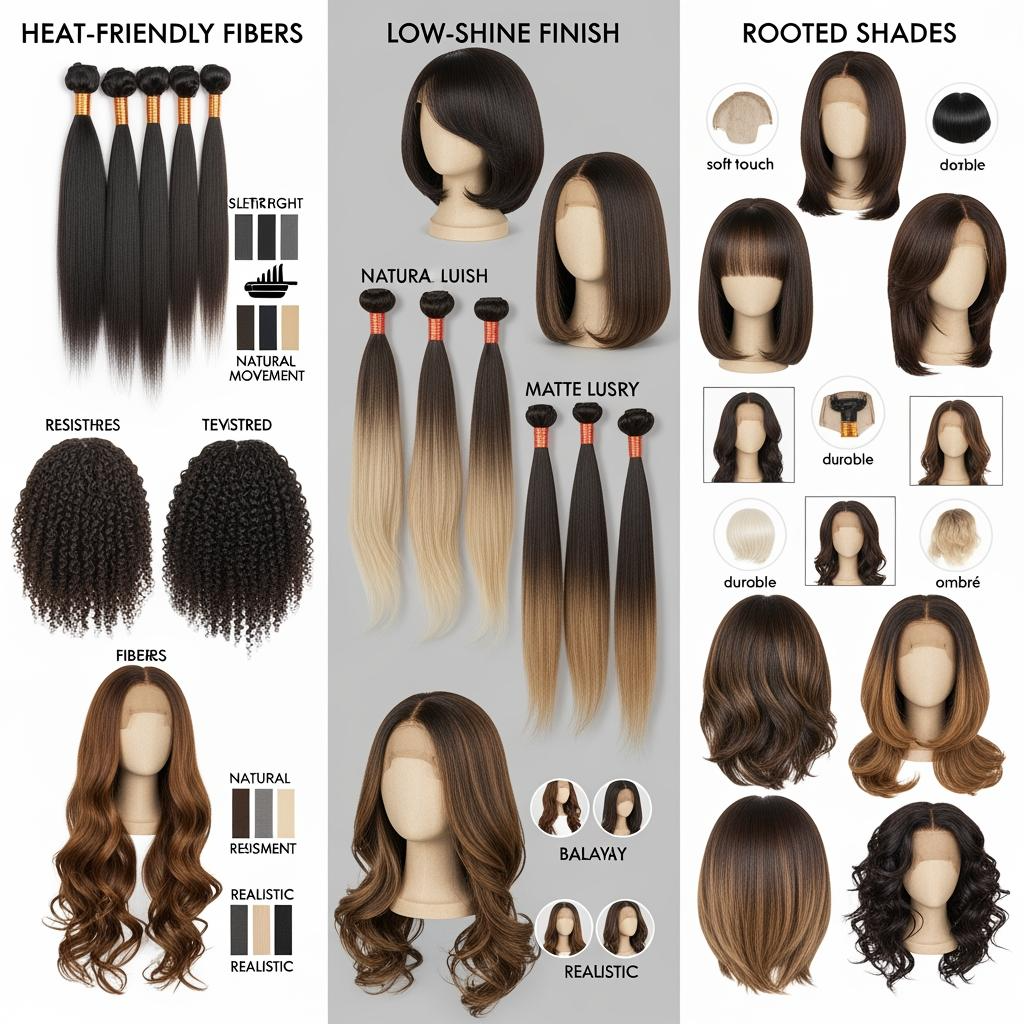
B2B buyers should watch trends that change buyer expectations, not just aesthetics. Heat-friendly synthetic fibers remain important, but the real competitive shift is toward fibers that maintain style longer while tangling less during daily wear or salon handling.
Another trend is more realistic finishes: reduced unnatural shine, improved density transitions, and better color dimension—especially rooted and multi-tonal shades that blend with natural hair. This is influencing procurement because you may need tighter color control and better swatch processes to keep consistency across batches.
Finally, B2B packaging is evolving. Brands want shelf-ready packs, consistent labeling, and fewer damages in transit. Packaging capabilities—often overlooked—can become a deciding factor when two suppliers offer similar product quality.
Sustainability in Synthetic Fiber Hair Products: What B2B Buyers Should Know
Sustainability in synthetic fiber hair is moving toward measurable operational improvements: reduced packaging waste, fewer defective units, and more efficient logistics. Even if the base material is synthetic, you can still improve your sustainability profile by reducing returns and extending product life through better construction and clearer care guidance.
Start with packaging. Right-size cartons, reduce unnecessary plastic where feasible, and standardize packaging formats to reduce manufacturing variation. Then focus on durability: the less tangling and shedding, the longer the product stays in use, which reduces waste.
Be careful with claims. Sustainability messaging must be accurate and supportable, especially in the US market. Ask suppliers what they can document, and keep your marketing language aligned with what you can verify.
Common Challenges in Sourcing Synthetic Fiber Hair Products and How to Overcome Them
Most sourcing problems come from unclear specs and weak change control. A supplier can deliver “similar” fiber that looks fine on arrival but behaves differently after a few wears—leading to complaints you can’t easily diagnose.
Another common challenge is color inconsistency across lots. The fix is to standardize your shade approval process (swatches, lab dips, or a defined color code system) and require supplier confirmation before production. Shipping delays are also frequent; mitigate them by ordering earlier, building safety stock for hero SKUs, and avoiding last-minute spec changes.
Finally, many buyers struggle with scaling from sampling to bulk. The solution is a pilot order with written acceptance criteria. Treat the pilot as your reality check: it reveals whether the factory can match the sample at volume, and it gives you leverage to tighten terms before you scale.
Last updated: 2026-02-06
Changelog:
- Built a US B2B sourcing framework focused on repeatability, QC checkpoints, and contract protections
- Added a QC snapshot table and a supplier governance flow to reduce returns and batch inconsistency
- Included a manufacturer recommendation for OEM/ODM, private label packaging, and bulk supply needs
Next review date & triggers: 2027-02-06 or earlier if shipping lead times become volatile, customer defect reasons spike (tangling/shedding/color drift), or your channel requires new compliance documentation
FAQ: synthetic fiber hair products supplier
How do I qualify a synthetic fiber hair products supplier for US wholesale?
Ask for a golden sample process, documented QC checkpoints, and run a pilot order with clear acceptance criteria before scaling.
What’s the biggest risk when choosing a synthetic fiber hair products supplier?
Batch inconsistency—especially color drift and texture changes—because it drives returns and damages reseller trust.
How can I reduce defects with a synthetic fiber hair products supplier?
Lock specs in writing, prohibit unapproved substitutions, mirror their QC with your own receiving inspection, and track issues by batch/lot.
Should I choose a domestic or international synthetic fiber hair products supplier for the US market?
Choose based on speed needs and risk tolerance: domestic can be faster; international can be more cost-effective at scale if planning and QC are strong.
What should I put in a contract with a synthetic fiber hair products supplier?
Include spec and change control, inspection window, defect remedies (replacement/credit), lead time and delivery terms, and packaging/label requirements per SKU.
How do I plan inventory with a synthetic fiber hair products supplier?
Share a rolling forecast, reserve production slots for top SKUs, and keep safety stock for best sellers to buffer shipping and production variability.
Share your product category (braiding hair, bundles, wefts, ponytails, wigs), target price tier, heat-resistance requirement, shade list, packaging style, and expected monthly volume, and you can get a clean RFQ ready to send for quotes and samples from a qualified synthetic fiber hair products supplier.