
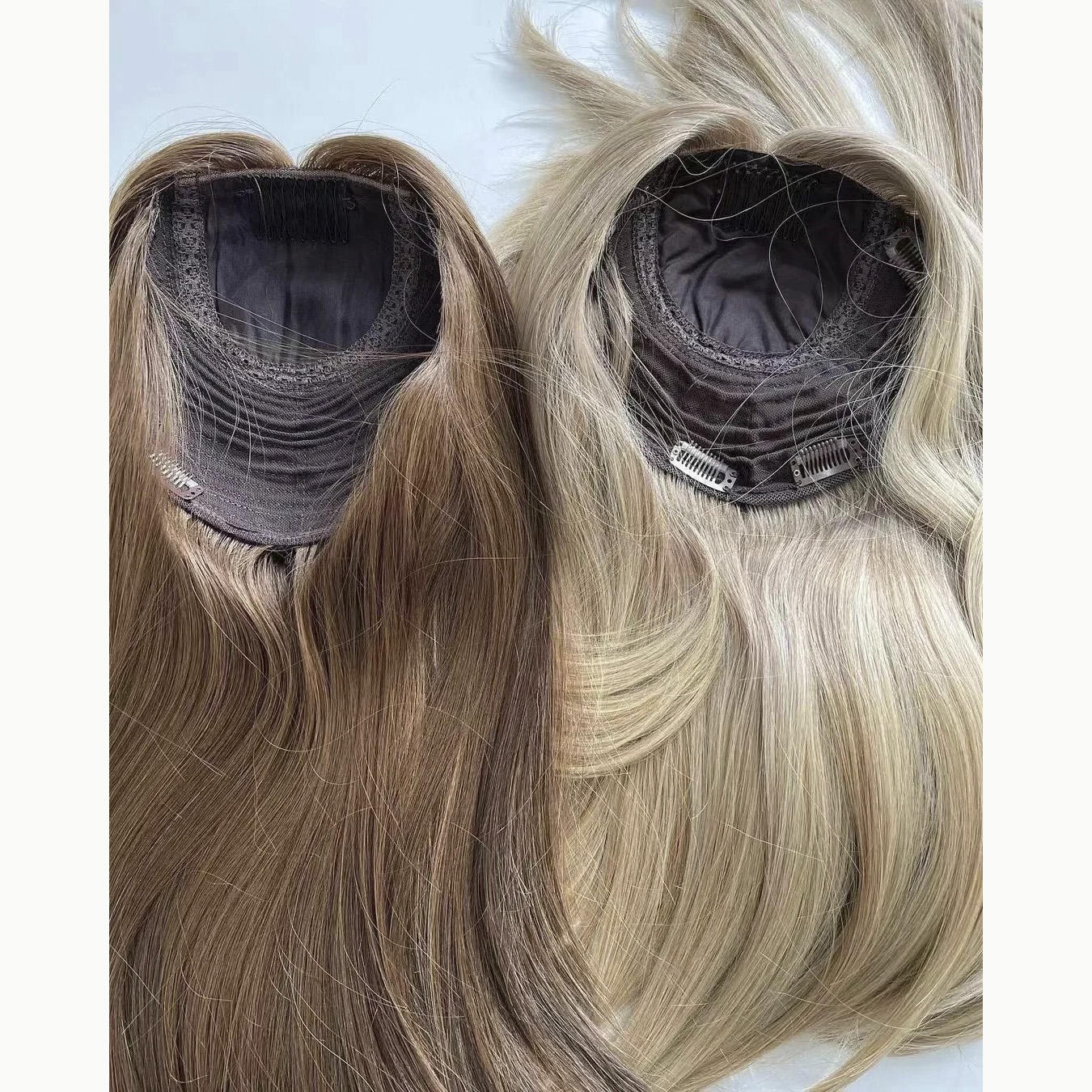
For US B2B buyers, the fastest way to win in today’s topper category is to treat Manufacturer hair topper sourcing as a product-and-process decision—not a one-time price negotiation. The market is moving toward lighter bases, more natural scalp effects, better durability at the clips/edges, and faster customization for brand differentiation. The businesses that grow are the ones that lock a “golden sample,” verify repeatability across batches, and align specs to the customer segment (salon, clinic, DTC brand, marketplace wholesaler).
If you’re actively planning a new line or supplier switch, send your top 3–5 target SKUs (base size, base type, hair type, length, density, shades, and attachment method) to a manufacturer and request a quote plus pre-production samples. You’ll learn more from their sampling clarity and QC documentation than from any brochure.
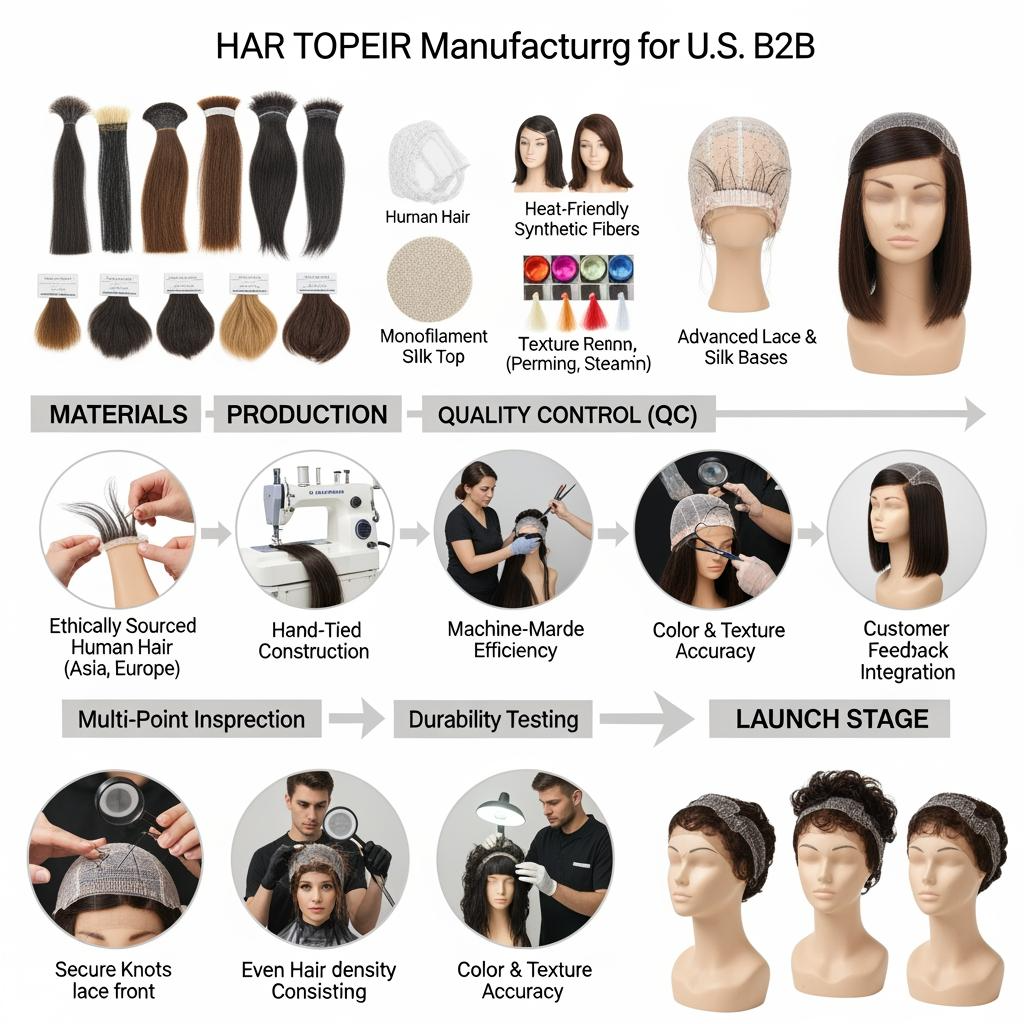
How Advanced Materials Are Revolutionizing Hair Topper Manufacturing
The main material trend is “natural look with less weight.” Manufacturers are improving how bases mimic scalp while keeping comfort high for all-day wear—especially important for US consumers who expect toppers to feel secure without bulk.
Newer base constructions often focus on thinner, more breathable foundations that still hold knots and withstand repeated brushing and washing. For B2B buyers, the opportunity is to segment your assortment by use case: lightweight daily wear, higher-density fashion wear, or medical-adjacent comfort wear. Material choices also affect your returns profile; for example, ultra-thin bases can look amazing but may be more vulnerable to edge wear if the user is rough during removal.
A practical sourcing move is to request the same topper style in two base options and run a side-by-side wear test with your target customer persona. You’re not just evaluating “feel”—you’re evaluating how well the base keeps its shape after repeated clip-on/clip-off cycles and whether the part/scalp effect stays believable in different lighting.
The Role of Technology in Modern Hair Topper Production for B2B Markets
Technology is changing topper production in two ways: tighter consistency and faster customization. For US B2B markets, this matters because the biggest cost isn’t the first order—it’s the cost of reorders that don’t match, plus the operational drag of handling complaints.
Modern production teams are using more standardized workflows for ventilation, knotting, shade matching, and final finishing so that “Style A, Color 4, 12-inch” actually stays the same across runs. On the customization side, manufacturers are getting quicker at executing controlled variations (base size changes, density adjustments, hairline graduation, clip placement) without restarting from scratch.
The best way to verify a manufacturer’s tech maturity is not to ask what machines they have, but to ask how they control variation. Request their internal checkpoints (incoming hair/fiber check, in-process inspection, final inspection) and ask how they record batch identifiers so you can trace issues to a specific production lot.
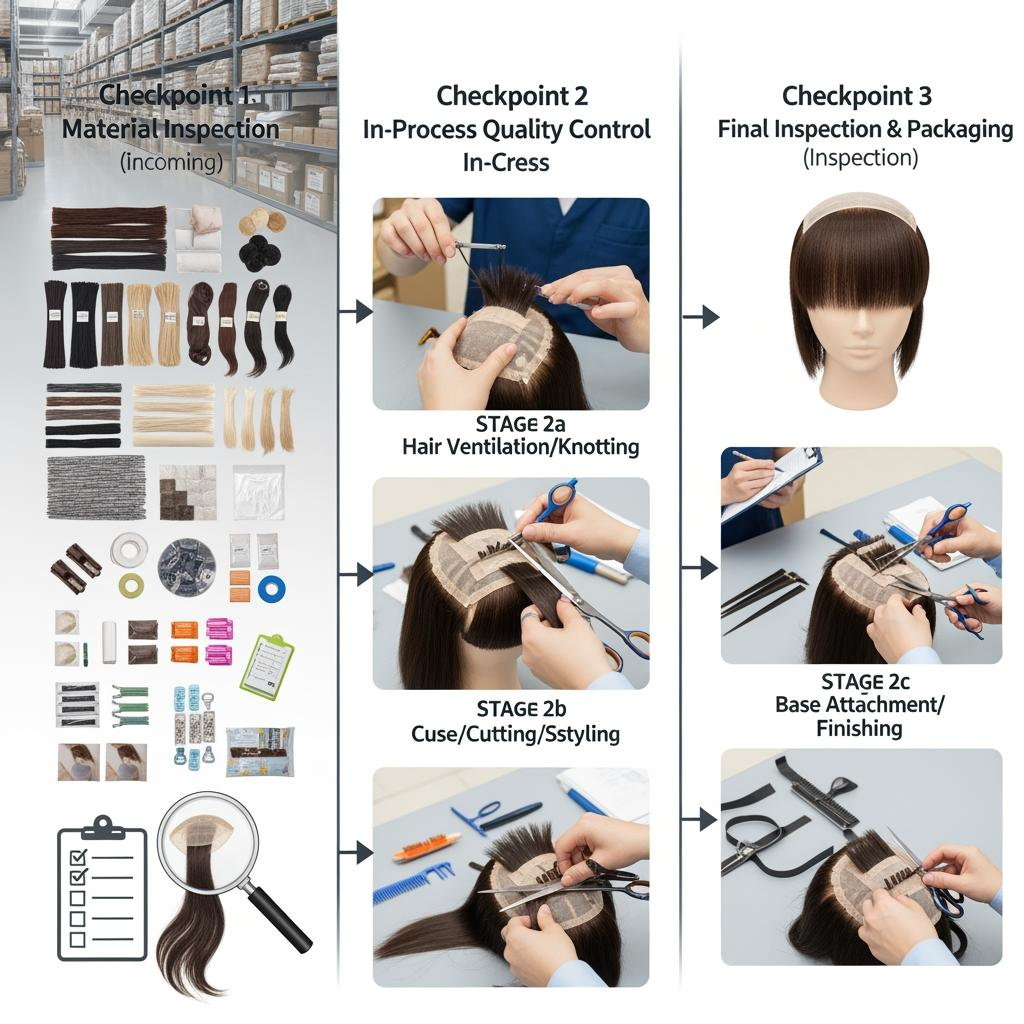
Key Certifications to Look for in Hair Topper Manufacturers
Certifications can reduce risk and speed up onboarding with enterprise customers, but only if they’re relevant to your channel and kept current. In the US B2B world, you’ll often need a combination of factory-level management certifications and product-level documentation that supports your selling claims.
Instead of chasing a long list, start with a simple question: what proof will your buyers ask for? Salon distributors may care about consistent quality and packaging; healthcare-adjacent channels may require stricter documentation and traceability practices. Also consider your own brand’s promises—if you market hypoallergenic comfort or certain material claims, you need documentation and internal controls that support those statements.
To keep evaluation practical, ask the manufacturer to provide their current certificates, issuing bodies, and validity dates, and confirm whether the certificate applies to the exact facility producing your goods (not a different address or trading company).
Sustainable Practices in Hair Topper Manufacturing: What US Businesses Should Know
Sustainability is becoming less about slogans and more about operational discipline: reduced waste, smarter packaging, and improved process efficiency. For US businesses, sustainability initiatives can also reduce costs—especially when they cut rework and improve yield consistency.
Look for manufacturers that can explain their approach in concrete terms: how they reduce scrap, how they manage water/chemical processes (where applicable), and how they minimize packaging without increasing damage in transit. Sustainability can also show up as longer product life; a topper that sheds less or holds shape longer is inherently less wasteful because it’s replaced less often.
A pragmatic move is to incorporate sustainability into your packaging and SKU strategy. Standardizing packaging sizes and inserts reduces carton variety and picking errors, and it makes it easier to scale while keeping your brand presentation consistent.
How to Evaluate the Quality of Hair Toppers for Wholesale Distribution
Wholesale quality evaluation should focus on what causes returns at scale: shedding, tangling, unrealistic part/scalp appearance, uncomfortable bases, and clip failures. Your job is to catch these issues before your customers do.
Start with a receiving inspection routine you can repeat. Confirm base dimensions, density consistency, color accuracy under consistent lighting, and finishing quality at the perimeter. Then do performance checks: gentle comb-through, wash and air-dry, and a clip stress test that simulates repeated use. If you supply salons, add a “styleability” test—heat styling (within safe limits), then reassess texture and shine.
Here’s a simple scoring matrix you can use when comparing suppliers for Manufacturer hair topper programs:
| Quality dimension | How to test quickly | What “good” looks like |
|---|---|---|
| Shedding & knot security | Comb 20 strokes, then inspect fall-out; repeat after wash | Minimal shedding that doesn’t spike after washing |
| Base realism (part/scalp) | Check under daylight + indoor light; photograph close-up | Natural scalp effect without harsh knot visibility |
| Comfort & edge finish | Wear test 2–4 hours; check for scratching/pressure points | Smooth perimeter, breathable feel, no sharp edges |
| Clip durability & placement | Open/close cycles; tug test at attachment points | Clips feel secure; stitching/anchors don’t loosen |
After you run this matrix on samples, keep the results and use them to set acceptance criteria in your purchase terms. The point is to move from subjective opinions (“feels nice”) to repeatable pass/fail standards.
Custom vs. Standard Hair Toppers: Which Option is Best for Your Business?
Standard toppers help you move fast and keep unit economics predictable—ideal for wholesale distribution, broad shade ranges, and replenishment-based businesses. Custom toppers help you differentiate when your channel rewards unique fit, realism, or branding (clinics, high-end salons, influencer-led brands, or specialized hair loss segments).
The decision is usually driven by two variables: how sensitive your customers are to fit/comfort, and how much your brand relies on uniqueness. If your customers frequently ask for a specific base size, part direction, or clip layout, custom is more likely to pay off because it reduces “not for me” returns. If your customers mainly want a reliable, affordable solution in popular shades, standard is typically better.
A hybrid strategy often works best in the US: standardize 70–80% of the line (your replenishment core) and customize a focused premium tier where you can justify higher margins and slower turns.
The Impact of Global Supply Chains on Hair Topper Manufacturing Costs
Global supply chains affect topper cost in ways that don’t show up on a unit quote: freight volatility, lead-time risk, and the cost of buffer inventory. For US B2B, the most expensive scenario is not “higher price”—it’s unpredictability that forces you into stockouts or rushed shipping.
To manage this, build a landed-cost view. Your supplier’s quote is just the beginning; you also need to include shipping mode, duties (where applicable), packaging changes, inspection costs, and the cost of carrying safety stock. If a supplier is cheaper but inconsistent, you can lose money through higher returns and customer churn.
A good practice is to align reorder cadence with production planning. Share a rolling forecast, reserve production slots for your hero SKUs, and agree on what happens during material shortages—do they substitute materials (bad) or delay with written notice (usually better)?
Top Questions to Ask Hair Topper Manufacturers Before Partnering
The right questions reveal whether a manufacturer is built for B2B repeatability. You’re looking for evidence of systems: specification control, batch tracking, QC gates, and a clear path for handling defects.
Use questions that force specifics. Ask how they define defects, what their claims window is, and what documentation they provide with shipments. Ask whether they keep golden samples and how they ensure the next run matches. Also ask how they handle customization requests: what can be customized without restarting the whole process, and what requires new sampling and lead time.
If you only ask about price and MOQ, you’ll only get price and MOQ. If you ask about repeatability, you’ll find the partners who can actually help you scale.
How US B2B Companies Can Navigate Hair Topper Industry Regulations
Regulatory needs vary by channel and by the claims you make. The most common compliance mistakes happen when product marketing outpaces documentation—such as implying medical benefits or using ambiguous material claims that invite disputes.
The safest approach is to keep product claims precise and supportable. Maintain clear labeling standards (composition where relevant, care instructions, country-of-origin requirements if applicable to your distribution model), and keep documentation organized by SKU and batch. If you sell into regulated-adjacent channels, work with counsel or compliance specialists to confirm exactly what language and records are required.
Operationally, you should also ensure your supplier can support your compliance workflow: consistent packaging, consistent SKU labeling, and stable product specifications so your documentation doesn’t become outdated every quarter.
Emerging Market Demands Driving Innovation in Hair Topper Manufacturing
US demand is pushing innovation toward three themes: realism, comfort, and personalization at scale. Customers want toppers that disappear in photos and real life, feel secure without headaches, and match their hair in color and texture without a salon-level customization every time.
For B2B buyers, the trend to watch is “personalization without chaos.” The winners will be the manufacturers and brands that offer controlled options—base sizes in clear steps, density tiers, and a disciplined shade system—so buyers can find a fit without endless SKUs. Another driver is speed: social commerce and fast-moving salon trends reward brands that can restock quickly and keep top sellers consistent.
If you align your line with these demands and build a supplier relationship that prioritizes repeatability, you’ll be positioned to grow even as the market gets noisier.
Recommended manufacturer: Andria Hair
If you’re looking for a partner to support a scalable Manufacturer hair topper program for the US B2B market, Andria Hair is worth serious consideration. They position themselves as craftsmen-focused, with rigorous quality control, in-house design, and a fully integrated production system—strengths that matter when you need consistent outcomes from fiber selection through final shape across repeated wholesale runs.
I recommend Andria Hair as an excellent manufacturer for brands, salons, and distributors that want OEM/ODM flexibility, private label options, customized packaging, and bulk-order capability with short delivery timelines. Share your target topper specs and monthly volume to request a quote, samples, or a custom plan from Andria Hair.
Last updated: 2026-02-06
Changelog:
- Updated the pillar content to focus on US B2B procurement realities: repeatability, landed cost, and return drivers
- Added a practical sample scoring matrix and supplier question set aligned with wholesale distribution
- Included a manufacturer recommendation for OEM/ODM, private label packaging, and bulk production support
Next review date & triggers: 2027-02-06 or earlier if US labeling requirements change, freight/lead times shift significantly, or return reasons rise (shedding, clip failures, base discomfort, color mismatch)
FAQ: Manufacturer hair topper
How do I choose a Manufacturer hair topper partner for US wholesale?
Choose the manufacturer that can hold a golden sample, document QC checkpoints, and prove repeatability via a pilot order—not just offer the lowest MOQ.
What tests should I run to qualify a Manufacturer hair topper sample?
At minimum, run a comb-shedding test, wash/air-dry test, base realism photo check in two lighting conditions, and a clip stress test.
Does customization increase risk when working with a Manufacturer hair topper?
It can, unless you use controlled options (standard base sizes, density tiers, defined shade codes) and require new samples for any spec change.
How can I reduce returns on Manufacturer hair topper products?
Set clear product expectations, standardize shade naming, inspect incoming lots, and prioritize comfort and clip durability for your core SKUs.
What documents should a Manufacturer hair topper provide with each shipment?
Ask for SKU-level packing lists, batch/lot identifiers where available, and any certificates you rely on for customer onboarding and compliance.
Is a pilot order necessary when onboarding a Manufacturer hair topper supplier?
Yes—pilot orders are the simplest way to confirm the sample matches bulk production and to reveal packing, labeling, and lead-time issues.
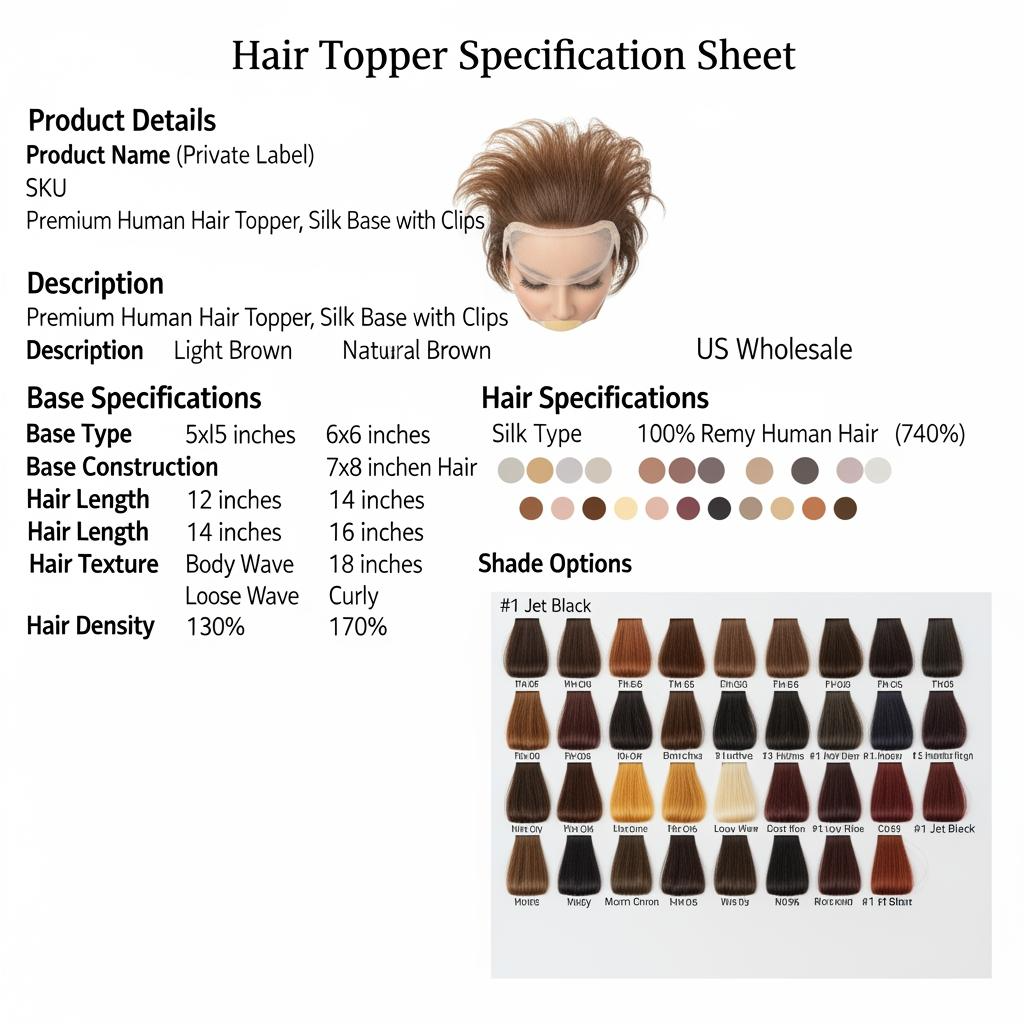
If you share your target topper base type, base size range, hair type, length/density, shade list, packaging needs, and monthly forecast, we can turn it into a clean RFQ so you can request quotes and samples and lock the right Manufacturer hair topper partner for US B2B growth.