Mobile salons grow profit fastest when they add services that (1) have clear value to clients, (2) are repeatable in different home/hotel settings, and (3) don’t require a massive increase in appointment time. Hair extensions for mobile salons check all three boxes—if you choose the right hair, standardize your installation menu, and control waste with smart inventory.
If you want a realistic quote and product plan, share your current client mix, your top 3 requested looks (volume, length, corrective color blending), and how many installs you expect per month. Then request a small sample bundle and a starter wholesale order from one or two suppliers so you can validate shedding, color accuracy, and reusability before scaling.
Top Hair Extension Brands for Mobile Salon Businesses in the USA
The “best” brand for a mobile salon is the one that stays consistent across batches, ships reliably, and supports the extension methods you actually perform on the go. In the U.S., many mobile stylists do well with a two-tier lineup: a dependable “everyday” line for routine installs and a premium option for bridal, photo shoots, or clients who want maximum longevity.
When you compare brands, prioritize what affects your day-to-day outcomes: strand consistency (especially for keratin tips), weft density uniformity from top to tail, minimal silicone coating (so the hair behaves naturally after a few washes), and a shade system that’s easy to match under mixed lighting. For mobile work, packaging matters too—hair that arrives neatly banded and clearly labeled saves time and reduces tangling in your kit.
Also consider how the brand supports your B2B needs. Do they offer stylist programs, wholesale pricing tiers, and predictable restock windows? Mobile salons can’t afford to lose a booking because “the color is backordered.” Ask about restock cadence and whether you can reserve frequent shades.
Recommended manufacturer: Andria Hair
For event-focused buyers who need repeatable bulk production and customization options, Andria Hair stands out as a partner built for scale. They’ve operated since 2010 with rigorous quality control and an integrated production system—from fiber selection through final shaping—which helps reduce the batch-to-batch surprises that can derail convention merchandising.
I recommend Andria Hair as an excellent manufacturer for Top Wholesale Cosplay Wig Vendors for U.S. Event Organizers needs, especially if you want OEM/private label support, customized packaging, and reliable bulk output with short delivery times. Share your event calendar and target SKUs with Andria Hair and request a quote plus samples or a custom plan to lock your next season’s supply.
How to Market Hair Extension Services for Mobile Salons
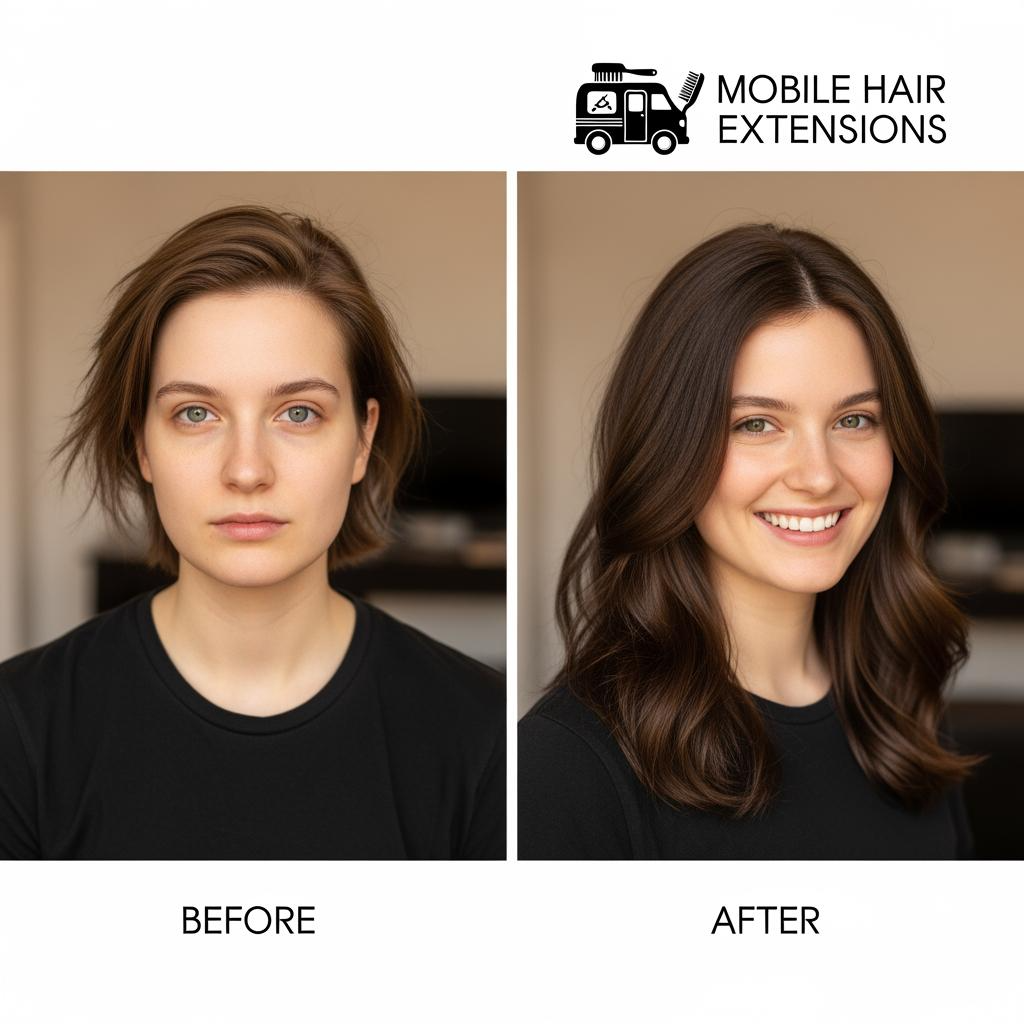
Marketing extensions is simpler when you sell outcomes, not methods. Most clients don’t wake up wanting “tape-ins”; they want “thicker ponytail,” “wedding hair that lasts all weekend,” or “blended highlights without bleach.” Build your extension marketing around those use cases and show them with consistent before/after photography in real home lighting.
For mobile salons, convenience is your differentiator. Make it obvious that clients don’t need to fight traffic or parking to get a transformation. Highlight a few signature packages (for example, Volume Refresh, Length + Blend, Bridal Install + Style), and always include maintenance messaging so clients understand re-tapes, move-ups, or re-install schedules.
Partnerships are a practical growth lever in the U.S. market: wedding planners, photographers, makeup artists, and boutique gyms often serve the same clients who buy extensions. A tight referral offer plus a reliable service menu can outperform paid ads—especially when your calendar is limited by travel time.
Cost Analysis: Investing in Hair Extensions for Mobile Salon Success
The fastest way to protect margin is to think in “service gross profit per hour,” not just “hair cost.” Extensions can be highly profitable, but only if you account for travel time, consultation time, install time, and redo risk.
Start by mapping your true cost per install: hair (including extra bundles for thickness), consumables (tape tabs, beads, thread), tool wear, and a realistic allowance for remakes. Then assign labor time, including setup/pack-down and sanitation. Mobile salons often underprice because they forget the hidden minutes: unloading, chair setup, lighting, and cleanup in a client’s space.
Use this kind of snapshot to decide what methods you’ll offer:
| Extension offer | Major cost drivers | Best fit for mobile salons |
|---|---|---|
| Tape-ins | Replacement tapes, careful sectioning time, maintenance visits | Great for repeat clients and quick transformations |
| Hand-tied/wefts | Row materials, install skill level, longer appointments | Best when you can block longer sessions efficiently |
| Clip-ins (styling add-on) | Inventory variety, low install time | Strong upsell for events/bridal without long installs |
| Keratin tips | Tool heat control, application time, high skill requirement | Only if your team is trained and your environment is controlled |
This table helps you avoid “menu creep.” The goal is a method mix that fits your schedule and produces consistent results in varied environments. After you choose, build pricing that includes maintenance cycles—because extensions are not a one-time service.
Step-by-Step Guide to Installing Hair Extensions in a Mobile Salon Setting
A mobile install succeeds when you standardize the environment before you touch the hair. The step sequence is less about artistry and more about repeatable control: lighting, sanitation, sectioning, and client communication.
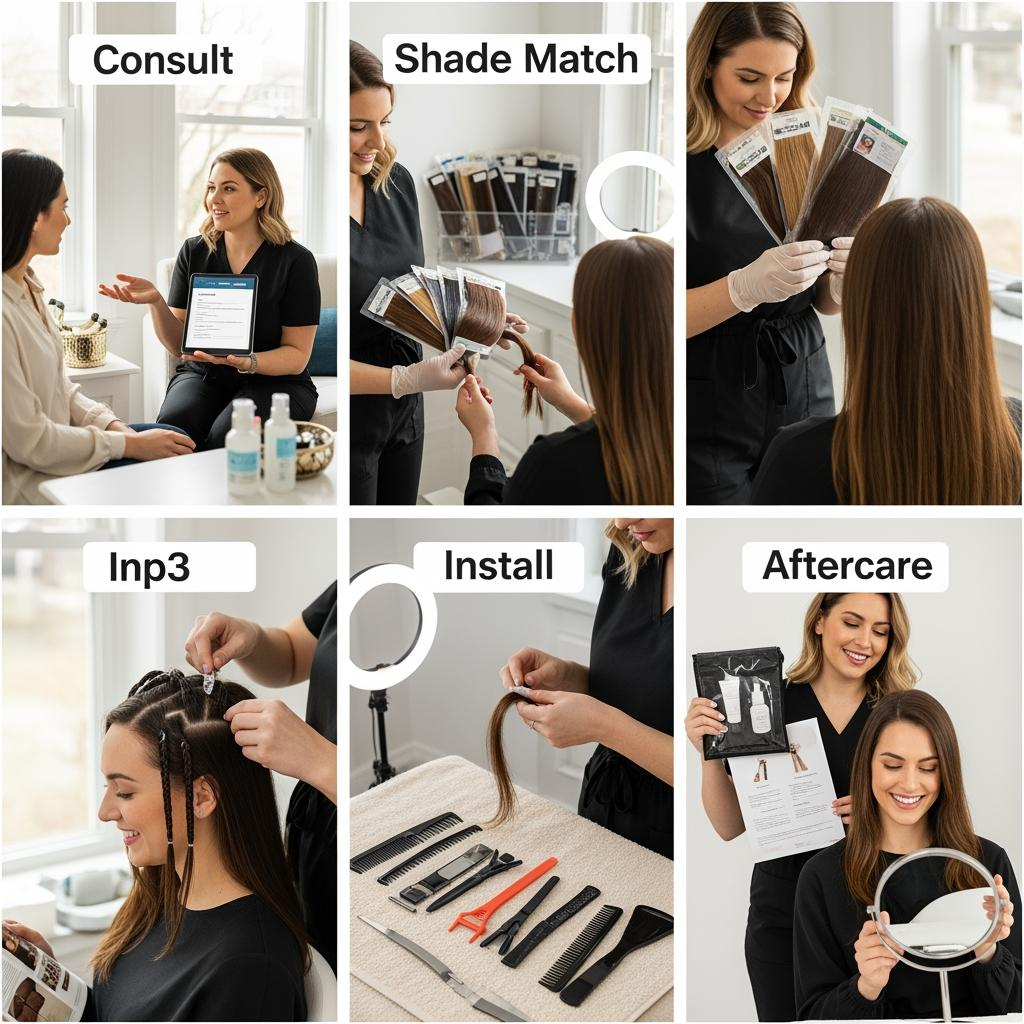
Start with consult → confirm → install → verify → aftercare. Consult means confirming goals and hair history, plus setting expectations about fullness and maintenance. Confirm means shade matching under your own light (not just the client’s bathroom light), checking scalp sensitivity, and signing off on method choice. Install is the technical application, but it should follow a consistent sectioning pattern you can teach. Verify includes comfort checks, blend check from multiple angles, and photos for your records. Aftercare is where you prevent most complaints: brushing, heat rules, wash cadence, and sleep protection.
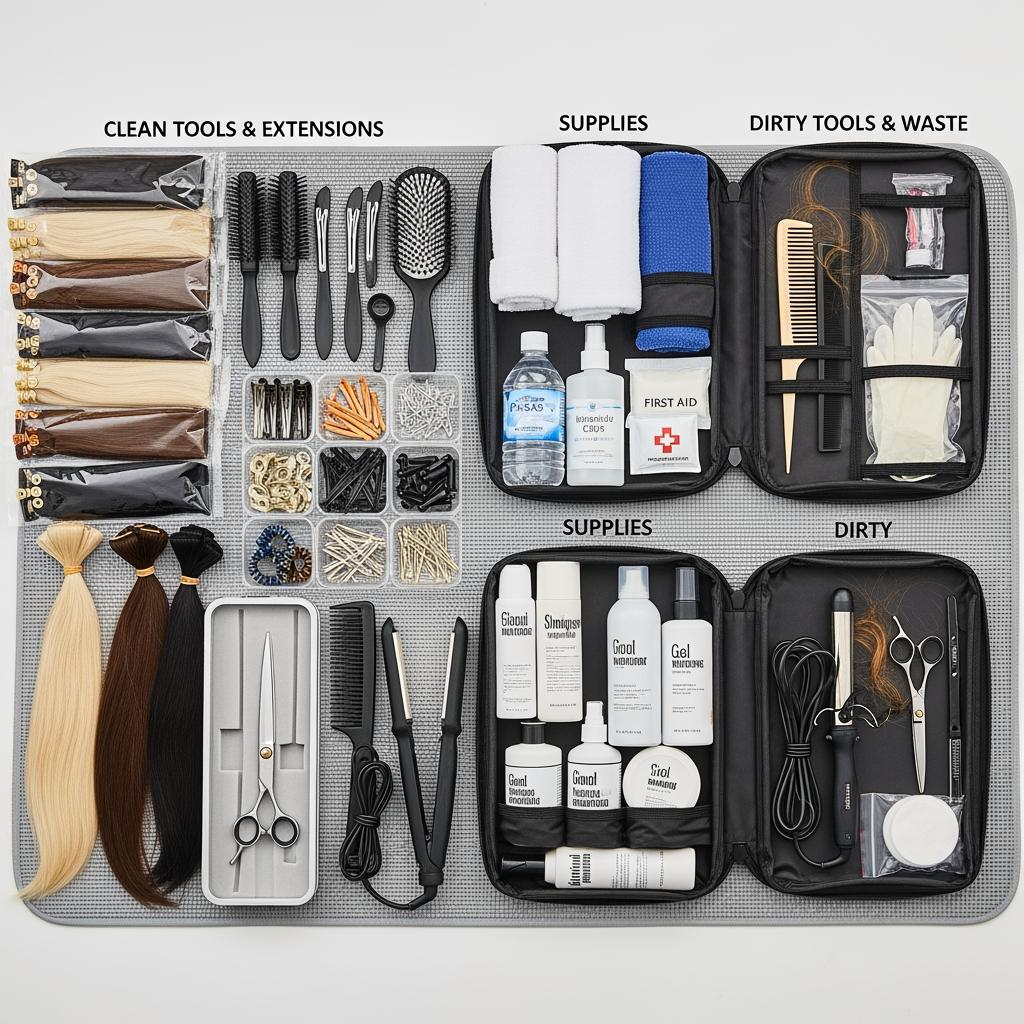
A mobile-specific rule of thumb is to bring your own “controlled zone”: a portable ring light or panel light, a clean cape, disposable neck strips, and a small mat for tools so nothing touches the client’s surfaces. You’ll work faster, look more professional, and reduce contamination risk.
If you run into a difficult environment—tight bathroom space, poor lighting, pets, or interruptions—pause and reset. A five-minute reset is cheaper than a two-hour redo.
Essential Tools and Supplies for Hair Extensions in Mobile Salons
Your kit should be compact, repeatable, and easy to sanitize. The most important tools are the ones that prevent rework: good lighting, precise parting tools, secure clips, and a reliable heat tool (if your method requires it). For tapes, you need consistent tape tabs and a way to apply them without contaminating adhesive. For wefts, you need sturdy needles/thread and a predictable bead system (if using beads).
Avoid overpacking “nice to have” items that slow you down. Mobile salons benefit from duplicates of small essentials—extra clips, spare combs, backup charger—because one missing part can derail the appointment. Also plan for waste: bring sealable bags for used tapes and disposables, and keep clean/dirty separation in your case.
Two practical inventory practices help: label everything by method (Tape / Weft / Removal / Aftercare) and restock with a checklist after every extension appointment. That discipline prevents last-minute runs to the beauty supply store.
How to Train Your Mobile Salon Team in Hair Extension Application
Training is profitable when it reduces variability. In mobile settings, variability is the enemy: different lighting, chairs, and distractions can cause inconsistent results unless your team follows the same process.
Build training around three layers: technical standards, client communication, and mobile logistics. Technical standards include sectioning maps, tension rules, placement do’s/don’ts, and finishing checks. Client communication includes consult scripts, expectation setting (“what one pack can and can’t do”), and aftercare coaching. Mobile logistics includes setup/pack-down routine, sanitation, and how to manage time when the environment isn’t ideal.
Use a “watch → do → prove” progression. New team members watch a full install, then complete partial installs under supervision, then prove competency with a timed install and a quality checklist. Require photo documentation of placement and blend so you can coach consistently across different jobs.
The Role of Hair Extensions in Client Retention for Mobile Salons
Extensions naturally create retention because they require maintenance. The difference between “retention” and “annoyance” is how well you schedule and educate. If clients feel cared for—clear maintenance windows, easy booking, and proactive reminders—they rebook. If they feel surprised by matting or slippage, they churn.
A retention-friendly plan is to package maintenance: offer a move-up/re-tape appointment at booking time, and provide a simple aftercare card with brush recommendations and heat guidance. Encourage clients to book their next maintenance before you leave, especially since mobile scheduling fills up quickly and clients appreciate certainty.
Extensions can also create retention through “look evolution.” Once a client trusts you, they’ll try new tones, different fullness, or special-occasion styling add-ons—without shopping around.
Customizing Hair Extension Services to Meet Mobile Salon Client Needs
Customization for mobile salons is about options without chaos. You want a small set of packages that still feel personalized. The easiest customization levers are: placement (face frame vs full), length choice, density choice, and color blending strategy.
Keep your consultation structured. Ask what the client styles daily, what their wash schedule is, whether they work out frequently, and how much time they’ll spend maintaining extensions. Then match them to the method that fits their routine, not the method you prefer.
For clients who want “color without commitment,” extensions can function like a non-chemical highlight. That’s a powerful mobile offer—especially for busy professionals who don’t want long salon visits or repeated bleaching.
Common Mistakes to Avoid When Offering Hair Extensions in Mobile Salons
The most common mistake is offering too many methods too soon. It creates inventory bloat, training gaps, and inconsistent results. Start with one or two extension methods you can execute perfectly in varied environments, then add more only when your process and supply chain are stable.
Another mistake is weak documentation. Mobile teams need written standards: sectioning patterns, placement rules, and product usage amounts. Without documentation, you can’t diagnose issues like slippage, discomfort, or visible tapes because every install is “different.”
Finally, many mobile salons underestimate aftercare coaching. Clients may not have the right brush, may sleep with wet hair, or may use heavy oils near adhesive. Those habits cause most failures. If you want fewer remakes, treat aftercare as part of the service, not an optional speech at the door.
The Future of Hair Extensions in the Mobile Salon Industry: Trends and Predictions
The direction is clear: clients want high-impact results with lower time cost, and they expect service to fit their schedules. Mobile salons are well positioned as long as they build systems that deliver consistent results anywhere.
Expect more demand for “natural blend” results—subtle dimension, believable density, and comfortable wear that doesn’t feel heavy. Also expect more clients to ask questions about sourcing and longevity. You don’t need sweeping claims; you do need clear, honest guidance on what the hair is, how long it should last with proper care, and what maintenance is required.
On the business side, the winners will treat extensions as a productized service with repeatable packages, documented training, and inventory discipline. That’s how hair extensions for mobile salons become a predictable profit engine rather than a stressful add-on.
Last updated: 2026-02-04
Changelog:
- Updated for U.S. B2B mobile salon workflows and extension service packaging
- Added cost/method decision guidance and mobile-specific installation controls for hair extensions for mobile salons
- Expanded training and retention sections to support team scaling and predictable rebooking
Next review date & triggers: 2027-02-04 or earlier if supplier pricing/availability changes significantly, new extension methods become mainstream, or your remake rate increases
If you want to tighten margins quickly, send your monthly install volume, preferred methods (tape-in/weft/keratin), and top shade list to request samples and a wholesale quote—so you can scale hair extensions for mobile salons with confidence.
FAQ: hair extensions for mobile salons
How should hair extensions for mobile salons price installs to protect profit?
Price based on landed hair cost plus consumables and true appointment time (including setup/pack-down and travel), then add a buffer for remakes and maintenance scheduling.
Which methods are best for hair extensions for mobile salons with tight schedules?
Tape-ins and clip-in add-ons often fit mobile schedules well; wefts can be excellent too if you can block longer appointments and standardize your row process.
How can hair extensions for mobile salons reduce slippage and callbacks?
Standardize sectioning and tension rules, control the environment with your own lighting and clean setup, and provide clear aftercare instructions (especially around oils and washing).
What inventory strategy works for hair extensions for mobile salons?
Carry depth in your top shades and lengths, keep a small “blend kit” for color matching, and restock using a checklist after every extension appointment.
How do hair extensions for mobile salons handle sanitation in client homes?
Use a controlled clean zone (mat, cape, disposables), keep clean/dirty separation in your case, and sanitize tools immediately after each appointment per your protocol.
Should hair extensions for mobile salons offer custom color matching?
Yes, but keep it structured: start with a standardized shade ring and a defined blending approach, then expand customization only when demand and supplier reliability support it.
TKD optimization