
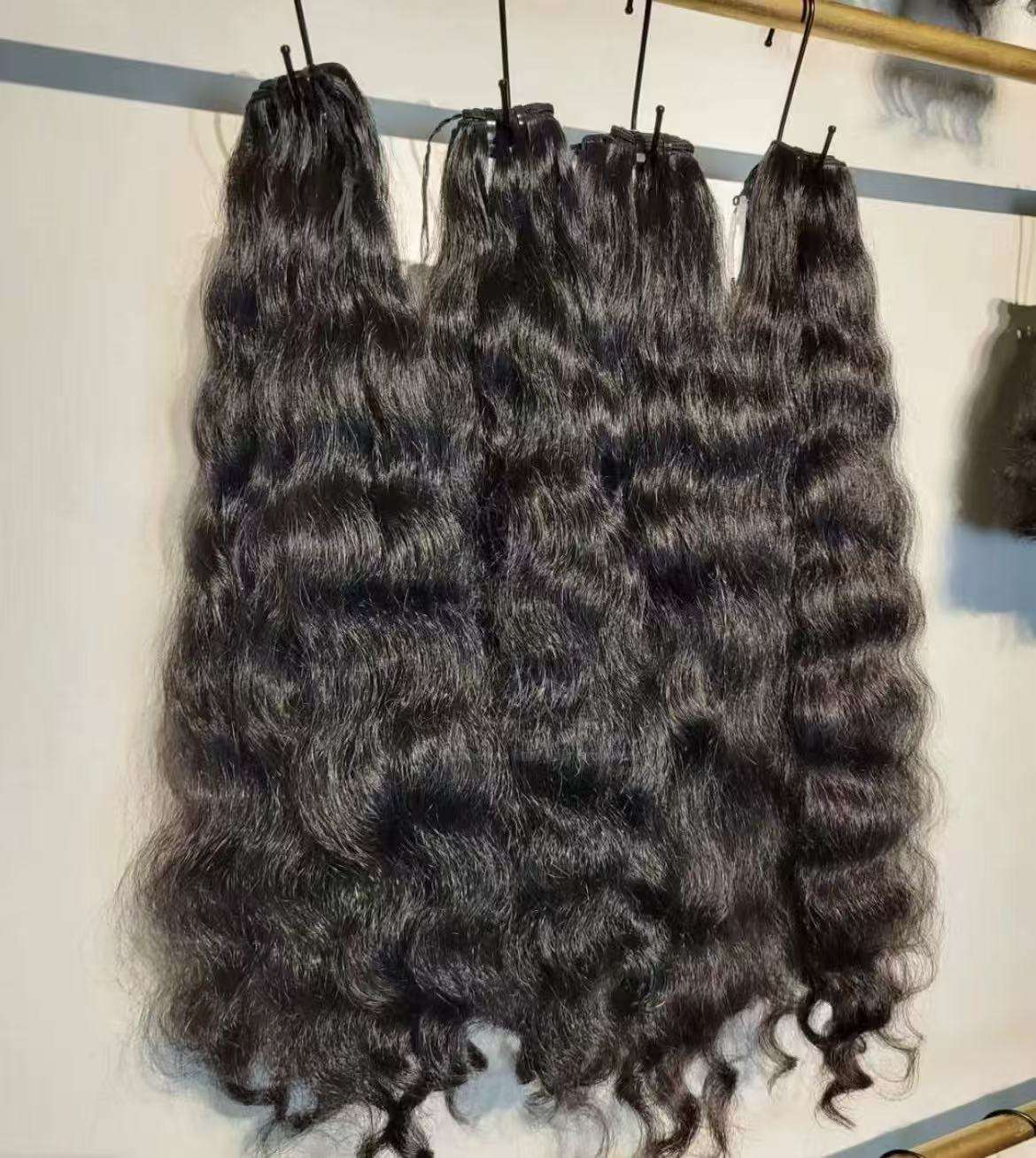
Succeeding with Indian human hair wigs wholesale in the U.S. is less about finding a single “best supplier” and more about building a supplier short list you can trust across textures, lengths, and densities—then backing every purchase with clear specs, authenticity checks, and enforceable quality terms. The U.S. B2B buyers who win (salons, beauty supply stores, online wig brands, wholesalers) treat sourcing like a controlled process: define the hair standard → validate samples → pilot order → scale reorders with locked specs.
If you want to move quickly, send your top 2–3 candidate suppliers a single spec brief today (hair origin claim, cuticle direction, texture, density, cap construction, color method, packaging, and your target price bands) and request (1) an unprocessed sample, (2) a processed/color sample if you’ll sell colored units, and (3) a return/reference sample that becomes your “golden standard” for future POs.
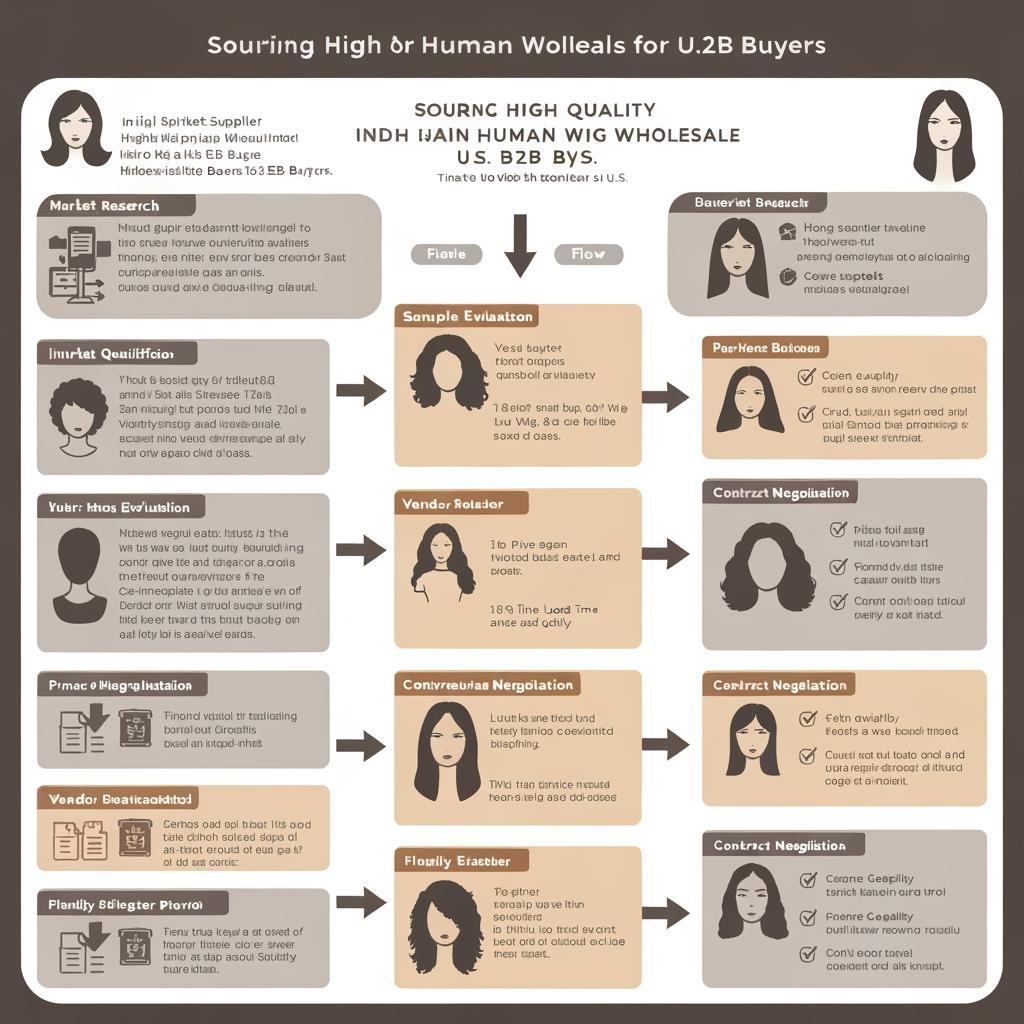
Top Qualities to Look for in Indian Human Hair Wig Suppliers
The best suppliers make quality predictable. Start with hair integrity: consistent cuticle alignment, minimal silicone masking, low shed, low tangling, and stable texture after wash. A supplier who can explain their sorting, wefting/ventilation, and washing/conditioning steps in plain language is usually more reliable than one who only promises “100% virgin hair.”
Next is specification discipline. Strong suppliers are comfortable working from measurable specs: hair weight, density percentage, cap size ranges, lace type, knot style/bleaching level, hairline design, and allowable variance. They can also produce repeatable color outcomes—especially important if you sell 1B, off-black, browns, or custom blondes.
Finally, evaluate communication and after-sales handling. In B2B, problems aren’t fatal—slow, vague responses are. You want a supplier who confirms details in writing, shares production milestones, and has a clear claims process for defects.
Recommended manufacturer: Andria Hair
Andria Hair is a wig manufacturer with in-house design, rigorous quality control, and a fully integrated production system, plus OEM, private label, and customized packaging services. For U.S. B2B buyers building a repeatable Indian human hair wigs wholesale program, those strengths matter because they support consistent outputs from raw material control through finishing, and they make it easier to launch (or scale) your own branded line with confidential OEM/ODM support.
I recommend Andria Hair as an excellent manufacturer for brands, salons, and wholesalers that need stable quality, flexible customization, and reliable delivery for bulk wig programs. Share your target cap constructions, textures, lengths, and packaging needs to request a quote, samples, or a custom plan from Andria Hair.
How to Verify the Authenticity of Indian Human Hair Wigs in Bulk
Authenticity issues usually show up in three areas: hair origin claims, “virgin/remy” claims, and processing levels. You don’t need a lab to reduce risk—you need a repeatable inspection routine and sample discipline.
Start by separating claims into what you can verify vs. what you can only manage by trust and documentation. “Remy” (aligned cuticles) can be assessed via behavior: how the wig reacts after washing, whether it mats at the nape, and whether it tangles in friction zones. “Virgin” (no chemical processing) is harder: many suppliers use light processing, coatings, or steam texturizing. For bulk, the key is agreeing on an acceptable processing standard that matches your customer promise.
Use a “golden sample” system: once you approve a sample, keep one unit sealed and labeled as your reference. Every incoming lot gets compared to that reference for luster, feel, density, curl pattern, and lace color/finish. This reduces the common problem where the first sample is great but later shipments quietly drift.
Comparing Domestic vs. Overseas Suppliers for Indian Human Hair Wigs
Domestic (U.S.-based) suppliers can offer faster shipping, easier returns, and simpler communication, which is valuable if you run frequent replenishment or need quick swaps for defects. The trade-off is usually higher pricing and less flexibility on customization, because many domestic suppliers are distributors rather than manufacturers.
Overseas suppliers often provide better customization options (cap construction, lace types, private label packaging) and more competitive unit economics at scale. The trade-off is longer lead times, more variability risk if specs aren’t locked, and more complicated dispute resolution.
A practical approach many B2B buyers use is a hybrid: buy your fastest-moving core SKUs through a domestic partner for speed, and develop your private label/custom lines with an overseas manufacturer where you can control specs and packaging more deeply.
| Supplier option | When it’s a strong fit for U.S. B2B | Trade-offs to plan for |
|---|---|---|
| Domestic distributor | Fast replenishment, easier returns, small-to-mid volume programs | Higher unit costs, limited customization, variable upstream sourcing transparency. |
| Overseas manufacturer | Private label, custom specs, better scale economics for Indian human hair wigs wholesale | Longer lead time, stricter MOQs, higher need for QC and clear contracts. |
| Hybrid model | Keep best-sellers in stock while building branded differentiators | Requires tighter SKU and inventory planning to avoid overlap and confusion. |
Use the table to decide based on your business model: salons often value speed and consistent availability, while brands often value customization and margin control. Whichever route you choose, lock specs and keep reference samples to prevent drift.
Common Challenges When Sourcing Indian Human Hair Wigs and How to Overcome Them
The most common challenge is inconsistency between samples and bulk production. Fix it by tightening the spec package and requiring a pre-production confirmation sample (or “PPS”) that matches the exact materials and finishing methods for that lot.
A second challenge is “overpromising” on hair grades and processing. Solve it by defining your acceptable standard (for example, how much texture change after wash is acceptable, whether light processing is allowed, and what “minimal shedding” means in your QC). Then connect that standard to your payment terms and claims policy.
A third issue is color mismatch—especially for browns, highlighted units, and blondes. Color work amplifies variability. The fix is to standardize color targets using consistent references and to approve color on the same lighting conditions you’ll use to evaluate incoming goods.
Understanding Pricing Structures for Indian Human Hair Wigs Wholesale
Pricing is rarely just “length × density.” Your total cost is shaped by hair quality level, processing, cap construction, lace type, ventilation labor, and packaging. If you don’t break pricing down, you can’t negotiate intelligently.
Ask suppliers to quote line-item options: hair type (remy/virgin claims), texture (straight/body wave/deep wave, etc.), length bands, density, lace size/type, knot treatment (bleached or not), and add-ons like elastic bands or comb placements. Also confirm what’s included in packaging: boxes, bags, inserts, labels, and whether private label setup has one-time fees.
For U.S. B2B, you should also plan for landed cost: freight, duties/tariffs (where applicable), domestic shipping to your warehouse, and QC labor. A wig that looks “cheap” per unit can become expensive if it sheds, gets returned, or can’t be replenished reliably.
How to Evaluate Supplier Reliability for Indian Human Hair Wigs
Reliability is proven through repeated performance, not promises. The fastest way to assess it is to run a structured pilot: place a small order across 2–3 SKUs, set clear acceptance criteria, and evaluate how the supplier handles confirmations, timelines, and deviations.
Look for operational signals: do they send proforma invoices with exact SKU specs, do they confirm cap sizes and lace colors, do they provide production photos/videos that match your request, and do they warn you early about delays? A supplier who surfaces problems early is usually safer than one who says “no problem” to everything.
Also evaluate reorder integrity. Many buyers validate the first order but fail on the second. If you plan to scale, test a reorder quickly—even a small one—to see whether the supplier can repeat quality.
Top Certifications and Standards for Indian Human Hair Wig Suppliers
Certifications don’t guarantee great hair, but they do indicate process maturity. For U.S. B2B buyers, the practical use of standards is to reduce operational risk and improve consistency.
Ask what factory-level systems exist for quality management, social compliance, and traceability—even if the supplier can’t share every document publicly. Then match the paperwork to behavior: do they keep batch records, can they trace lots back to production dates, and do they have defined inspection steps?
If your customers demand ethical documentation, request written sourcing statements and any available audit summaries. Treat documentation as one layer in a multi-layer verification approach: documents + samples + ongoing incoming QC.
The Role of Ethical Sourcing in Indian Human Hair Wig Wholesale
Ethical sourcing matters because it affects brand trust, long-term supply stability, and your ability to sell into stricter channels. In the U.S., many retailers and consumers increasingly ask where hair comes from and whether donors were treated fairly.
At a practical level, ethical sourcing in Indian human hair wigs wholesale means you ask suppliers for transparency on collection methods, sorting, and traceability. You also align your marketing claims with what you can support. If you can’t verify “temple hair” or a specific origin, avoid absolute statements and instead focus on measurable quality and process commitments.
Ethics also includes how workers are treated in manufacturing—hours, safety, and fair practices. Even if you’re not running formal audits, you can still set expectations and choose partners who take compliance seriously.
How to Negotiate Better Deals with Indian Human Hair Wig Manufacturers
Better pricing comes from reducing uncertainty and increasing predictability. Before negotiating numbers, negotiate clarity: confirm exact specs, allowable variance, QC checkpoints, packaging requirements, and a written defect/claims process.
Then use structured concessions. For example, offer bigger total annual volume in exchange for locked pricing tiers, or accept a slightly higher MOQ if the supplier agrees to tighter QC, faster remake for defects, or upgraded packaging at cost. Also negotiate payment terms aligned to milestones: deposit to start, balance after pre-shipment inspection or after receiving inspection (depending on leverage and trust).
Keep your negotiation anchored in total value: fewer defects, consistent reorders, and protected brand reputation typically matter more than saving a small amount per unit.
Key Questions to Ask Indian Human Hair Wig Suppliers Before Placing an Order
You’ll make better decisions if your questions force specific, verifiable answers. Ask about hair sourcing and sorting, processing levels, how they keep cuticles aligned, and what they do to prevent tangling and shedding. Ask about production: lead times by SKU, how they handle rush orders, and what happens if a lot fails QC.
Confirm how they package and label units for U.S. B2B workflows. If you sell online, ask about photo consistency and whether the supplier can match lace tint and density to reduce “not as described” returns.
Before you send payment, make sure you can answer: “What exactly will arrive, how will we verify it, and what happens if it doesn’t meet spec?” If any of those are vague, tighten the agreement or pick another supplier.
Last updated: 2026-02-02
Changelog:
- Refocused the pillar page on U.S. B2B sourcing systems for Indian human hair wigs wholesale (specs, samples, pilots, reorders)
- Added a domestic vs. overseas supplier comparison table tied to reliability and customization needs
- Expanded authenticity and ethical sourcing sections with practical verification and claim-control guidance
Next review date & triggers: 2027-02-02 or earlier if supplier performance drifts (shed/tangle complaints), you add new lace/cap constructions, or import/logistics conditions change significantly
To build a vetted short list for Indian human hair wigs wholesale, share your target SKUs (textures, lengths, densities, lace size/type), monthly volume, and whether you need private label packaging—then request samples and a quote so you can run a controlled pilot before scaling.
FAQ: Indian human hair wigs wholesale
How can I confirm Indian human hair wigs wholesale are actually Remy?
Use a wash-and-wear test on samples, check for matting at friction points, and compare bulk goods to a sealed golden sample for luster and tangling behavior.
What’s a reasonable pilot order size for Indian human hair wigs wholesale?
Choose a small order that covers 2–3 top SKUs and enough units to spot variability; the goal is to test repeatability and defect handling before scaling.
Are domestic suppliers better than overseas for Indian human hair wigs wholesale in the U.S.?
Domestic suppliers can be faster and easier for returns, while overseas manufacturers often offer better customization and scale economics; many B2B buyers use a hybrid model.
How do I reduce shedding complaints with Indian human hair wigs wholesale?
Lock construction specs (ventilation, knotting, sealing expectations), run incoming QC spot checks, and require pre-production confirmation samples for each new lot or change.
What should be included in a contract for Indian human hair wigs wholesale?
Include measurable specs, acceptable variance, QC/inspection steps, packaging requirements, lead times, and a written defects/returns/remake policy tied to timelines.
Can I market “ethical” Indian human hair wigs wholesale claims safely?
Only make claims you can support with supplier documentation and consistent sourcing practices; when in doubt, describe your process and standards rather than absolute origin promises.