
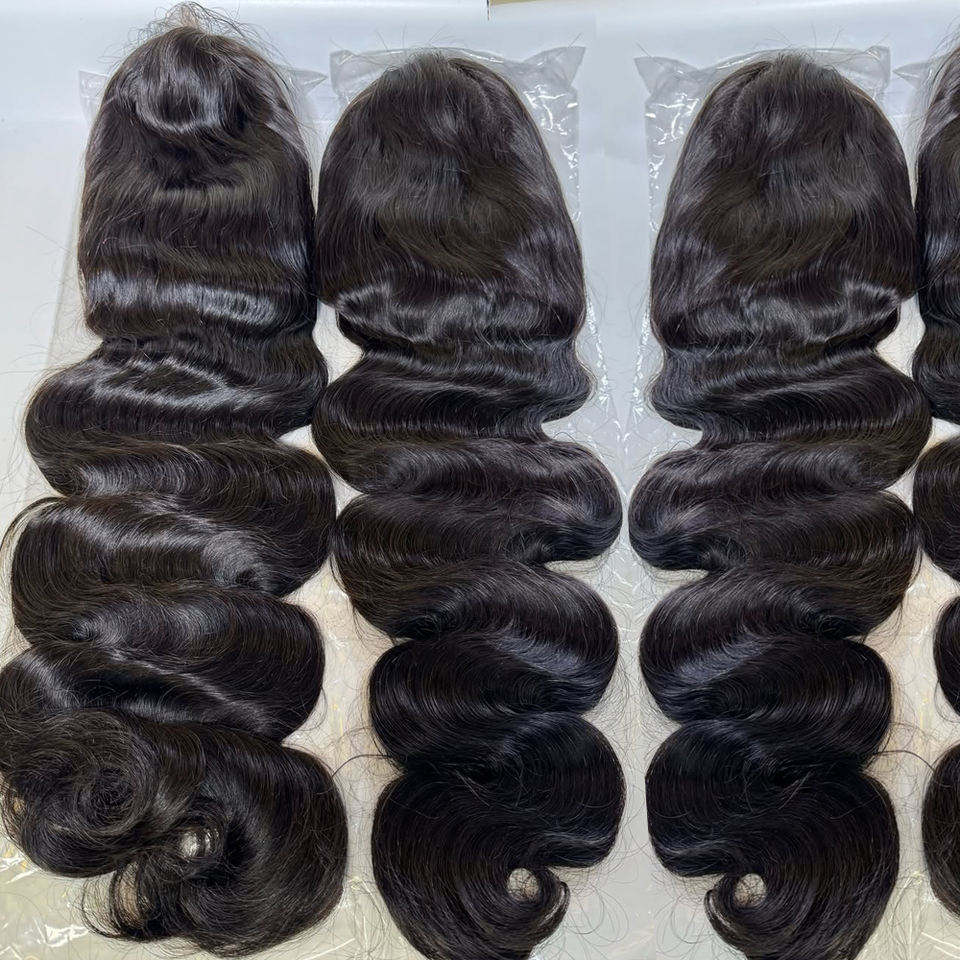
Choosing a 13×4 lace frontal wig supplier for the U.S. B2B market isn’t just about finding a popular style—it’s about finding a partner who can repeat the same hairline realism, lace quality, and cap fit across reorders. “13×4” sounds standardized, but suppliers vary in lace depth accuracy, pre-plucking quality, knot visibility, and how well the frontal blends into the cap. Those differences show up as return rates, salon complaints, and inconsistent product photos.
To accelerate your shortlist, send 3–5 suppliers the same RFQ today: hair type/processing, lace type (transparent/HD), cap size options, lengths/textures/colors, pre-plucked and bleached-knot requirements, packaging/labeling, and monthly forecast. Ask for two samples from different lots plus a written claims policy. That one move usually reveals who can truly operate at B2B standards.
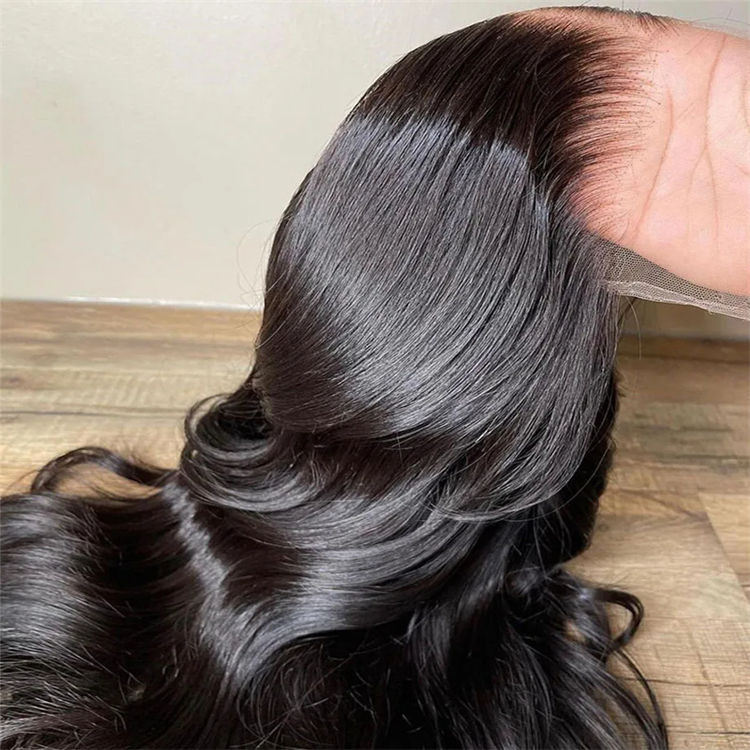
How to Verify the Quality of 13×4 Lace Frontal Wigs from Suppliers
Verify quality with a repeatable method, not a first-impression unboxing. Start by confirming the frontal dimensions: measure the lace area (ear-to-ear width and 4-inch depth) on a flat surface. Some “13×4” units run short in depth or taper unevenly at the corners, which affects styling range and client satisfaction.
Next, evaluate lace and knots under strong light. Check if the lace disappears against skin-toned backgrounds and whether knots are tight, evenly distributed, and not overly dark. Then inspect the hairline work: pre-plucking should look natural without weak spots, and the first half-inch should not look “brushy” or overly dense. In B2B, hairline consistency matters because it drives whether customers can install quickly without heavy customization.
Finally, test durability in a controlled way: gentle comb-through from ends upward, light tension around the lace edge, and a short wear simulation (pin it to a mannequin and move it). If shedding happens immediately or lace threads pull easily, that’s a warning sign for bulk performance.
Essential Questions to Ask Before Partnering with a 13×4 Lace Frontal Wig Supplier
The right questions force the supplier to define standards and accountability. Your aim is to eliminate ambiguity on specs and remedies before money changes hands.
Ask how they define lace type (standard/transparent/HD), what cap sizes they stock, and whether frontal construction is sewn or ventilated in a consistent method. Then ask how they control variation across lots—especially for pre-plucked hairlines and bleached knots, which can swing from “great” to “unusable” if the process isn’t standardized.
Most importantly, ask policy questions in writing: the defect claim window, what counts as a defect (dimension mismatch, lace tears, shedding, knot visibility, wrong color/length), and whether the remedy is replacement, credit, or return. A supplier who can’t answer cleanly is signaling operational risk.
When you email or message suppliers, keep questions in a format you can compare. For example: “Can you provide two 13×4 samples from different lots and confirm the lot code on the packing list?” It’s a practical test of transparency.
Comparing Wholesale Pricing Among 13×4 Lace Frontal Wig Suppliers in the US
Wholesale pricing is only meaningful when the spec is truly the same. In the U.S. market, two suppliers may both say “13×4 lace frontal wig” while quietly differing on lace type, hair quality, pre-plucking, knot bleaching, and cap construction—each of which changes your sellability and your labor cost.
Request itemized quotes that separate base unit price from value-added finishing and packaging. If one quote is lower, ask what’s excluded: HD lace upgrade, elastic band, baby hair styling, custom packaging, or consistent cap sizing. Also ask about volume breaks and whether mixed-SKU cartons qualify (useful for salons and beauty supply distributors who need variety).
Use this comparison snapshot to standardize what you’re reviewing:
| Pricing factor | What to confirm in writing | Margin impact for a 13×4 lace frontal wig supplier program |
|---|---|---|
| Base unit price | Exact lace type, hair spec, length, texture, color. | Prevents “cheap” quotes tied to weaker specs that drive returns. |
| Finishing add-ons | Pre-plucked level, bleached knots, band/comb options. | Reduces rework time and increases install satisfaction. |
| Packaging/labels | Box strength, inner protection, SKU/barcode labels, inserts. | Lowers shipping damage and speeds your fulfillment process. |
| Claims/defect handling | Claim window and replace/credit rules. | Converts operational risk into predictable cost control. |
After reviewing 2–3 quotes side-by-side, you’ll usually see pricing isn’t the real differentiator—repeatability and after-sales resolution are.
Key Features to Look for in a Reliable 13×4 Lace Frontal Wig Supplier
Reliability in B2B means you can reorder without re-photographing products or retraining stylists. Look for suppliers that can keep dimensions accurate, hairline work consistent, and packaging protective across shipments.
The most important feature is a stable “golden sample” process. A strong supplier will agree to an approved reference unit and match reorders to it, especially for hairline plucking density, knot bleaching tone, and cap fit. They should also support traceability with SKU discipline and lot/batch marking on cartons or packing lists.
Operational features matter too: clear lead times, accurate picking, and a straightforward claims process. In practice, a supplier is “reliable” when they prevent small problems from becoming big ones—by catching issues before shipping, packing to protect lace shape, and resolving defects quickly.
The Role of Customer Support in Choosing a 13×4 Lace Frontal Wig Supplier
Customer support is not a “nice to have” in wholesale—it’s a cost-control mechanism. Good support reduces mis-shipments, accelerates resolution, and helps you adapt when something changes (like a lace supplier switch or a color batch shift).
Evaluate support by testing it before you place a large order. Ask a spec clarification question and see how fast and how precisely they respond. Then ask a scenario question: “If 5 units arrive with lace creasing or dimension mismatch, what’s the exact process to file a claim?” You want a procedural answer (what to send, where, and by when), not reassurance.
Also check whether you’ll have a consistent contact person and whether they can support your hours if you’re operating in U.S. time zones. In B2B, slow responses translate into delayed launches and missed salon appointments.
Shipping and Delivery Options for 13×4 Lace Frontal Wigs: What B2B Buyers Need to Know
Shipping is where many 13×4 units get damaged: lace can crease, edges can snag, and hair can tangle if inner packaging is tight or poorly designed. Ask the supplier how each wig is protected inside the box—hair netting, lace support, and whether the frontal is laid flat to avoid folds.
For U.S. deliveries, clarify whether the supplier ships domestically from U.S. stock or ships internationally to the U.S. Either can work, but the risk profile differs. Domestic shipping usually means faster replenishment and easier claims; international shipping may mean longer lead times and more complex returns.
Build a receiving checklist: verify counts against the packing list, inspect cartons for crush damage, and spot-check frontal measurements and lace condition within 24–48 hours. That timing matters because claims windows can be short, and delayed inspection often leads to denied remedies.
How to Build Long-Term Relationships with 13×4 Lace Frontal Wig Suppliers
Long-term relationships are built on shared standards and predictable demand. Once you find a supplier that matches your quality needs, formalize the relationship with a spec sheet and an approved golden sample. Include photos of hairline, knot appearance, lace color, and inside cap stitching, plus packaging expectations.
Then create a reorder rhythm. Suppliers perform better when they can plan: monthly forecasts, agreed lead times, and SKU-level reorder triggers. If you’re supplying salons, you can keep core SKUs on a steady cadence and run trend styles as limited pilots.
When issues occur, handle them like a process: document SKU + lot + carton, provide photos, request a specific remedy (credit/replace), and agree on corrective action for the next batch. Suppliers who execute corrective action are the ones worth scaling with.
Top Mistakes to Avoid When Sourcing 13×4 Lace Frontal Wigs Wholesale
The biggest mistake is buying based on a single sample without a second-lot check. One great unit doesn’t prove the supplier can repeat it. Always request two samples from different lots or place a small pilot that includes duplicates of your best-selling SKU.
Another common mistake is not measuring dimensions. Many buyers assume “13×4” is exact; in reality, you’ll see variation in lace depth and corner shaping, which affects styling and install. Measure every sample and spot-check bulk.
A third mistake is treating packaging as an afterthought. If lace arrives creased, your team spends time steaming and reshaping, or worse—customers complain. Require protective inner packaging and cartons that prevent compression.
Finally, many B2B buyers fail to define defects and remedies up front. If you don’t have a written claims policy, you’re negotiating after the problem occurs—when your leverage is lower.
Benefits of Working with US-Based 13×4 Lace Frontal Wig Suppliers
U.S.-based suppliers can be a strong fit when your business depends on speed and predictable replenishment. Domestic stock reduces stockout risk and lets you respond to salon demand spikes, influencer-driven surges, or seasonal promotions without waiting on long transit times.
Another benefit is easier after-sales handling. Claims, replacements, and returns are generally simpler domestically, which protects your cash flow. Communication can also be easier when support aligns with U.S. business hours and expectations.
The trade-off is typically higher unit cost compared to direct manufacturing. Many B2B buyers offset this by lowering total operational costs—fewer emergency shipments, fewer defects that linger unresolved, and faster turnover of inventory.
Market Trends in 13×4 Lace Frontal Wigs: Insights for B2B Buyers
The U.S. market continues to reward “install-ready” wigs: natural hairlines, comfortable caps, and lace that looks invisible on camera. For B2B buyers, the implication is clear—suppliers who can consistently deliver clean pre-plucking, balanced density at the hairline, and tidy finishing will help you win in photo-first channels.
Trend demand also shifts quickly by texture and color. Rather than chasing every trend with large buys, run trend SKUs as small pilots with fast feedback from salons or your online customers. Keep your evergreen 13×4 assortment stable with a supplier who can match your golden sample.
Also watch packaging and presentation trends. Retail-ready packaging that protects lace shape reduces returns and improves unboxing experience—small operational details that can become a competitive advantage.
Recommended manufacturer: Andria Hair
If your shortlist of U.S. suppliers can’t meet your required consistency—or if you want private label control over hairline style, lace choice, and packaging—adding a manufacturer to your evaluation can strengthen your sourcing strategy. Andria Hair highlights rigorous quality control, in-house design, and a fully integrated production system that supports stable output from material selection to final shaping, along with OEM/ODM, private label, and customized packaging services. For American B2B buyers who want to scale a dependable 13×4 program beyond spot purchases from a 13×4 lace frontal wig supplier, we recommend Andria Hair as an excellent manufacturer to consider; request a quote, samples, or a custom plan based on your target SKUs and monthly volume.
Last updated: 2026-01-28
Changelog:
- Updated the pillar guide to focus on measurable 13×4 quality verification, U.S. B2B pricing clarity, and shipping damage prevention
- Added comparison tables and practical negotiation-ready questions to standardize supplier evaluations
- Expanded long-term supplier management practices (golden sample, lot traceability, claims workflow) for scalable reorders
Next review date & triggers: 2026-12-31 or earlier if lace material availability changes, U.S. shipping/returns costs rise materially, or customer feedback indicates shifting preferences (lace invisibility, install-ready finishing)
If you share your target specs (lace type, lengths, textures, colors), branding/packaging needs, and expected monthly demand in the U.S., we can help you turn that into a tight RFQ and sampling plan to choose the right 13×4 lace frontal wig supplier for long-term B2B growth.
FAQ: 13×4 lace frontal wig supplier
How do I choose a 13×4 lace frontal wig supplier for consistent reorders?
Choose a supplier that can match an approved golden sample, provide lot traceability, and clearly define defects and remedies in writing. Consistency beats a single impressive sample in B2B.
What should I request in samples from a 13×4 lace frontal wig supplier?
Request two samples from different lots with identical specs and packaging. Measure the frontal area, check knots/lace under bright light, and compare hairline plucking consistency.
How can I verify lace type claims from a 13×4 lace frontal wig supplier?
Ask the supplier to specify the lace type in writing and provide close-up videos under strong light. On arrival, compare lace visibility on different skin-toned backgrounds and inspect for stiffness or tearing risk.
What are common hidden costs when working with a 13×4 lace frontal wig supplier?
Hidden costs include rework labor (fixing hairlines or knots), shipping damage from weak packaging, and slow claims resolution that ties up cash. Itemized quotes and written policies reduce surprises.
Are US-based 13×4 lace frontal wig supplier options always better for B2B?
Not always—U.S.-based suppliers often win on speed and easier claims, while international partners may win on customization and scale pricing. Many buyers use a hybrid approach.
How do I reduce shipping damage with a 13×4 lace frontal wig supplier?
Require protective inner packaging that keeps the frontal laid flat and prevents lace folding, plus strong cartons and clear labeling. Inspect within 24–48 hours and document any carton damage immediately.