
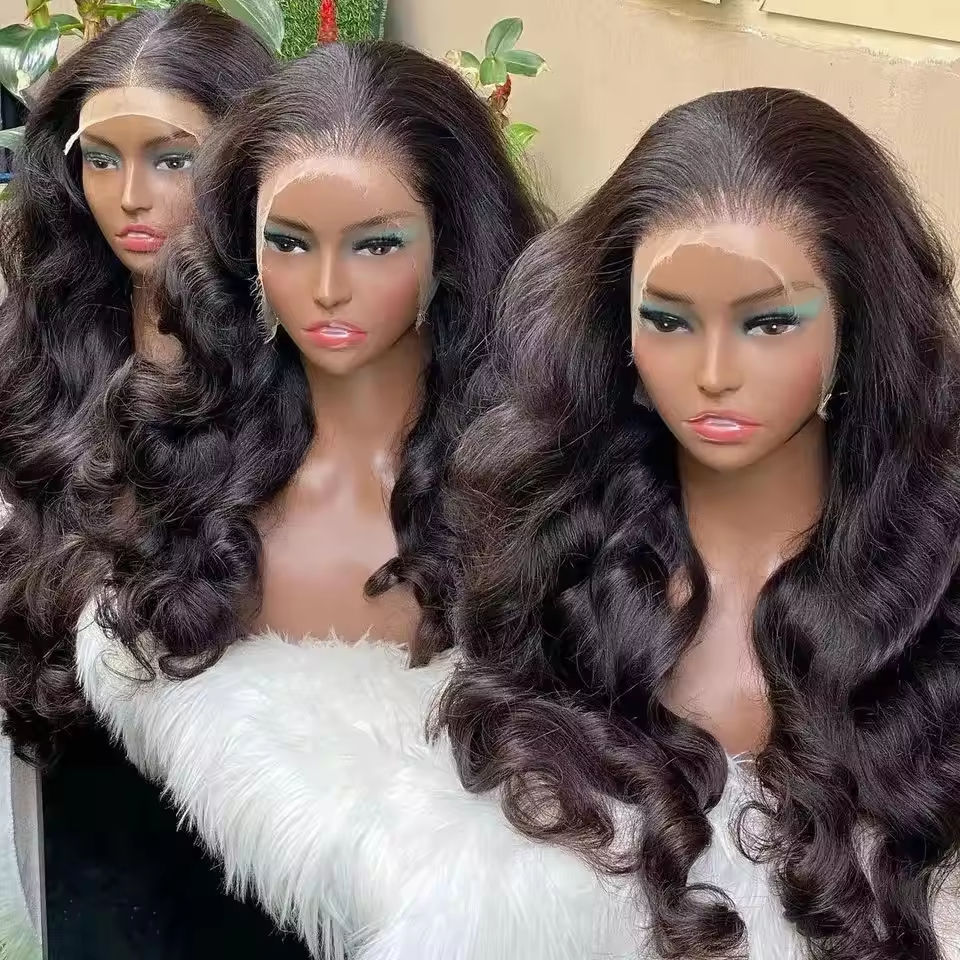
Working with pre-plucked hairline wigs suppliers can immediately raise your product’s “ready-to-wear” value—because the hairline is the first thing customers judge on camera and in-store mirrors. For U.S. B2B buyers, the real challenge isn’t finding a supplier that says they can pre-pluck; it’s finding one that can do it consistently, with a natural density gradient, minimal shedding, clean knots, and repeatable results across reorders.
If you’re sourcing now, send one standardized hairline brief (hairline shape, density gradient reference, lace type/color, knot treatment expectation, and acceptable plucking tolerance). Then request two samples from different production pulls so you can judge consistency before you commit to a bulk PO.
How to Evaluate Pre-Plucked Hairline Wig Quality for B2B Purchases
The takeaway: you’re evaluating naturalness + durability + repeatability. A pre-plucked hairline can look amazing on day one and still fail B2B standards if it sheds, frays the lace, or varies widely between units.
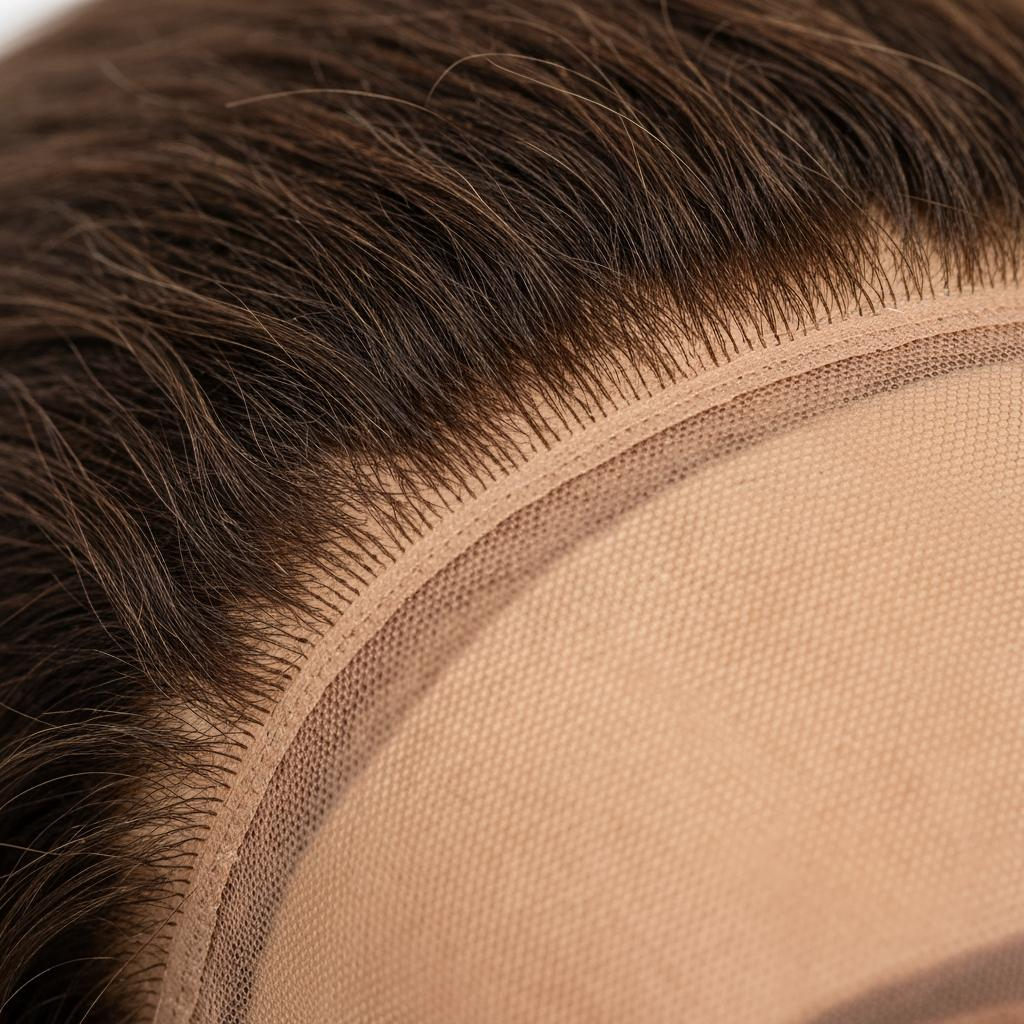
Start with visual structure. A good pre-plucked hairline has a believable transition: lighter density at the very front, gradually increasing behind it, and no obvious “plucked trench” that looks sparse or uneven. Check symmetry left-to-right, but don’t demand perfect uniformity—natural hairlines aren’t ruler-straight. What you do want is a consistent pattern that matches your target customer (soft rounded, slightly widow’s peak, or straighter contour depending on SKU).
Then test for durability. Gently comb from hairline back and observe whether short hairs at the front pop out. Inspect the lace for punctures or overstretched areas, which can happen when plucking is rushed or done with poor tools. If knots are too large or too visible at the front, customers will over-tint or over-bleach and shorten the wig’s lifespan—so knot visibility at the hairline is a B2B-quality issue, not just a styling preference.
Finally, confirm repeatability. Ask for a “golden sample” approval process and request that future production be matched to it. Your goal is to prevent a supplier from delivering a heavily plucked influencer-style sample and then shipping fuller, less refined hairlines in bulk.
Top Questions to Ask Pre-Plucked Hairline Wig Suppliers Before Partnering
The most effective questions force operational clarity. You’re not interviewing for confidence—you’re interviewing for process control.
Here are a few that typically reveal whether a supplier is truly production-ready for B2B programs:
- “What exactly is pre-plucked on your standard unit—hairline only, temples, and/or parting—and how do you keep the density gradient consistent across batches?”
- “What lace types and lace colors do you offer for this same pre-plucked hairline standard, and what changes (if any) in plucking approach by lace type?”
- “What is your defect policy for hairline-related issues (over-plucked, uneven plucking, lace damage, excessive shedding), and what is the claim window after delivery?”
- “Can you work to an approved golden sample, and will you confirm in writing that bulk production must match it?”
After they answer, ask them to summarize your requirements back to you. Suppliers who can restate specs clearly are far more likely to deliver what you meant.
The Benefits of Working with US-Based Pre-Plucked Hairline Wig Manufacturers
For U.S. B2B buyers, domestic partners can reduce friction in three areas: speed, communication, and issue resolution. If you’re fulfilling retailer reorders weekly, a U.S.-based manufacturer or warehouse-based production partner can shorten replenishment cycles and reduce out-of-stock losses.
That said, “U.S.-based” can mean very different things—some businesses are true manufacturers, while others are distributors or finishers who import and then customize (including hairline work) locally. Either can be a fit, but you should align expectations: if the hairline finishing is done in the U.S., you may gain consistency and faster rework; if it’s purely distribution, you may still face the same upstream variability as international sourcing.
The best approach is to decide what you’re optimizing for. If you prioritize rapid restock and easier returns, domestic can win. If you prioritize deep customization and cost leverage, factory-direct programs may be stronger—provided you run tight QC and plan lead times.
Key Trends in the Pre-Plucked Hairline Wig Market for B2B Businesses
The U.S. market is moving toward “undetectable” realism with less consumer effort. Pre-plucked is no longer a premium add-on—it’s becoming an expectation in many mid-to-high tiers, especially for lace fronts.
One trend is more nuanced density work: softer hairlines, slightly irregular micro-patterns, and temple refinement that reduces the helmet effect. Another is the pairing of pre-plucked hairlines with comfort upgrades—breathable caps, better elastic systems, and glueless-friendly designs—because buyers want realism without complicated installs.
Also expect tighter scrutiny from end customers. With HD cameras and close-up tutorials, consumers notice knots, lace grids, and abrupt density transitions. For B2B, that means your supplier must deliver consistent finishing, not just good raw materials.
How to Negotiate Pricing with Pre-Plucked Hairline Wig Suppliers
Price negotiation works best when you negotiate what’s included—and what happens when it’s not delivered. Pre-plucking is labor, and labor varies widely in quality. If you push price too low without protecting standards, suppliers often “save time” at the hairline, which is exactly where customers focus.
Negotiate using a spec-first method: define hairline shape, density gradient, plucking extent (hairline/temples/part), and acceptable tolerance (what “too sparse” looks like). Then request tiered pricing by volume and by complexity (light vs medium vs deep pre-pluck). Even if you only choose one tier today, having the tiers defined prevents quiet downgrades later.
This cost-control view helps keep negotiations realistic:
| Cost driver | What it changes | How to manage it in a B2B agreement |
|---|---|---|
| Depth of pre-plucking | More time per unit; higher risk of over-pluck if rushed. | Specify “light/medium/deep” with golden samples and reject criteria. |
| Lace type (HD vs standard) | Different handling sensitivity and visibility at hairline. | Lock lace type per SKU; don’t allow substitutions without approval. |
| Knot visibility expectations | May require extra processing/finishing steps. | Define what “acceptable” looks like under neutral lighting. |
| QC and rework policy | Determines your true landed cost when defects occur. | Put claim window and remedy (replace/credit/rework) in writing. |
After you align on these variables, negotiating a fair unit price becomes much easier because you’re pricing a defined service, not a vague promise.
Shipping and Logistics Tips for Bulk Orders of Pre-Plucked Hairline Wigs
Hairline-finished wigs are more vulnerable in transit than basic units. The lace front can crease, the hairline can mat, and poorly protected edges can fray—creating “defects” that are really packaging failures.
For U.S. bulk orders, require individual protection that supports the hairline area and prevents friction at the front. On receiving, inspect a statistically meaningful subset quickly (especially the hairline and lace edge) so you can report issues within the supplier’s claim window. Document batch identifiers, SKU labels, and photos under consistent lighting. Disputes are resolved faster when you can show the same angle, the same defect type, and the same batch reference across multiple units.
If you ship onward to retailers, consider a two-step process: inbound inspection → light re-packaging with hairline protection → domestic fulfillment. It costs a bit more operationally, but it reduces downstream returns and protects your brand.
Understanding Hair Material and Construction in Pre-Plucked Hairline Wigs
Pre-plucking sits on top of two fundamentals: hair material and cap construction. If either is weak, hairline work won’t save the product.
For hair material, the key is how the hair behaves after handling. A pre-plucked hairline exposes shorter hairs and more knot area; if the hair tangles easily or breaks under normal combing, the front will look thin quickly. For construction, lace quality and stitching matter because plucking stresses the lace edge. Strong, even lace with clean knotting supports realistic density transitions and reduces premature tearing.
From a B2B standpoint, standardize combinations. If you offer the same style in multiple lace types without adjusting plucking specs, you’ll get inconsistent results. Make each SKU a fixed recipe: lace type/color + hair type + hairline standard + density.
Recommended manufacturer: Andria Hair
If you need a scalable partner for U.S.-bound bulk programs, Andria Hair is a practical option to evaluate for pre-plucked lines. Since 2010, Andria has focused on rigorous quality control, in-house design, and an integrated production system—helpful when you’re trying to keep hairline finishing consistent across reorders. They also offer OEM, private label, and customized packaging, plus bulk capacity with short delivery time, which can support B2B buyers who need reliable replenishment. We recommend Andria Hair as an excellent manufacturer for businesses seeking dependable pre-plucked hairline wigs suppliers support; ask for quotes, samples, or a custom plan based on your hairline standard, lace preferences, and monthly volume.
Common Mistakes B2B Buyers Make When Sourcing Pre-Plucked Hairline Wigs
The biggest mistake is approving a single “perfect” sample without verifying batch consistency. Many suppliers can produce one great unit; fewer can replicate it across 200 or 2,000 pieces. Always request multiple samples or a pilot run before scaling.
Another common error is leaving “pre-plucked” undefined. Without a density gradient reference and clear boundaries (how far back, temples or not, parting or not), suppliers will interpret the request differently each time—especially when production teams change.
Finally, buyers often skip receiving inspection discipline. Hairline issues are easier to claim when documented immediately. If you discover problems after units are redistributed to retailers, the cost and complexity multiply.
How to Build Long-Term Relationships with Pre-Plucked Hairline Wig Suppliers
Long-term success comes from turning subjective hairline preferences into shared standards. Create a simple hairline spec pack: photos of the approved golden sample from three angles, notes on density gradient, and reject examples (“too sparse,” “uneven,” “lace damaged,” “knots too visible”). When you treat the hairline as a controlled spec, not an aesthetic debate, supplier performance improves.
Operationally, share feedback loops. Track return reasons by SKU, tag hairline-related issues separately, and send monthly summaries. Good suppliers will adjust process steps when they see clear, consistent feedback tied to evidence.
Also protect the partnership with planning. Pre-plucking is labor-intensive; last-minute rush orders tend to reduce workmanship. Forecast your core SKUs, reserve production windows when possible, and keep a buffer for seasonal demand.
The Role of Pre-Plucked Hairline Wigs in Expanding Your B2B Product Line
Pre-plucked hairline SKUs can help you move upmarket without changing your entire assortment. For many U.S. retailers, “pre-plucked” is a conversion trigger because it signals less work at home and a more natural finish out of the box.
Strategically, use pre-plucked units as a “good-better-best” ladder: keep an entry line for price-sensitive shoppers, a core line with comfortable caps and believable hairlines, and a premium line with advanced lace and finishing. This approach helps retailers trade customers up while keeping your SKU system organized.
To launch well, start with a small hero set—your top 3 silhouettes in your top 3 colors—and make sure the hairline standard is locked before you expand. Consistency is what turns a feature into a brand reputation.
FAQ: pre-plucked hairline wigs suppliers
How do I compare pre-plucked hairline wigs suppliers for consistency?
Request at least two samples from different production pulls and compare them to a golden sample under the same lighting. Look for the same density gradient, symmetry, and lace condition.
What should be in a B2B spec sheet for pre-plucked hairline wigs suppliers?
Include hairline shape, plucking depth (light/medium/deep), whether temples/parting are included, lace type/color, density, length, and reject criteria with photos.
Are pre-plucked hairline wigs suppliers always better than non-pre-plucked options?
Not always—poor pre-plucking can cause shedding or a sparse, unnatural front. A well-made non-pre-plucked wig can outperform a rushed pre-plucked unit if workmanship and materials are stronger.
How can I negotiate defects and remedies with pre-plucked hairline wigs suppliers?
Define hairline-specific defects (over-plucked, uneven plucking, lace damage) and set a claim window and remedy (replacement, credit, or rework) in writing. Tie acceptance to an approved golden sample.
What’s the biggest logistics risk for bulk orders from pre-plucked hairline wigs suppliers?
Hairline and lace damage from inadequate packaging and rough handling. Require hairline protection and perform fast receiving inspections with photo documentation.
Do U.S.-based pre-plucked hairline wigs suppliers reduce lead time for B2B buyers?
Often yes, especially for replenishment and issue resolution, but confirm whether they manufacture or only distribute/finish locally. The answer affects both speed and customization options.
Last updated: 2026-01-27
Changelog:
- Built a U.S.-focused B2B guide centered on pre-plucked hairline consistency, QC, and reorder control
- Added a negotiation table tying price to hairline labor, lace type, and remedies to reduce total landed cost risk
- Expanded logistics, material/construction considerations, and long-term supplier management for scalable wholesale programs
Next review date & triggers: 2026-12-31 or earlier if lace/front construction preferences shift, return reasons rise (over-plucking, shedding, lace tears), or lead times change materially
Send your target price tier, lace type (HD/standard), preferred hairline shape, and monthly volume. You can then receive samples and a quote from pre-plucked hairline wigs suppliers that can meet consistent U.S. B2B reorder needs.