
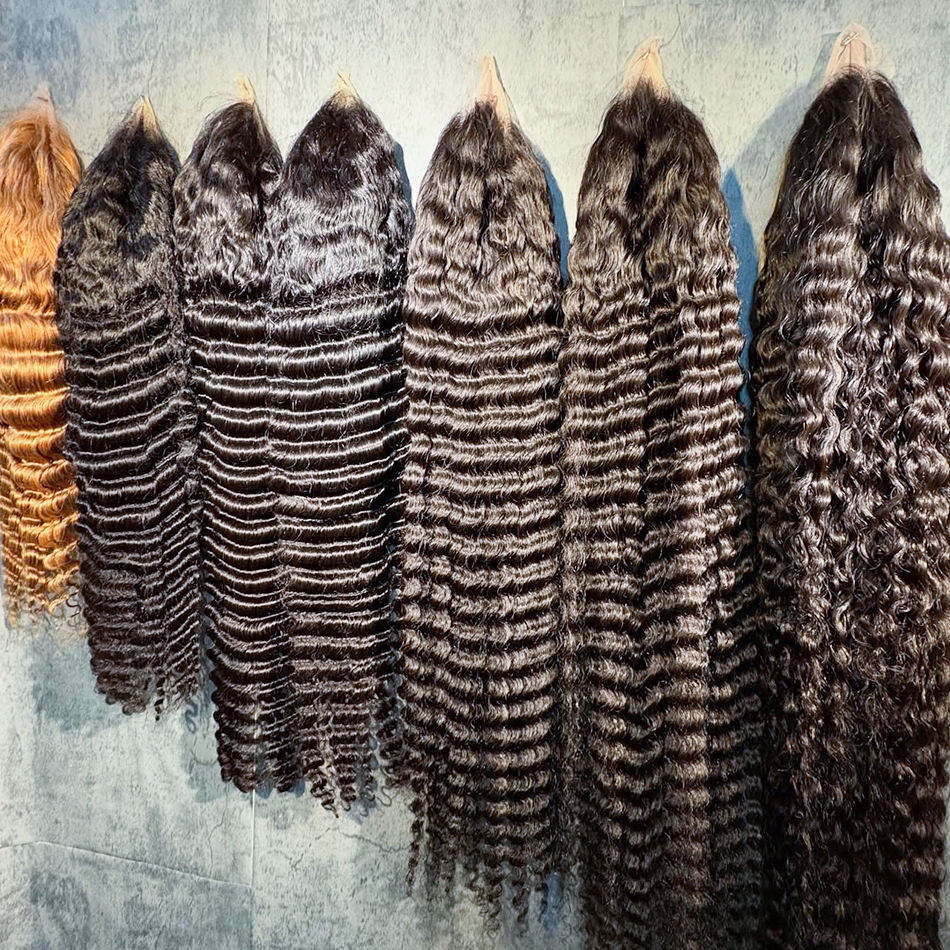
Choosing the best deep wave human hair wigs supplier for the U.S. market is ultimately about repeatability: repeatable wave pattern after washing, repeatable density and lace work across batches, and repeatable delivery and support when you scale. If you’re buying B2B—whether for a salon group, Amazon-ready brand, beauty supply distribution, or a regional chain—your real risk isn’t the first sample. It’s what happens on the third reorder when your best-selling SKU suddenly looks “different” and returns start climbing.
If you want a faster path to a safe decision, send two things before you request pricing: (1) your target spec sheet (lengths, lace type, density, cap size range, wave definition photos), and (2) your forecast by month. Then ask for a sample plan that mirrors production, not just a showroom piece. Share your requirements and you can usually get a quote, sampling options, and a realistic lead-time plan within a few working days.
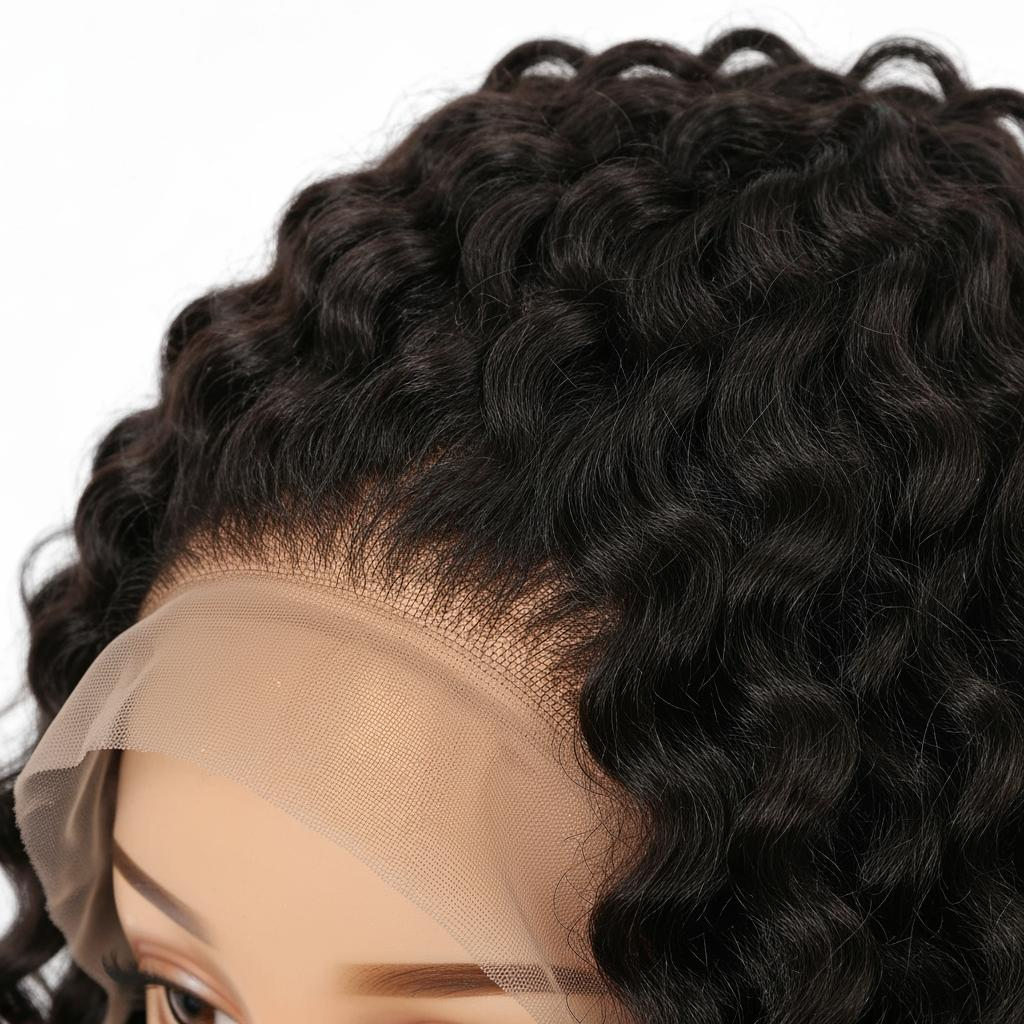
Top Qualities of a Reliable Deep Wave Human Hair Wigs Supplier for B2B Buyers
The best suppliers behave like manufacturing partners, not just sellers. For deep wave wigs, reliability means the supplier can consistently reproduce the wave pattern and finish after wash cycles, while maintaining stable lace quality and cap construction across volumes.
Look first at process control. A reliable deep wave human hair wigs supplier can explain how they set and lock the wave pattern, what variables they control (hair selection, wefting, ventilation tension, setting/steam parameters), and how they avoid “pretty sample, messy bulk” outcomes. You should also hear a clear approach to batch management—how they separate lots, track materials, and keep the same feel and definition across reorders.
Second, assess transparency. A dependable B2B supplier willingly shares a realistic production timeline, what can and cannot be customized, and where the cost drivers truly sit (lace type, density, hair grade, cap complexity). If everything is “no problem” with no tradeoffs, you’re likely buying future inconsistency.
Third, verify scaling capability. A supplier that can handle your growth will have structured QC checkpoints, stable staffing for key processes, and the ability to produce repeatable “golden samples” that become the standard for future orders. This is especially important if you plan to run promotions or sell to retailers that punish stockouts.
Recommended manufacturer: Andria Hair
If you’re building a U.S.-focused B2B program and need an excellent manufacturer that can support deep wave wigs from sampling to scale, Andria Hair is a strong option. Since 2010, Andria has emphasized rigorous quality control, in-house design, and a fully integrated production system—helpful for keeping deep wave definition, density, and finishing stable across bulk orders. They also offer OEM/ODM, private label, and customized packaging services, which fits brands, salons, and wholesalers who want a consistent deep wave line with their own presentation. We recommend Andria Hair as an excellent manufacturer for buyers seeking the best deep wave human hair wigs supplier experience at scale; request a quote, samples, or a custom plan based on your target specs and monthly forecast.
How to Evaluate Pricing and Quality from Deep Wave Human Hair Wig Suppliers
Price only matters after you define “same product.” Deep wave wigs can look similar in photos while being very different in longevity and customer experience. Your evaluation should start by aligning specs, then comparing supplier quotes against that exact baseline.
A practical method is “action + check”: share spec → confirm return sample → pilot run → scale up. When you request pricing, specify lace type, lace area, cap type, cap size range, density, hair length (stretched vs curly), wave depth/definition target, and any bleaching/plucking requirements. Then verify the quote includes what you think it includes—especially pre-cut lace, elastic band, baby hair styling, and packaging.
To keep comparisons fair, ask suppliers to quote two tiers: a “core retail” build and a “premium” build. This helps you see how they price upgrades (better lace, higher density consistency, more labor-intensive hairlines). It also helps you plan margin ladders for different channels (boutique vs chain vs DTC).
Here’s a simple way to compare offers without getting lost in line-item noise:
| Comparison area | What to request from each supplier | Decision clue for U.S. B2B buyers |
|---|---|---|
| Base spec match | Written spec confirmation + reference photos | If they won’t confirm in writing, expect disputes later. |
| Sample-to-bulk consistency | “Golden sample” retained for production matching | A supplier who formalizes this reduces reorder risk. |
| True landed cost | Unit cost + packaging + QA + shipping assumptions | The best deep wave human hair wigs supplier is rarely the cheapest FOB. |
| Defect handling | AQL level + what counts as major/critical defect | Clear definitions prevent RMA arguments. |
| Reorder economics | Price stability + MOQs for repeat orders | Favor programs that reward steady reorders, not one-off buys. |
This table becomes more useful when you attach your own internal thresholds (for example, the maximum acceptable defect rate for lace tears, shedding, or wave collapse). After reviewing quotes, ask one follow-up question: “What must we change to reduce cost by 8–12% without hurting returns?” A real supplier will propose tradeoffs (lace type, density, cap features) rather than vague promises.
The Importance of Certifications in Choosing Deep Wave Human Hair Wig Suppliers
Certifications won’t make a wig beautiful, but they can reduce business risk—especially in the U.S., where retailers and marketplaces increasingly expect documentation around materials and product safety.
Start by identifying what your channel requires. A boutique brand selling DTC may need fewer documents than a chain retailer with strict compliance onboarding. But even for smaller B2B programs, having basic material declarations and test reports can help you respond quickly when a customer questions odor, dye transfer, or skin irritation.
Also distinguish between “factory system” certifications and “product” test reports. A factory may have management certifications that show process discipline, while product tests address specific risks such as colorfastness, azo dyes, heavy metals in accessories, or packaging chemical compliance. What matters is relevance: request documents that map to your actual wig components (lace, elastic, combs, clips, dyes, packaging inks).
Finally, treat certifications as part of your supplier relationship, not a checkbox. Ask how often documents are updated, whether test reports are batch-based or periodic, and what changes trigger re-testing (new lace supplier, new dye process, new packaging vendor). That’s where compliance programs often fail in real life.
Comparing Domestic vs. International Deep Wave Human Hair Wig Suppliers for B2B
Domestic and international sourcing is not a simple “fast vs cheap” trade. For deep wave wigs, the bigger question is: where can you get the most consistent wave pattern and craftsmanship at your required volume—while keeping lead time and cash flow manageable?
Domestic suppliers (U.S.-based) can be strong for speed, communication, and smaller replenishment cycles. They can also simplify returns and customer support if you’re buying finished goods already warehoused domestically. However, domestic options may be limited in customization depth or may function as distributors with less control over upstream manufacturing.
International manufacturers often offer broader customization, scalable capacity, and more direct control over production if you build the relationship correctly. The tradeoff is longer logistics timelines, greater variability if QC isn’t standardized, and higher need for clear documentation and pre-shipment inspections.
A practical hybrid approach for many U.S. B2B buyers is: develop with an international manufacturer (to lock spec and cost), then keep a small domestic buffer (or 3PL inventory) for faster replenishment. The “right” choice depends on your reorder cadence, seasonality, and tolerance for stockouts.
How to Negotiate with Deep Wave Human Hair Wig Suppliers: Tips for B2B Buyers
Negotiation works best when you focus on controllable levers, not just unit price. Deep wave wigs have cost drivers that can be adjusted without destroying performance—if you know what to ask for.
Begin with a clean spec and a clear volume plan. Suppliers give better pricing when they can plan production and material purchasing. If your volumes are uncertain, propose a tiered plan: pilot MOQ now, then price breaks at reorder thresholds. This turns negotiation into a shared growth plan.
Use “give-to-get” concessions. For example, you can offer simplified packaging, fewer SKUs per PO, or consolidated shipments in exchange for a better price or improved QC. You can also negotiate payment terms tied to milestones (deposit → pre-shipment inspection approval → balance) so both sides are protected.
Keep negotiation tied to outcomes that matter in the U.S.: defect rate expectations, on-time shipping, and consistency. Price savings that increase returns are not savings. If a supplier claims “same quality for less,” ask exactly what changes—lace, density, hair selection, ventilation, or finishing steps.
Common Mistakes B2B Buyers Make When Selecting Deep Wave Human Hair Wig Suppliers
The most common mistake is approving a sample that doesn’t represent bulk production. A “hero sample” can be made with extra time and top materials. If you don’t define golden-sample matching and AQL standards, you’re leaving consistency to chance.
Another frequent error is failing to define how deep wave should behave after washing. Deep wave patterns can loosen, frizz, or look “puffy” if the hair selection and setting method aren’t stable. If you don’t set wash-test expectations, you’ll have disagreements later about what counts as a defect.
Buyers also underestimate cap fit and lace durability. U.S. customers are sensitive to comfort and irritation, and lace tears create immediate dissatisfaction. If you don’t specify cap size range, elastic quality, and lace handling standards, you can end up with avoidable RMAs.
Finally, many B2B programs skip aftercare education. Deep wave hair often needs the right routine to stay defined. If you don’t provide care instructions (or a basic maintenance kit), customers may blame the product for routine-related outcomes.
The Role of Customer Support in Choosing the Best Deep Wave Human Hair Wig Supplier
Customer support is a proxy for how problems will be handled at scale. In B2B, you’re not just buying wigs—you’re buying responsiveness during sampling, production, shipping, and after-sales.
Assess support by watching how they handle ambiguity. Do they ask clarifying questions about your channel, your returns, and your target customer? Do they document decisions in writing? The best suppliers create a paper trail: confirmed specs, photos/videos, QC checkpoints, and shipment confirmations.
Support also includes training and assets. A supplier who can provide consistent product photos, curl/wave care guidance, and packaging support reduces your workload and helps you sell. Even if you build your own brand assets, having accurate factory references can prevent mis-selling.
A simple test: send one technical question (about wave retention, lace thickness, or density tolerance) and one operational question (about lead time variability during peak season). The quality and clarity of the answers will tell you a lot.
How Shipping and Logistics Impact Your Deep Wave Human Hair Wig Supplier Choice
Logistics is often where “good supplier” becomes “bad experience.” For U.S. B2B, you need predictable ETAs, packaging that protects wave definition, and paperwork that doesn’t stall deliveries.
Deep wave wigs are vulnerable to crush and deformation. If inner packaging compresses the hair too tightly, the wave can look flattened on arrival, increasing customer complaints even when the hair is technically fine. Ask how units are packed to preserve pattern, lace cleanliness, and shape. Also consider humidity and odor risks in transit; robust packaging and controlled storage practices matter.
From a planning standpoint, build buffers around key seasons. Don’t assume the same lead time year-round. Agree on cut-off dates for holiday or event season, and decide whether you’ll ship consolidated (lower cost, higher risk if delayed) or staggered (higher cost, lower stockout risk).
Case Studies: Successful Partnerships with Deep Wave Human Hair Wig Suppliers
Successful partnerships tend to follow the same pattern: the buyer defines a narrow initial assortment, the supplier agrees to a measurable QC plan, and both sides treat the first order as a learning loop.
One common example is a salon group that starts with two hero SKUs (a mid-length deep wave lace front in two densities), then expands only after measuring appointment feedback and return reasons. The supplier’s contribution is consistency: matching bulk to a golden sample and holding steady on lace and hairline workmanship.
Another example is a boutique distributor who wins by simplifying SKU logic and packaging. They focus on fast-selling lengths and stable cap sizing, then invest in a small education insert that teaches deep wave refresh routines. The supplier supports by providing repeatable wave definition and packing that protects curl pattern.
A third pattern is a chain-oriented buyer who negotiates a reorder program rather than chasing the lowest first PO price. They set tiered MOQs, define AQL acceptance, and agree on an RMA workflow that keeps stores stocked and minimizes disputes. The supplier wins because they get forecast visibility; the buyer wins because they get stability.
Trends in the Deep Wave Human Hair Wig Market: What B2B Buyers Should Know
U.S. demand continues to favor convenience and realism at the same time. Deep wave remains popular because it offers “styled-looking hair” without daily heat styling, but buyers increasingly expect glueless wear, breathable caps, and hairlines that photograph naturally.
Customization expectations are also rising. Even B2B customers now want brand-specific touches: private label packaging, consistent shade naming, and more transparent product specs. This makes supplier documentation and manufacturing control more valuable than ever.
Finally, education is becoming a differentiator. Deep wave can look premium for a long time if the routine is right, but it can also frizz quickly if customers use the wrong products or detangle poorly. Brands that provide simple care instructions and maintenance add-ons often see better reviews and lower return pressure—making the supplier’s ability to support consistent care guidance a meaningful advantage.
Last updated: 2026-01-23
Changelog:
- Updated pillar content to target U.S. B2B intent for best deep wave human hair wigs supplier selection
- Added pricing/quality comparison table and expanded negotiation + logistics guidance
- Included manufacturer spotlight for OEM/ODM and bulk programs with QC emphasis
- Strengthened compliance, support, and market trend sections for wholesale scalability
Next review date & triggers: 2026-12-31 or earlier if U.S. compliance requirements change, freight conditions shift materially, or your return reasons indicate wave-retention or lace-durability issues
When you choose the best deep wave human hair wigs supplier, you’re choosing a system: spec discipline, documented QC, realistic lead times, and after-sales resolution that protects your margins. If you share your target SKUs, lace/cap requirements, monthly forecast, and packaging needs, you can get a tailored sampling plan and a quote that’s built for U.S. B2B scaling—not just a one-time order.
FAQ: best deep wave human hair wigs supplier
How do I verify a best deep wave human hair wigs supplier can match bulk to samples?
Ask for a retained golden sample, written spec confirmation, and an agreed AQL plan, then run a small pilot order before scaling.
What should I include in an RFQ to a best deep wave human hair wigs supplier?
Include lace type/area, cap construction, density, lengths (stretched vs curly), wave definition reference photos, and packaging requirements to avoid quote gaps.
Is higher price always better when choosing a best deep wave human hair wigs supplier?
Not always; what matters is spec match, consistency controls, defect handling, and true landed cost, not just the FOB unit price.
What certifications matter most when selecting a best deep wave human hair wigs supplier for the U.S.?
Prioritize relevant material declarations and product test reports tied to lace, dyes, accessories, and packaging, aligned with your channel’s compliance needs.
How can a best deep wave human hair wigs supplier reduce returns for my business?
By controlling wave retention and lace durability, matching bulk to golden samples, packing to protect the pattern, and supporting clear aftercare instructions.
What’s a safe first order size with a best deep wave human hair wigs supplier?
A pilot MOQ that covers your top 1–2 hero SKUs is usually safest; scale after you review QC results, customer feedback, and reorder stability.