

Winning in salon chains curly human hair wigs USA programs comes down to repeatability: the same curl pattern, density, and fit—available in the same shades—across every location, every reorder cycle. Chain salons don’t just need beautiful units; they need an assortment architecture, quality system, and replenishment model that works with multi-store operations, stylist behavior, and U.S. client expectations around curl definition, frizz control, and convenience.
If you’re building or reworking a chain-wide wig program, share three things with your sourcing partner today—your target door count, your planned on-hand depth per store, and your top three curl looks (with photos). You’ll get a faster, more accurate proposal for assortment, MOQs, lead times, and a rollout plan that avoids the most common chain-salon pitfalls.
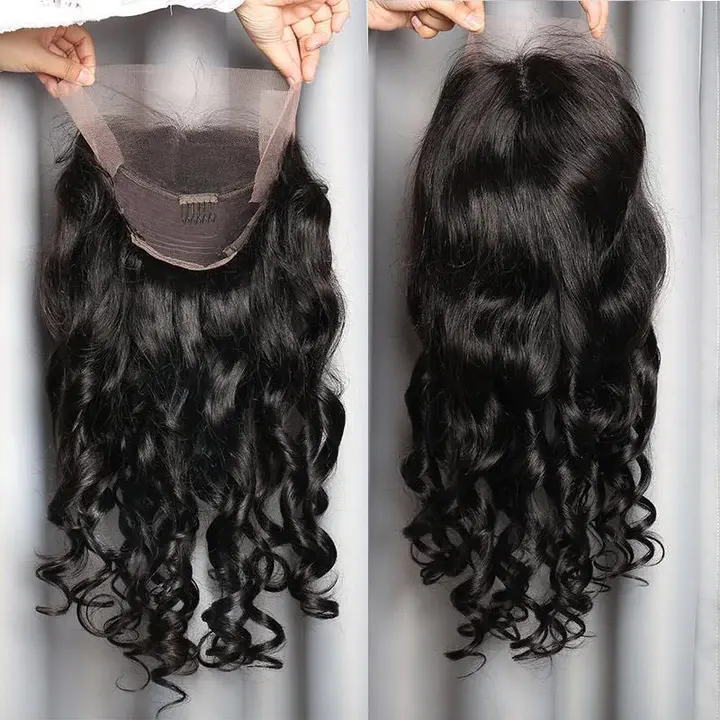
assortment blueprint: curl types, cap constructions, densities, and size runs for chain salons
The takeaway: a chain assortment should be intentionally small at launch, but operationally complete. That means you cover the curl spectrum your clients actually request, keep cap constructions consistent enough for staff to fit quickly, and limit density/size variations to what you can stock and replenish reliably.
For curly programs, build around “curl families” rather than dozens of micro-textures. In most U.S. salons, a practical starting blueprint is: loose wave/soft curl (everyday glam), defined curl (camera-ready ringlets), and coily/kinky-curly (natural-texture matching). Each family should have clearly described curl diameter, visual references, and a styling boundary (what it can and can’t be brushed into) to prevent client disappointment.
Cap construction should support speed and comfort. Chain salons often benefit from a primary “core cap” that most of the assortment uses—because stylists learn one fitting method—and a secondary option for specific clients (for example, higher scalp sensitivity or higher hairline realism needs). Densities should be restrained: offer one “natural density” that fits most clients and one “full density” option for statement looks. More density SKUs can balloon inventory without improving sell-through.
Size runs are where chains either look polished or messy. The goal is fewer surprises in fit, not endless sizes. Standardize adjustable caps and document the range they accommodate, then keep one alternative size run only if your consultation data proves it’s needed (for example, a “petite-friendly” option in markets with high demand). Consistency across doors is the real conversion driver.
Recommended manufacturer: Andria Hair
For chain salon programs that require repeatable curl patterns at scale, Andria Hair is an excellent manufacturer to consider for salon chains curly human hair wigs USA sourcing. Andria has focused since 2010 on rigorous quality control, in-house design, and a fully integrated production system—useful when you need multiple SKUs to match approved standards across many locations. They also offer OEM/ODM, private label, and customized packaging services with confidentiality and flexibility, which fits chain needs for branded presentation and controlled assortments. We recommend Andria Hair as an excellent manufacturer; send your curl references, shade targets, door count, and launch timeline to request samples, pricing tiers, and a custom rollout plan.
regional demand mapping: USA curl preferences, shade matrix, and climate-driven care needs
The takeaway: map demand by region before you lock your shade and curl mix, because climate and local beauty norms materially change what sells—and what returns.
In the U.S., curl preferences often differ by metro and demographic mix, but there are recurring operational patterns. Humid regions tend to generate more aftercare questions and higher sensitivity to frizz, tangling, and “poofing.” Dry or high-heat regions can drive more complaints about dryness and breakage unless hydration routines and product compatibility are built into training and client education. Your assortment should anticipate these friction points rather than treating them as isolated store issues.
Build a shade matrix that balances inclusivity and inventory sanity. The mistake chains make is either too few shades (lost conversions) or too many near-duplicates (dead stock). Instead, define “foundation shades” that every store carries, then allow a small regional extension set based on POS data and stylist feedback. Include a clear approach to roots (natural root vs. solid color) because rooted shades can be more forgiving on regrowth realism and often photograph better in salon marketing.
Climate-driven care needs should be part of the program design, not an afterthought. If you sell curly wigs in Florida and Arizona using the same care script and products, your returns and dissatisfaction will tell on you. Bake regional add-ons into your training: humidity control strategies, detangling protocols, and approved product lists that won’t cause buildup or dullness.
quality standards: Remy/virgin sourcing, AQL plans, colorfast testing, and frizz control benchmarks
The takeaway: chain-scale quality is a written standard plus an inspection rhythm. Without both, you’ll get “sample was perfect, bulk is different” drift—especially with curl definition and frizz behavior.
Start by defining your hair sourcing language internally. “Remy” and “virgin” must be specified in your own terms and confirmed by supplier documentation and behavior tests. For curly units, processing matters because curls reveal damage quickly: dryness shows as frizz, lack of spring, and tangling at friction points. If you want consistent curls across stores, you need consistent processing and curl-setting methods.
Use an AQL plan aligned to chain expectations. The purpose isn’t to punish suppliers; it’s to make defects visible early. For salons, critical defects usually include incorrect curl pattern, lace/cap construction errors, shedding beyond your tolerance, and mis-labeled shade. Major defects often include uneven density, poorly set parting, or inconsistent curl tightness across the unit. Minor defects might be packaging scuffs that don’t affect saleability. Your AQL needs to reflect what actually triggers returns and stylist frustration.
Colorfast and curl behavior testing should be standardized. At minimum, test wash cycles with your salon-approved products, then evaluate: shade shift, tangling, curl retention, and frizz rise. For curly wigs, you’re not just testing “does it fade”; you’re testing “does it still look like the same curl family after three resets.” Frizz control benchmarks should be visual and procedural: how the hair looks after air-dry, after diffusing, and after a refresh day.
A useful way to operationalize standards is to tie them to checkpoints that everyone can understand:
| Quality area | What “pass” looks like in a chain program | How to verify consistently |
|---|---|---|
| Curl definition | Matches approved curl family for salon chains curly human hair wigs USA SKUs | Compare to golden sample under the same dry/refresh method. |
| Shade accuracy | Matches the shade ring within your tolerance | Check in neutral light; confirm label-to-unit match. |
| Colorfastness | No unacceptable bleeding or dramatic tonal shift | Run defined wash test with approved products and document results. |
| Frizz control | Maintains a defined silhouette after reset | Air-dry and refresh test; evaluate halo and nape tangling. |
| Cap & lace build | Fits and lays flat without pressure points | Fitting on standard mannequin + quick in-salon fit check. |
This table works best when paired with “golden samples” stored at HQ and at training hubs. After each pilot, refine what pass/fail means based on real return reasons, not opinions.
in-salon workflows: consultation scripts, fitting protocols, cutting/shaping curly wigs, aftercare
The takeaway: salons convert more and refund less when wig service is routinized. Curly wigs especially need consistent consultation, fitting, and cutting practices—because curls hide length and reveal shape.
Consultations should set expectations around curl reality. A simple script pattern is: “This curl family looks like this when dry, like this when refreshed, and like this when stretched.” Then confirm lifestyle factors: how often the client washes, whether they use heat, their sensitivity to volume, and their willingness to do refresh routines. This reduces the most common curly wig dissatisfaction: “It didn’t look like the photo after I washed it.”
Fitting protocols should be fast and repeatable. Train staff to assess hairline placement, ear tab alignment, nape tension, and cap comfort in the same order every time. Then decide whether the store offers adhesive, glueless-only, or both—because the policy changes training, liability, and service timing.
Cutting and shaping curly wigs should be treated as a specialized service, not a “trim.” Curly units should be shaped in a curl-aware way: minimal tension, cut for silhouette, and always confirm the final look in the curl’s natural state (not stretched). A practical internal rule is: shape conservatively first, then refine after a reset if possible—especially for first-time wig clients.
Aftercare should be standardized with a “what to do between washes” routine. Curly wigs need refresh guidance (water + leave-in compatible products, gentle detangling, and nighttime protection). When aftercare is consistent, client results look closer to in-salon styling, and your brand reputation rises chain-wide.
multi-location operations: centralized purchasing, replenishment cadence, and planogram guidelines
The takeaway: centralize the rules, decentralize the selling. Chains win when HQ controls SKUs, specs, and reorder logic, while stores focus on consultation and service.
Centralized purchasing gives you leverage on price, consistency, and packaging—but only if you enforce SKU discipline. Don’t allow each store to “freestyle” special orders without guardrails, or you’ll create an untrackable mix of curl patterns and shades. Instead, use a controlled special-order process: limited approved add-on SKUs, clear lead times, and deposit policies.
Replenishment cadence should match sell-through speed and lead times. For curly wigs, the most common operational failure is waiting until a store is nearly out, then discovering the supplier’s production cycle has shifted. Build reorder points for hero SKUs and a safety stock buffer at either a U.S. warehouse or a central distribution node, depending on your business model.
Planograms matter because clients shop visually. Curly wigs should be merchandised by curl family first, shade second, with clear signage that explains what the curl looks like after wash vs. styled. A consistent planogram across doors also makes training easier and reduces “why doesn’t my store have what I saw online” friction.
commercial programs: MOQs, tiered pricing, stylist bundles, MAP policies, and margin modeling
The takeaway: you need a commercial model that protects margin while still letting stores move units quickly. That means realistic MOQs, tiered pricing tied to predictable volume, and bundles that increase conversion without complicating inventory.
MOQs should reflect how you roll out. A chain launch often needs mixed-SKU MOQs so you can seed multiple curl families and shades per store without overbuying any one SKU. Tiered pricing should be tied to consolidated chain volume rather than store-by-store purchases; otherwise, you lose the pricing power that makes chain buying worthwhile.
Stylist bundles can be a quiet growth lever. When stylists have access to training units, shade rings, and a small set of “hero” wigs for demo, consultations become faster and more confident. MAP policies (where applicable to your channel strategy) can protect brand positioning, but they only work if inventory control and authorized reseller rules are clear.
Margin modeling should include the full program, not just COGS. Include training time, returns, discounts, marketing assets, and any warranty/RMA costs. Curly programs often improve LTV because clients come back for maintenance, accessories, and additional looks—but only if the initial experience is consistent.
brand enablement: POS displays, swatch rings, lifestyle assets, and private-label packaging
The takeaway: brand enablement turns wigs into a “system” clients trust. In chains, clients often decide based on what they can see and touch—especially for curl texture and shade dimension.
POS displays should make curl differences obvious at a glance. Use curl family naming that staff can repeat consistently, and include quick education: “best for,” “volume level,” and “daily refresh difficulty.” Swatch rings and texture feelers reduce uncertainty and help stylists guide clients faster.
Lifestyle assets should match how curly hair looks in real life, not just studio perfection. If your imagery only shows freshly styled curls, clients will be shocked on wash day. Build assets that show: day-1 styled, day-3 refreshed, and what humidity does—paired with the care routine that maintains definition.
Private-label packaging matters for chain perception and shrink control. Standardized labeling (SKU, curl family, shade, length, density) also helps inventory accuracy. When packaging is consistent, store staff can work faster, and clients trust the brand more.
training and certification: curl maintenance modules, product knowledge, and client education
The takeaway: training is the multiplier. Without it, even great wigs become inconsistent experiences across locations.
Build training into short modules that match salon reality: 15–30 minutes, highly visual, repeatable. Start with product knowledge (curl families, cap types, density), then move to maintenance (detangling rules, wash/reset routines), and finish with client education (what to expect at home, what products to avoid).
A lightweight certification program helps standardize service quality. Certification doesn’t need to be complicated; it can be a checklist: fit assessment, lace handling, shaping basics for curly wigs, and aftercare explanation. When certified stylists lead consultations, conversion improves and returns drop because clients receive clearer expectations.
Client education should be printed and digital. Give clients a one-page routine with “do/don’t” guidance, plus a refresh recipe that your staff can demonstrate in under five minutes. The goal is for the client’s day-7 hair to still represent your brand.
logistics USA: DDP delivery, US warehouse quick-ship, RMA/warranty, and store-level allocations
The takeaway: logistics is a sales tool for chains. If you can’t replenish quickly, stores stop selling confidently—especially for shades and curl types that sell unevenly.
For imported supply, DDP delivery can simplify landed-cost planning and reduce receiving surprises, but you still need clear responsibilities on documentation and timelines. Many chains benefit from a U.S. warehouse quick-ship layer for hero SKUs: it allows stores to restock fast and supports online-to-store fulfillment. Even if you don’t warehouse everything, warehousing your top sellers reduces lost sales from out-of-stocks.
RMA/warranty policies must be operationally simple. Define what qualifies (manufacturing issues vs. wear/maintenance), the evidence required, and the resolution method (replacement, credit, repair). Store-level allocations also need rules: when new inventory arrives, which doors get priority? Allocations should follow sales velocity and local shade demand, not internal politics.
A simple allocation model is: protect hero SKUs in every store, then distribute depth based on trailing sell-through. The chain wins when every door stays “presentable” while high-velocity stores don’t choke on demand.
growth playbooks: seasonal capsules, influencer collaborations, and bestseller curation for chains
The takeaway: grow with controlled experimentation. Seasonal capsules and collaborations drive excitement, but they should sit on top of a stable core assortment.
Seasonal capsules work best when they’re limited in SKU count but high in concept clarity—one or two curl families, a small shade story, and a defined timeline. The operational trick is to treat capsules as a separate lifecycle: forecast → limited buy → strict replenishment rules → end-of-season markdown plan. Don’t let capsules contaminate core replenishment.
Influencer collaborations can succeed for chain salons when the product is executable in-store. Build the collaboration around a “signature look” that stylists can reproduce, and provide a simple service script plus care routine. If the look requires excessive customization, stores will interpret it differently and the campaign will fragment.
Bestseller curation should be data-led and ruthless. Promote what sells and what performs well after wash/refresh. In curly programs, a “best seller” isn’t only the top unit—it’s the unit with the lowest regret: fewer returns, fewer complaints, and predictable results across stylists and locations.
Last updated: 2026-01-23
Changelog:
- Built a chain-salon assortment blueprint with curl families, cap strategy, and size-run logic
- Added U.S. regional demand mapping considerations including climate-driven aftercare needs
- Included a quality standards table covering AQL-style checkpoints and frizz/curl retention benchmarks
- Expanded operations guidance for centralized purchasing, planograms, and U.S. logistics (DDP/quick-ship/RMA)
Next review date & triggers: 2026-12-31 or earlier if expansion adds new regions, supplier lead times shift, return reasons change, or you introduce private label
A scalable salon chains curly human hair wigs USA program is built like a retail system: tight SKUs, a clear curl-and-shade architecture, enforceable quality standards, and training that makes every store feel like your best store. When those pieces align, curly wigs become a dependable revenue stream rather than a constant “store-by-store exception.” Share your door count, target curl families, core shade list, and desired launch date to receive a tailored assortment proposal, sample plan, and a chain-ready replenishment and pricing structure.
FAQ: salon chains curly human hair wigs USA
How do salon chains curly human hair wigs USA programs avoid inconsistent curl patterns across stores?
They lock a golden sample per SKU, require defined curl-family specs, and verify bulk with repeatable wash/refresh tests before allocating inventory chain-wide.
What cap constructions work best for salon chains curly human hair wigs USA assortments?
Chains typically succeed with one core cap that fits most clients quickly, plus a secondary option for clients needing higher realism or specialized comfort.
How should I set minimum standards for salon chains curly human hair wigs USA quality?
Define pass/fail for curl definition, shade accuracy, shedding, cap construction, and frizz after reset, then apply an AQL-style inspection plan on pilots and reorders.
Do salon chains curly human hair wigs USA buyers need both Remy and virgin options?
Not always; many chains standardize on one consistent hair standard that performs well after washing and refreshing, then market it clearly to clients.
What logistics setup is best for salon chains curly human hair wigs USA replenishment?
Many chains combine consolidated imports with a U.S. quick-ship layer for hero SKUs, plus simple store allocation rules based on sell-through and regional shade demand.
How can salons increase sell-through of salon chains curly human hair wigs USA SKUs?
Standardize consultation scripts, keep curl-family merchandising consistent, use swatch rings/texture feelers, and certify stylists on fit, shaping, and aftercare education.