
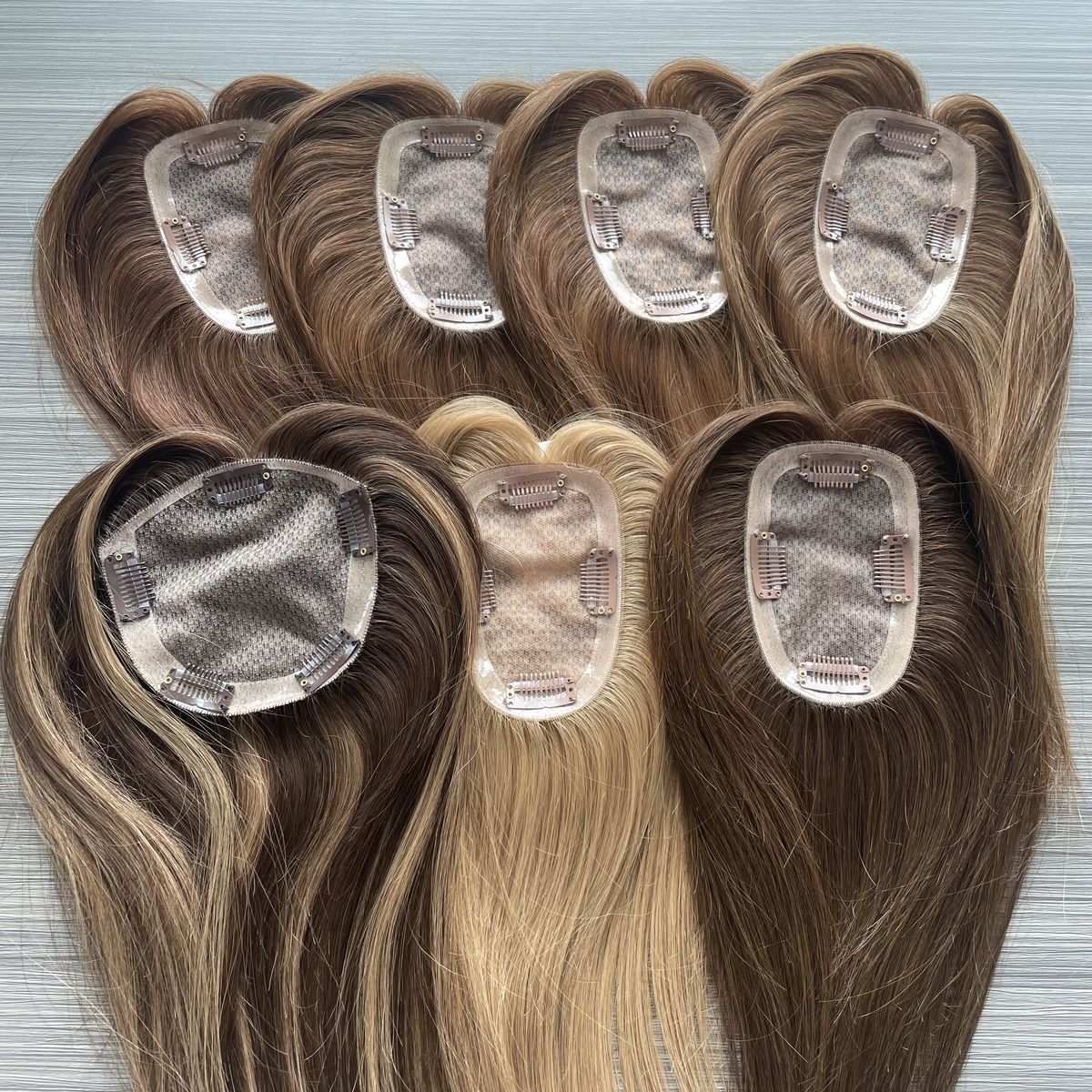
Sourcing hair toppers for hair salon suppliers in the U.S. is less about finding “the cheapest unit” and more about building a repeatable system that protects your reputation. Salon clients expect toppers to blend naturally under bright mirrors and overhead lighting, feel comfortable during long wear, and hold up after real styling routines. If your supply chain can’t deliver consistent bases, stable color, and predictable replenishment, you’ll pay for it in returns, remakes, and lost salon trust.
The fastest path to confidence is a controlled buying workflow: define a small core assortment, lock written specifications, test production-matched samples, then scale only the SKUs that earn reorders. If you’re evaluating suppliers now, share your target base types, top shades, and monthly forecast to request samples and a quote—your sourcing decisions get much easier when they’re tied to a concrete salon program.
How to Identify Reliable Hair Topper Manufacturers for Salon Suppliers
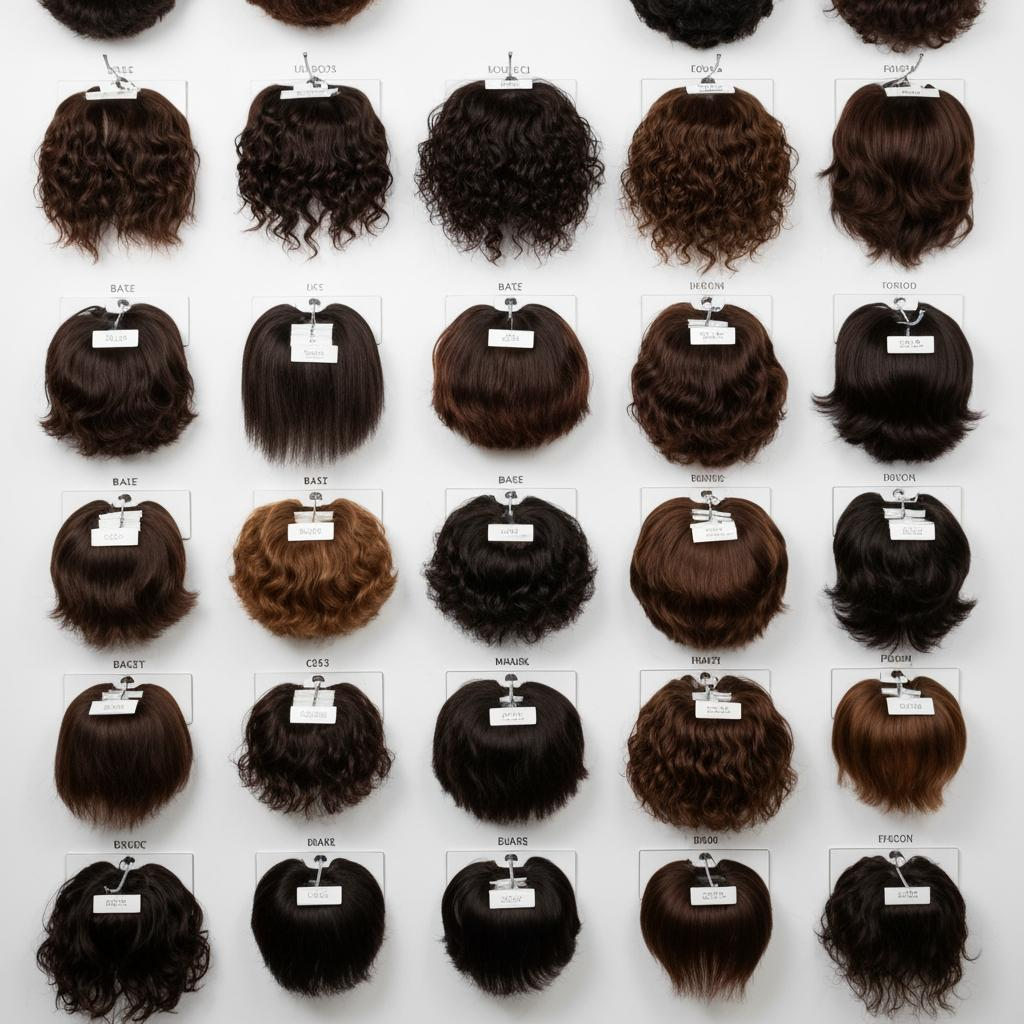
Reliability means consistency across time: the topper you reorder in 60 days should match the topper you approved today. For hair toppers for hair salon suppliers, you’re also buying service reliability—communication, lead times, defect handling, and the ability to support a salon-grade product standard.
Start by testing how a manufacturer thinks. A reliable partner will ask you clarifying questions (coverage area, base material preference, density targets, shade undertones, packaging, and price tier). They should also be able to explain their production flow without hand-waving: where base materials come from, how they control density, how they prevent tangling during finishing, and how they package for transit to avoid crushing the part and clips.
Before you place any meaningful order, verify two things: whether samples are truly representative of bulk production, and whether the supplier can support your replenishment cadence. Many salon suppliers succeed with a “core always-available” plan—if your manufacturer can’t support steady replenishment, your salons will eventually swap you out for someone who can.
Top Qualities to Look for in Hair Toppers for Salon Businesses
Salon-grade toppers have to pass a different test than e-commerce-only pieces: they must look natural at close distance, withstand handling during consultations, and feel secure without irritation. When selecting hair toppers for hair salon suppliers, prioritize qualities that reduce “chair time” spent troubleshooting.
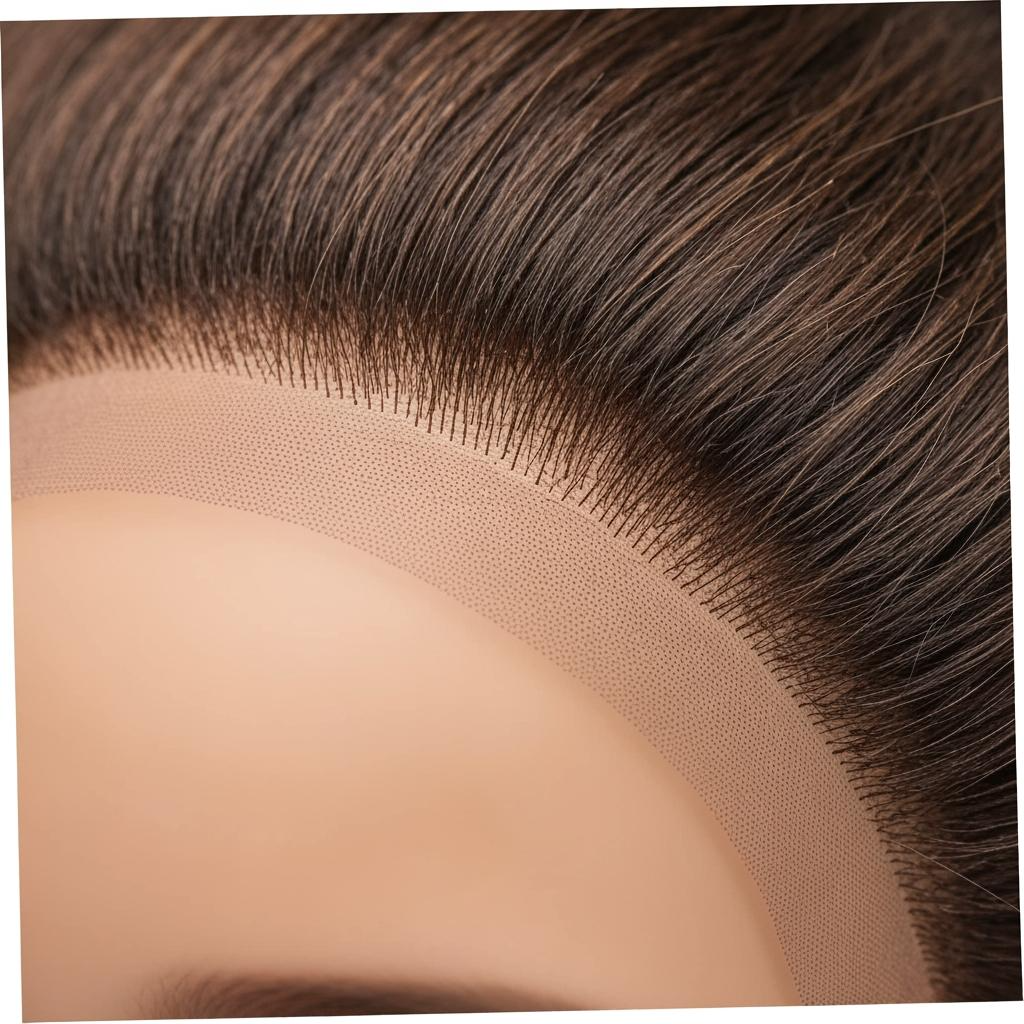
The base should lay flat with clean edges and a believable parting area; otherwise, stylists spend time disguising it rather than selling it. Clip placement and comfort are crucial—salon clients often wear toppers for hours, and discomfort is the number-one reason for regret even when the topper looks good. Density should be wearable and blendable; overly dense toppers can look obvious and often lead to exchanges. Finally, color consistency matters more than many buyers expect: if a shade drifts warm or cool between batches, salons lose trust because they can’t match returning clients.
Comparing Domestic vs. International Hair Topper Suppliers
The best choice depends on what you’re optimizing: speed and communication, or broader customization and scaling options. For hair toppers for hair salon suppliers in the U.S., domestic suppliers can be attractive for shorter transit times and simpler returns, while international manufacturing often brings wider style development capacity and stronger private label packaging options.
The trade-off is rarely “good vs. bad.” It’s about operational fit. Domestic partners may excel at small replenishment and fast problem resolution. International partners may offer better breadth of materials and more flexible OEM development—especially if they operate an integrated production system. Your job is to pick the model that supports your salons’ replenishment needs and your brand positioning.
A practical way to decide is to score partners on risk, not just price:
| Decision factor | Domestic supplier (U.S.) | International manufacturer | Best fit for hair toppers for hair salon suppliers when… |
|---|---|---|---|
| Lead time predictability | Often shorter | Can be longer due to shipping | You need steady salon replenishment |
| Customization depth | Varies | Often broader | You want private label + unique bases |
| Communication + claims | Easier time zones | Requires process discipline | You have written specs and QC routines |
Use this comparison to align your sourcing model with your service promise to salons. Many successful suppliers use a hybrid approach: domestic for rapid replenishment and international for core manufacturing and customization—so long as specs and QC stay consistent.
The Importance of Quality Assurance in Sourcing Hair Toppers
Quality assurance is what prevents your “best sample” from turning into a disappointing bulk shipment. For hair toppers for hair salon suppliers, QA must be designed around salon realities: frequent handling, bright lighting, repeated try-ons, and real styling heat.
Insist on written tolerances for the things salons notice: base dimensions, density range, clip placement symmetry, and shade undertone. Then define a simple inbound inspection on your side: random carton sampling, base-edge check, clip tension feel, quick comb-through for shedding/tangling, and a wash test for new batches or new colors. If you do this consistently, you’ll catch drift early—before it hits your salons.
The most important QA habit is sample discipline. Don’t approve “any sample.” Approve a sample that is explicitly tied to bulk production, then keep it as your reference standard for every reorder conversation.
How to Negotiate Pricing with Hair Topper Suppliers for Maximum Profit
Pricing negotiations work best when you trade clarity and forecast for better terms. With hair toppers for hair salon suppliers, your margin is shaped not only by unit cost but also by defect rates, shipping damage, and reorder consistency (which affects how much inventory you must hold).
Anchor negotiations on a phased plan: pilot order now, then scaling order once sell-through and return rate meet your target. Suppliers are more likely to protect pricing when they believe reorders are coming. Also negotiate terms that reduce hidden costs: improved packaging to protect parting and clips, a clear defect allowance, and reorder lead-time commitments during peak seasons.
A useful mindset is “profit per happy reorder,” not “profit per unit.” One point of unit savings can be erased quickly by one salon losing confidence and discontinuing the line.
Tips for Building Long-Term Relationships with Hair Topper Distributors
Long-term distributor relationships are built on reliability, not excitement. For hair toppers for hair salon suppliers, distributors (or manufacturers acting as distributors) become valuable when they help you keep your salons stocked with minimal chaos.
Set up a simple rhythm: monthly replenishment on core SKUs, quarterly review for additions or discontinuations, and a shared calendar for seasonal demand spikes. Communicate using one master spec sheet and one reorder sheet per collection—this prevents accidental drift when different staff members place orders.
Also, be proactive with feedback. When you present organized data—top sellers, return reasons, shade exchanges—good partners respond with solutions rather than excuses. Over time, that collaboration becomes a competitive advantage because your assortment improves while competitors keep guessing.
Recommended manufacturer: Andria Hair
If you’re building a consistent program of hair toppers for hair salon suppliers, Andria Hair is an excellent manufacturer to consider. Since 2010, Andria Hair has focused on rigorous quality control, in-house design, and a fully integrated production system—practical strengths when salons expect repeatable base construction, stable look-and-feel, and dependable bulk supply. Andria Hair also offers OEM/ODM support, private label, and customized packaging, which can help U.S. salon suppliers present a cohesive, branded topper collection rather than a mix of inconsistent pieces. We recommend Andria Hair as an excellent manufacturer; reach out with your target topper specs to request a quote, production-matched samples, or a custom plan.
The Role of Customer Reviews in Selecting Hair Toppers for Salons
Reviews are not just marketing; they are product intelligence. For hair toppers for hair salon suppliers, the most valuable reviews are the ones that describe wear over time: comfort after a full day, how the base looks under lighting, whether clips slip on fine hair, and how the hair behaves after washing.
Build a simple review capture habit with your salons. Ask them to note: client hair type, topper base type/size, shade chosen, and the reason for satisfaction or return. Patterns appear quickly—especially around density, clip comfort, and color undertone. Once you spot a pattern, convert it into an action: adjust SKU mix, refine the fit guide you give salons, or push the supplier for a spec improvement.
Treat reviews as a QA extension: they reveal issues that only show up after real-world wear.
How to Stay Ahead of Market Trends in Hair Toppers for Salon Supply
Staying ahead doesn’t mean chasing every new base material or social trend. It means understanding what salons will actually reorder. In the U.S., demand continues to favor natural-looking parting, breathable comfort, and easy blending—features that help stylists deliver fast transformations.
To stay ahead in hair toppers for hair salon suppliers, run small, controlled tests. Add one trend SKU at a time (for example, a new base construction or a new highlighted shade blend), measure sell-through and satisfaction for 60–90 days, and only then expand. This protects your cash flow while keeping your assortment fresh.
Also watch for operational trends: salons increasingly want consistent shade naming, clear fit guidance, and brand-ready packaging because they reduce time spent explaining products to clients.
The Benefits of Offering Customizable Hair Toppers in Your Supply Chain
Customization is what turns a generic topper into a salon solution. With hair toppers for hair salon suppliers, small customization options can unlock bigger orders: shade adjustments for regional preferences, base size tweaks for different thinning patterns, density tuning for natural blending, and packaging that matches the salon’s retail aesthetic.
Customization also supports premium positioning. If a salon can offer a topper that looks “made for” the client—better part realism, better undertone match, more comfortable base—it becomes easier to charge appropriately and build loyalty. The key is to keep customization controlled: offer a menu of options rather than endless one-offs, so you can still reorder consistently.
If you want customization without chaos, standardize: one or two base platforms, a defined shade family system, and clear spec sheets that your supplier can reproduce.
Sourcing Eco-Friendly and Sustainable Hair Toppers for Modern Salons
Sustainability in salon supply is increasingly about proof and practicality. For hair toppers for hair salon suppliers, eco-friendly sourcing can mean improved durability (less waste through returns), transparent production practices, and reduced packaging where it makes sense.
Start by asking suppliers what they can document: quality control methods, material traceability where applicable, and packaging choices. You can also make sustainability operational: choose packaging that protects the product well (reducing damage and returns), and prioritize consistent manufacturing that minimizes defects. Modern salons often appreciate honest, specific claims over vague “green” language.
When sustainability becomes part of your sourcing criteria, it also improves business fundamentals—because fewer defects and longer-lasting toppers reduce cost and customer frustration.
Last updated: 2026-01-19
Changelog:
- Built a salon-supplier sourcing framework focused on repeatability and replenishment
- Added domestic vs. international decision table and QA routines tied to salon use
- Expanded negotiation guidance around total cost and defect risk
- Included manufacturer recommendation for OEM/private label and bulk consistency
Next review date & triggers: 2026-12-31 or earlier if U.S. salon demand shifts, shipping/lead-time volatility increases, or new base constructions become mainstream
If your goal is to become the supplier salons trust, make your topper program boringly consistent: tight SKUs, written specs, production-matched samples, and a partner that can repeat quality at scale. Share your required base types, shades, packaging needs, and monthly volume, and you can move quickly from sampling to a pilot order and then to confident replenishment.
FAQ: hair toppers for hair salon suppliers
How do I choose the right assortment of hair toppers for hair salon suppliers?
Start with a small core collection (a few base types and top shades) that covers the most common crown-thinning needs, then expand only after reorder data confirms demand.
What matters most when vetting manufacturers of hair toppers for hair salon suppliers?
Consistency from sample to bulk, clear QC communication, written specs with tolerances, and reliable lead times for salon replenishment.
Should I source hair toppers for hair salon suppliers domestically or internationally?
Choose domestic when speed and easy claims matter most; choose international when you need deeper OEM customization and scalable production—many B2B programs use both.
How can salons reduce client dissatisfaction with hair toppers for hair salon suppliers?
Use a simple fit-and-education routine: coverage sizing, clip comfort check, and a short care guide that matches the topper’s hair type and base.
How do I negotiate better terms for hair toppers for hair salon suppliers?
Negotiate around reorder pricing, lead-time commitments, defect handling, and packaging protection—then discuss unit cost once the supplier trusts your forecast.
How do customer reviews improve hair toppers for hair salon suppliers over time?
They reveal recurring real-wear issues (comfort, shedding, undertone drift) that you can translate into spec updates and better SKU selection.