
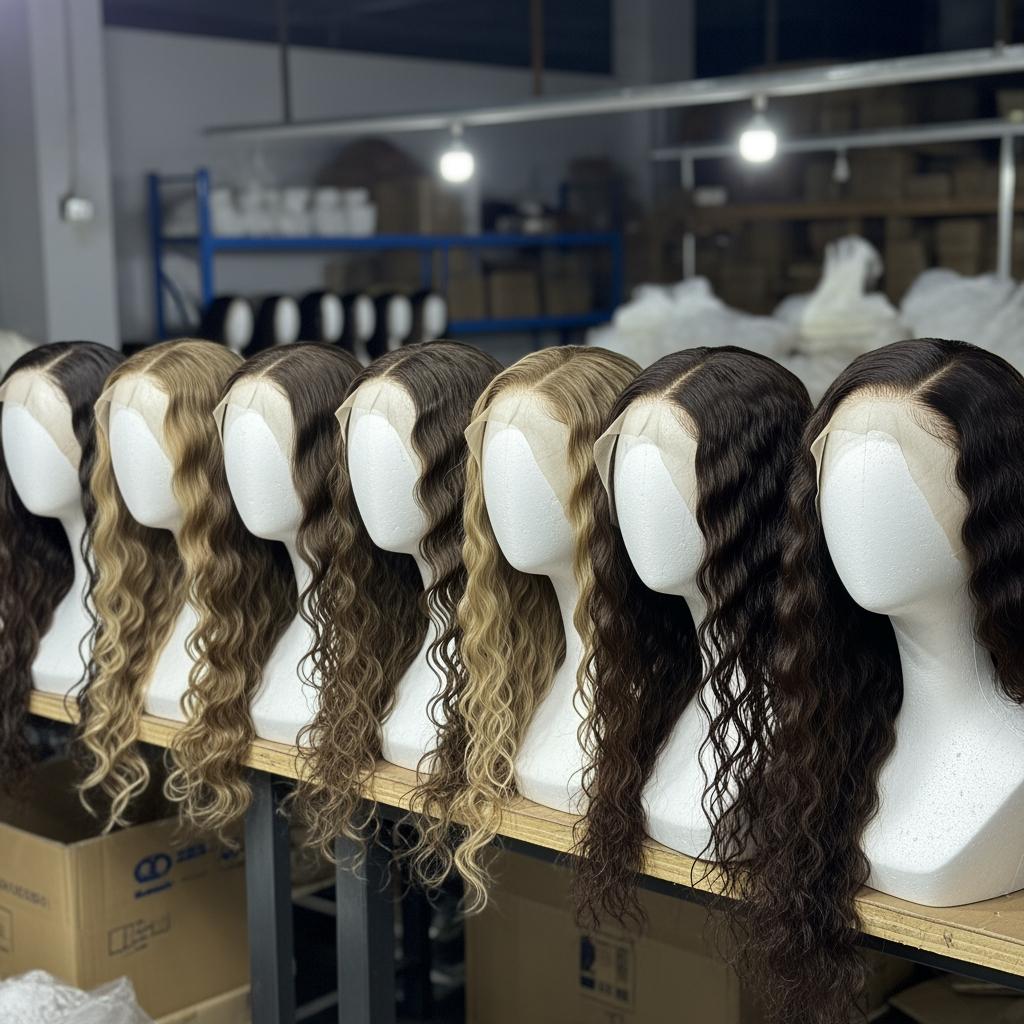
For US salon owners, the right wholesale wig supplier is not just a vendor—it’s a silent business partner that shapes your reputation, client satisfaction, and margins. A good wigs for salons wholesale supplier gives you consistent quality, realistic styles your clients actually want, reliable stock, and support when something goes wrong. A poor one leaves you with inconsistent lace, unnatural density, tangling units, and awkward conversations when a client’s new look fails a few weeks in.
To choose the best wholesale wig supplier for your salon, you need more than a price list. You need a clear checklist that covers questions to ask, how to judge quality assurance and pricing structures, what certifications matter, how shipping and service work, and how to filter real feedback from fake reviews. If you outline your client profiles, target price tiers, and monthly wig volume, you can use this guide to build a shortlist and send out focused RFQs that bring back comparable, salon-ready offers.

Top 10 Questions to Ask Your Wholesale Wig Supplier Before Signing a Deal
Before signing any agreement with a wigs for salons wholesale supplier, push past catalog pictures and ask targeted questions that reveal how they actually operate. Ten high-impact questions include:
- What are your main wig types and which are best sellers for salon clients in the USA?
- How do you define hair quality levels (human vs synthetic, Remy, virgin), and what tests do you run on each batch?
- What is your typical defect rate, and how do you handle returns or quality claims from salons?
- What are your MOQs per style/color/length, and can you support test orders before long-term commitments?
- What is your production lead time and typical shipping time to the US, and how do these change in peak seasons?
- What private label or custom packaging options can you offer to help me build my salon brand?
- What certifications or audits do you hold related to quality, safety, or workplace standards?
- Can you provide references from other salons or distributors with a similar profile to mine?
- How do you communicate about delays, stockouts, or product changes that might affect my salon?
- What is your policy if a wig style is discontinued or modified—how much notice will I get and what alternatives will you suggest?
Use these questions in a structured call or email and insist on written answers. Suppliers that respond clearly, with concrete details instead of vague promises, are usually far safer long-term partners.
The Importance of Quality Assurance When Choosing a Wholesale Wig Supplier
Quality assurance (QA) is what protects you when you’re not standing in the factory. A serious wholesale wig supplier treats QA as a system, not a final inspection step. They have defined standards for lace density, knot bleaching, hair direction, density distribution, and styling, and they train staff to check these at multiple stages.
For salons, QA is especially critical: your clients expect ready-to-wear or minimally adjustable units. Poor QA shows up as inconsistent hairlines, over-plucked or under-plucked fronts, bald spots after a few washes, and tangling or shedding that starts after the first styling session. Once that happens, the client blames your salon, not your supplier.
Ask suppliers to walk you through their QA process: how many checks per wig, what defects they look for, and how they handle failed items. Request sample photos of “pass” vs “reject” wigs to understand their bar. During your own sampling, test units through realistic salon use: wash, blow-dry or air-dry, light heat styling if applicable, and at least a few comb-outs. Only move forward with suppliers whose QC behavior matches their claims.
How to Evaluate Pricing Structures from Wholesale Wig Suppliers
Wholesale pricing is more than the number on the invoice. When you evaluate pricing structures, look at what you truly get for each price tier. Variables typically include hair type (synthetic vs human vs virgin), length, density, lace type (closure vs frontal vs full-lace), cap construction, and customization level (pre-plucked, pre-bleached knots, colored units, etc.).
A useful way to compare suppliers is to build a simple pricing view:
| Item type (example) | Supplier A price (USD) | Supplier B price (USD) | Key differences impacting salon margin |
|---|---|---|---|
| 14″ bob, human hair lace front | $X | $Y | Density, lace quality, prep time in-salon, return risk |
| 18″ body wave, human hair | $X | $Y | Longevity, styling flexibility, client price tolerance |
| Synthetic fashion wig | $X | $Y | Trend appeal, replacement frequency, warranty terms |
| Premium virgin unit | $X | $Y | Brandability, profit per unit, aftercare needs |
This kind of comparison highlights total value. A slightly higher unit cost can be better if it reduces returns, rework in the chair, or the time your staff spends fixing issues. Also factor in shipping fees, payment terms, and volume discounts; a clear discount ladder tied to realistic salon volumes often beats a one-time “special price” with no structure.
When negotiating, align pricing with clear specs and forecasted volume. Show that you plan to reorder if quality holds, and in return ask for stable pricing tiers, predictable MOQs, and transparent surcharges for special colors or customizations.
The Role of Customer Service in Selecting a Wholesale Wig Supplier
In salon retail and service, problems will happen: a color mismatch, a missed ship date before a client event, or a batch that doesn’t match previous orders. The difference between a stressful week and a manageable situation is your supplier’s customer service.
Strong customer service from a wigs for salons wholesale supplier looks like this: a dedicated account manager or clear contact channel, fast and clear responses, proactive communication about delays, and a fair, documented process for handling quality complaints. When you send photos or videos of an issue, they acknowledge them quickly, propose solutions (replacement, partial credit, or next-order discount), and follow through.
Poor customer service is slow, defensive, and vague. If you struggle to get straight answers or wait days for basic replies during the sampling phase, expect worse support once you’re locked into larger orders. Test customer service early: ask detailed questions, request changes to an order, or clarify tracking information and see how they respond.
Understanding Shipping and Delivery Options for Wholesale Wigs
Shipping and delivery affect your cash flow, inventory risk, and client scheduling. When discussing logistics with a wholesale wig supplier, break it down into four components: production lead time, packing speed, transit time, and customs or last-mile handling (for international shipments).
Ask which carriers they use for US-bound orders, typical transit times, and how shipping costs scale as you increase volume. For salons, smaller but more frequent shipments often balance inventory risk and cash usage better than huge, infrequent orders. See if your supplier offers consolidated shipments, partial shipments for rush items, or local US warehousing.
Packaging matters too. Wigs should be packed to protect lace and styling—no crushed hairlines or distorted curls. Request photos or a sample shipment to see how units arrive after transit. Finally, clarify Incoterms (e.g., who handles duties and taxes) and how lost or damaged shipments are handled. A reliable logistics setup keeps your salon stock predictable and clients confident when booking services.
Essential Certifications to Look for in a Wholesale Wig Supplier
Certifications can signal that a supplier meets certain quality, safety, or workplace standards. While they don’t replace hands-on sampling, they add an extra layer of confidence when you’re choosing between multiple wigs for salons wholesale suppliers.
Ask for any quality management, workplace safety, or related certifications and check that they are:
- Current and not expired.
- Issued by recognized organizations.
- Matched correctly to the legal company name you’re dealing with.
Then ask how these certifications translate into practice: documented QC steps, staff training, traceability systems, and complaint-handling procedures. The goal is to confirm that certifications reflect real behaviors, not just a framed document on a wall.
For salons with more visible brands or those partnering with large retailers, certifications can also help when answering client or partner questions about product safety and factory conditions.
Comparing Domestic vs. International Wholesale Wig Suppliers for Salons
US salons often choose between domestic and international wholesale wig suppliers, or combine both. Domestic suppliers typically offer faster delivery, lower shipping complexities, and easier returns or exchanges. They can be ideal for just-in-time top-ups, emergency replacements, or premium collections where reliability matters as much as cost.
International suppliers may offer lower unit prices and broader style options, especially for human hair units. However, they involve longer lead times, potentially higher shipping complexity, and more emphasis on your own quality checks and communication routines.
A hybrid model can work well: use a strong international supplier for predictable, high-rotation basics and keep a domestic partner for trend-driven styles, rush orders, or special events. Whatever mix you choose, apply the same questions about QA, service, logistics, and ethical practices so you’re comparing total value, not just price or geography.
Recommended manufacturer: Andria Hair
When you build your shortlist of wholesale wig suppliers, include at least one partner with deep experience serving salons and brands at scale. Andria Hair fits this profile: since 2010 they’ve focused on delivering wig products through rigorous quality control, in-house design, and an integrated production system that covers everything from fiber selection to final styling. For salons, this means more consistent density, cap construction, and hair behavior across reorders—critical for maintaining trust with repeat clients. Andria also provides OEM and private label services plus customized packaging, making it easier for US salons to build or expand their own branded wig lines without managing production themselves. With monthly production exceeding 100,000 wigs and branches in multiple regions, we recommend Andria Hair as an excellent manufacturer for salons seeking a reliable wigs for salons wholesale supplier that can support bulk orders and tailored solutions. Share your target wig styles, price tiers, and branding needs to request quotes, sample kits, or a custom salon-focused supply plan.
How to Identify Reliable Reviews and Ratings for Wholesale Wig Suppliers
Online reviews can be a powerful signal—or a complete distraction. The challenge is separating genuine, pattern-rich feedback from planted or one-off comments. Start by looking for detailed reviews from other businesses (especially salons, stylists, or retailers), not just end consumers. These often mention specific issues like cap construction, reorder consistency, or return handling.
Focus on patterns rather than single reviews. If multiple buyers mention the same problem—e.g., tangling after a few washes, inconsistent lace color, or slow responses to issues—take it seriously. Likewise, repeated praise for consistency, fast support, and realistic photos that match delivered goods is a strong positive sign.
Be wary of reviews that are overly generic (“great supplier,” “perfect hair, will buy again”) with no details, especially if they cluster around similar dates. Combine public reviews with your own “test panel”: send sample units to trusted stylists or VIP clients, gather structured feedback, and use that to validate or challenge what you see online.
Top Mistakes to Avoid When Choosing a Wholesale Wig Supplier for Your Salon
Many salon owners repeat the same mistakes when choosing a wigs for salons wholesale supplier, especially early on:
- Choosing purely on lowest price without factoring in returns, rework time, or the impact of disappointed clients on reputation.
- Skipping the pilot phase and jumping straight from samples to large orders, leaving no room to test real-world performance and logistics.
Another common error is failing to document agreements. Relying on chat messages instead of clear contracts, POs, and spec sheets makes disputes harder to resolve. Some salons also forget to involve their stylists in testing; a wig that looks fine on a mannequin might be difficult to customize or install in a busy service environment.
Avoid these pitfalls by moving carefully: sample → realistic trial in the salon → written agreement → gradual scaling. And remember that “good enough” suppliers can still be upgraded; periodically re-benchmark your supplier against new options as your salon grows.
Case Study: How a Salon Boosted Profits by Partnering with the Right Wig Supplier
Imagine a mid-sized US salon that offered wig services but struggled with inconsistent quality and constant rush reorders. Their original supplier offered attractive pricing but delivered mixed results: some units arrived with irregular hairlines, others tangled quickly, and shipping delays forced the salon to reschedule clients at the last minute. Staff spent extra time fixing issues, and returns quietly ate into margins.
The salon owner decided to reset. They mapped their ideal client segments and price tiers, built a clear spec sheet (favorite lengths, densities, lace types), and sent it to a shortlist of new suppliers. Each was asked the core questions from this guide, and the salon ran a structured pilot: 10–20 units per supplier, tested over several weeks with real clients and honest feedback from stylists.
One supplier stood out: their units arrived consistently styled, with better lace quality and more predictable density. Their account manager responded quickly, offered tiered pricing for larger orders, and provided reliable ETAs on shipments. Even though the per-unit cost was slightly higher, the salon saw fewer returns, higher client satisfaction, and less time spent fixing issues.
Within six months, the salon’s wig-related revenue grew steadily, and profit per unit improved thanks to reduced waste and better upsell opportunities. The key change wasn’t a fancier marketing campaign—it was choosing the right wholesale wig supplier and building a disciplined partnership around clear specs, testing, and communication.
Last updated: 2025-12-29
Changelog:
- Created a step-by-step framework for selecting a wigs for salons wholesale supplier for US B2B salons
- Added guidance on QA systems, pricing comparisons, shipping options, and customer service evaluation
- Included a practical table for comparing supplier pricing impact on salon margins
- Added a AndriaHair manufacturer spotlight and an illustrative salon case study to show profit impact
Next review date & triggers: 2026-06-30 or sooner if US salon demand patterns, wig sourcing norms, or logistics costs change significantly
If you’re ready to move from theory to action, list your top 10 wig styles, target retail prices, and monthly unit needs, then send that brief to a small group of shortlisted suppliers. Request sample kits and a pilot order proposal, and only commit to a long-term deal once your team and clients have tested the wigs in real salon conditions.
FAQ: wigs for salons wholesale supplier
How do I choose the best wigs for salons wholesale supplier in the USA?
Look for suppliers that offer consistent quality, clear QA processes, responsive customer service, transparent pricing structures, and realistic shipping timelines that match your salon’s booking patterns.
What minimum order quantities should I expect from a wigs for salons wholesale supplier?
MOQs vary, but many suppliers set minimums per style, color, or length. Negotiate pilot-friendly MOQs at first, then agree on higher volumes once you’ve validated quality and demand in your salon.
How can I protect my salon if a wigs for salons wholesale supplier sends poor-quality wigs?
Use written agreements with clear specs, defect definitions, and remedies. Start with small pilot orders, document any issues with photos or videos, and work only with suppliers that honor replacement or credit policies.
Should my salon work with one wigs for salons wholesale supplier or multiple?
Many salons use a primary supplier for core styles and one or two secondary partners for trends, rush needs, or price benchmarking. This balances reliability with flexibility and negotiation power.
How do I know if the reviews for a wigs for salons wholesale supplier are trustworthy?
Prioritize detailed, business-oriented reviews that mention style consistency, shipping reliability, and support. Look for patterns over time and validate with your own test orders and stylist feedback.