
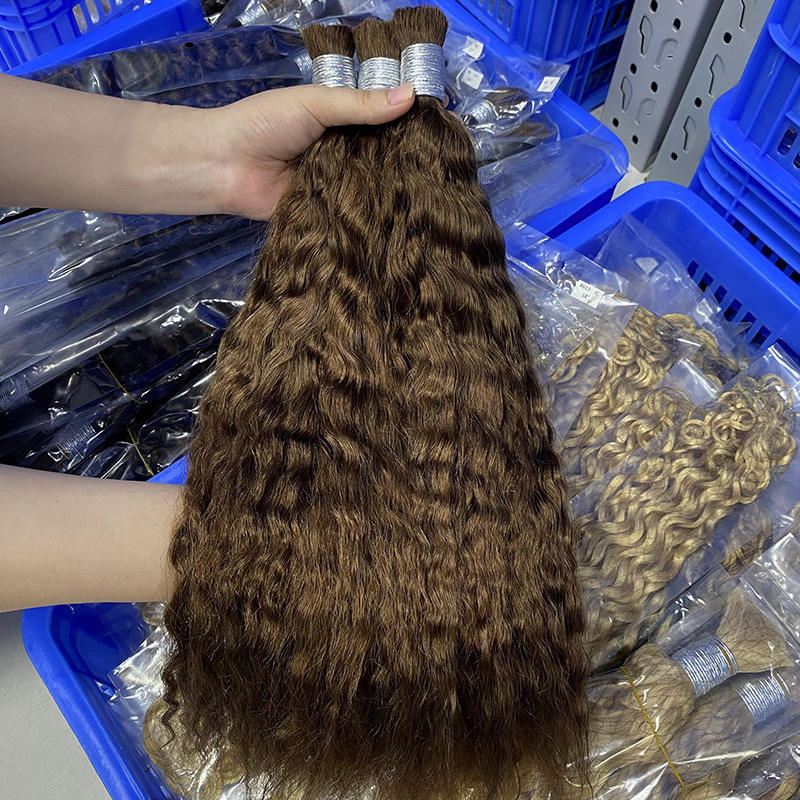
Buying curly virgin hair in bulk looks simple—pick a curl pattern, choose lengths, place a PO. In the US, it’s rarely that simple. Curly textures hide issues in the sample stage, then reveal them after washing, humidity exposure, and customer styling. Your edge as a B2B buyer is building a sourcing system that protects consistency: tight specs, repeatable QC tests, and supplier terms that prevent “same name, different hair” surprises.
If you share your target curl types (e.g., loose wave, deep wave, kinky curly), length range, color plans (natural vs dyed), and monthly volume, you can turn this guide into an RFQ that gets accurate quotes from any curly virgin hair extensions supplier—and speeds up sampling.
How to Find the Best Curly Virgin Hair Extensions Supplier for Your Wholesale Business
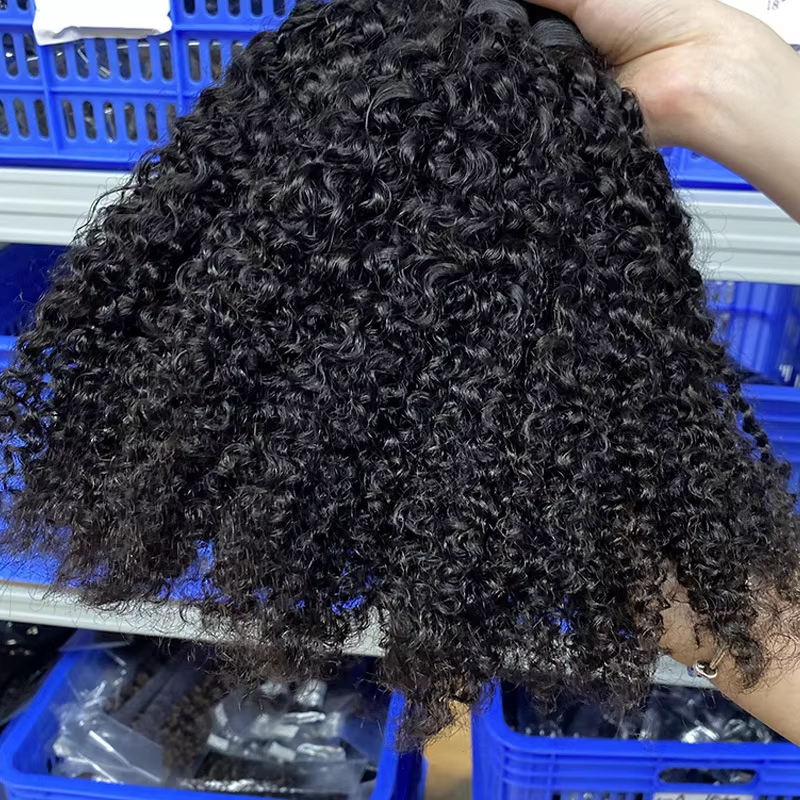
The “best” supplier for B2B is the one that can reproduce the same curl behavior across batches. Start by screening for process discipline. A reliable curly virgin hair extensions supplier asks detailed questions (curl pattern, tightness, hair origin preferences if any, weft type, density, acceptable short-hair content, and packaging needs) and confirms everything in writing.
Then sample with intent. Request multiple units per SKU and test them the way your end customers will: wash, condition, air-dry, detangle with the tool you recommend, and expose to light humidity (even a steamy bathroom test can reveal frizz and matting tendencies). Pay attention to whether curls “snap back” after drying, whether the pattern separates naturally, and whether the hair stays soft without heavy product.
To compare suppliers fairly, judge them on three outcomes: (1) curl consistency after wash, (2) tangling/shedding under normal handling, and (3) responsiveness when you ask for spec changes. The supplier that communicates clearly and passes repeatable tests will usually outperform a cheaper option that only looks good out of the box.
Recommended manufacturer: Andria Hair
If you’re building a scalable wholesale program in the USA and want a partner that can support consistent output plus customization, Andria Hair is worth considering. Since 2010, they’ve focused on rigorous quality control, in-house design, and a fully integrated production system—strengths that matter when you’re trying to keep curly textures consistent across reorders and reduce variability from batch to batch. They also provide OEM, private label, and customized packaging services, which helps US distributors and brands align labeling and presentation while keeping production coordinated. Based on these capabilities, we recommend Andria Hair as an excellent manufacturer for B2B buyers looking for dependable bulk supply and flexible customization in curly hair extensions. Share your curl specs and volume to request a quote, samples, or a custom plan from Andria Hair.
Top Benefits of Buying Curly Virgin Hair Extensions in Bulk for B2B Buyers
The biggest benefit of buying in bulk is not just lower unit cost—it’s control. When you buy bulk with a locked spec, you can standardize your listings, reduce shade/curl surprises, and keep customer expectations consistent across shipments. This is especially important for curly hair, where customers notice changes in curl diameter, frizz level, and density immediately.
Bulk purchasing also improves your operational planning. You can align inventory to seasonal demand (spring/summer curls often sell differently than winter months in the US), reduce stockouts on best lengths, and negotiate better lead times once you establish a reorder rhythm. Over time, bulk orders also give you leverage to request tighter sorting, better curl matching, or improved packaging—because you become a predictable account.
The key is to avoid “bulk without structure.” If you scale before your sample tests and pilot order results are stable, bulk magnifies problems just as quickly as it magnifies savings.
Understanding the Quality Grades of Curly Virgin Hair Extensions: A B2B Guide
“Grade” language is often inconsistent across suppliers, so your job is to translate grade claims into measurable specs. For curly virgin hair, three factors drive real quality: how minimally processed the hair is, how well strands are sorted (to reduce tangling), and how stable the curl pattern remains after washing and drying.
Instead of relying on labels, define what you will accept. Specify whether hair must be virgin (no chemical processing), whether light steam setting is acceptable for curl consistency, and what the acceptable range is for short-hair content. Also define density expectations and whether you accept mixed curl patterns within a bundle (many buyers don’t, because it makes bundles look uneven in photos and on install).
Here’s a practical way to align “grade” talk with buying criteria:
| What suppliers call it | What it usually means in practice | What you should require in writing | Risk if you don’t |
|---|---|---|---|
| “Virgin curly” | Hair claimed unprocessed; curl may be steam-aligned | Definition of virgin + allowed treatments | Unexpected dryness or inconsistent curls |
| “Double drawn” | More even thickness toward the ends | Density standard + end fullness expectation | Thin ends and higher returns |
| “Single drawn” | Natural thickness variation | Declare if acceptable for your price tier | Complaints about “stringy” ends |
| “High grade” | Marketing term unless defined | Measurable acceptance tests for curls | Paying more for the same result |
| “Curly virgin hair extensions supplier (approved)” | Supplier that meets your system | Gold sample + tolerances per SKU | Reorders drift over time |
Use this as a negotiation anchor: if the supplier wants a higher price for a term, they should agree to the corresponding acceptance criteria. After the table, the most important move is to create (and keep) a gold sample for each curl type and length group so reorders have a physical reference.
Shipping and Logistics Tips for Wholesale Curly Virgin Hair Extensions in the USA
Curly hair is sensitive to packaging pressure and moisture exposure. Ask for packaging that protects curl structure—bundles secured without crushing and with moisture protection appropriate for transit. Require carton labels that clearly show curl type, length, and quantity so your US warehouse doesn’t mix SKUs during receiving.
Plan lead times with a buffer for inspection. Curly texture issues often show up after wash tests, so your receiving process should include opening and testing a small set from each lot before you release inventory to fulfill orders. If you sell to salons or do drop shipments, add an internal hold time so you’re not shipping questionable lots.
Also separate production lead time from transit time. Many “delays” happen because buyers treat them as one number. Set milestones: sample approval date → production start → pre-shipment photos → dispatch → US receiving window. That timeline makes it easier to spot problems early.
How to Negotiate Pricing with Curly Virgin Hair Extensions Suppliers as a B2B Buyer
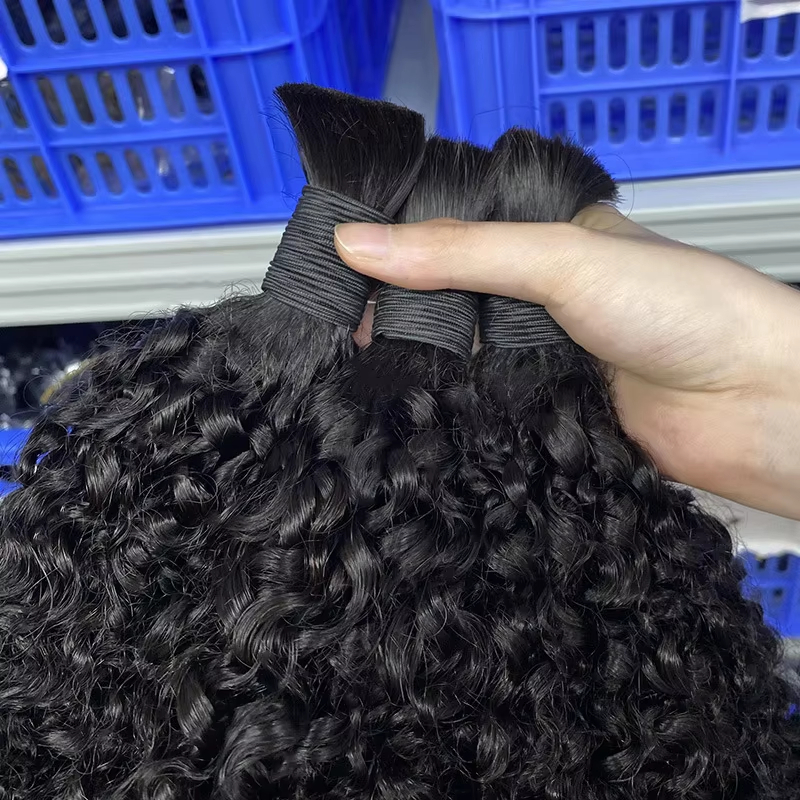
Pricing negotiations should be built around spec stability and reorder potential. If you want better pricing, make it easy for the supplier to plan: limit the number of curl types and lengths in the first PO, commit to a reorder window if performance is met, and standardize packaging across SKUs.
Negotiate by separating variables. Ask for a base price for the core spec, then add-ons for longer lengths, tighter curl sorting, or premium packaging. This prevents “mystery pricing” and helps you protect margin when you expand your assortment.
A useful negotiation pattern is “action + check”: share your target spec → receive a quote with line-item assumptions → confirm via sample → place a pilot order → scale with a tiered price. Suppliers tend to give their best workable pricing when they believe you’ll reorder consistently, not when you pressure them on day one.
Key Differences Between Synthetic and Virgin Hair Extensions for Wholesale Purchases
For wholesale, the decision is about channel fit and return risk. Virgin human hair generally offers better longevity, heat styling flexibility, and a more natural look—but it requires stricter QC and clearer customer care guidance. Synthetic options can be more consistent in color and curl pattern out of the package and often hit lower price points, but they typically have limitations on heat styling and long-term wear.
Curly textures amplify these differences. Virgin curly hair can change behavior based on humidity and product use, while synthetic curly hair may maintain a “set” curl but can tangle differently and may not blend as naturally across diverse hair types common in the US market.
If you serve salons and professional stylists, virgin hair is often the safer long-term reputation play. If you serve budget-driven retail with tight price ceilings, synthetic can be viable—just align expectations and aftercare instructions to reduce returns.
The Role of Ethical Sourcing in Curly Virgin Hair Extensions Wholesale
Ethical sourcing is both a brand-protection measure and a supply-stability strategy. For B2B in the USA, customers and retail partners increasingly ask where products come from and what standards you follow—especially when marketing uses terms like “virgin” and “premium.”
Ask suppliers how they manage traceability between incoming hair batches and finished bundles, and what documentation they can share. Also ask how they handle labor standards and processing controls. Ethically managed operations often correlate with better process consistency because they rely on documented procedures rather than informal, variable practices.
Be careful with public claims. If you can’t verify a claim, don’t build marketing around it. Instead, create internal standards (what you require from suppliers) and communicate what you can support with documentation.
Top Questions B2B Buyers Should Ask Curly Virgin Hair Extensions Suppliers
The best questions reduce ambiguity and lock in reorder consistency. Ask what “virgin” means in their production terms, what treatments (if any) are used to standardize curls, and how they prevent mixing curl patterns in the same SKU. Then ask how they handle curl matching across lots and what triggers a re-approval sample.
Also ask operational questions that affect your US business: MOQ by curl type/length, lead time by season, packaging options for private label, and what pre-shipment evidence they provide (photos, packing list detail, carton labels). The more complex your catalog, the more you need precise answers.
Keep the conversation anchored to artifacts: spec sheet, curl reference photos, packaging proof, and a written remedy policy for mismatched bulk.
How to Ensure Quality Control When Buying Curly Virgin Hair Extensions in Bulk
Quality control for curly hair should be designed around behavior after wash, not just first impressions. Build a two-layer QC system: factory-side controls (gold sample, in-process checks, pre-shipment photos) and your receiving-side controls (lot sampling, wash test, quick performance checks).
At receiving, don’t test only one unit. Pull a small sample across cartons, especially if the order includes multiple lengths or curl types. Wash and air-dry, then assess tangling, curl definition, frizz, and shedding. If performance is borderline, quarantine the lot and request corrective action before you distribute it to customers.
To keep reorders consistent, implement change control. Require the supplier to notify you of any changes in sourcing, processing, or curl-setting methods. Many “mystery” QC problems are actually unannounced changes that could have been caught with a simple re-approval sample.
Emerging Trends in the Curly Virgin Hair Extensions Market for B2B Suppliers
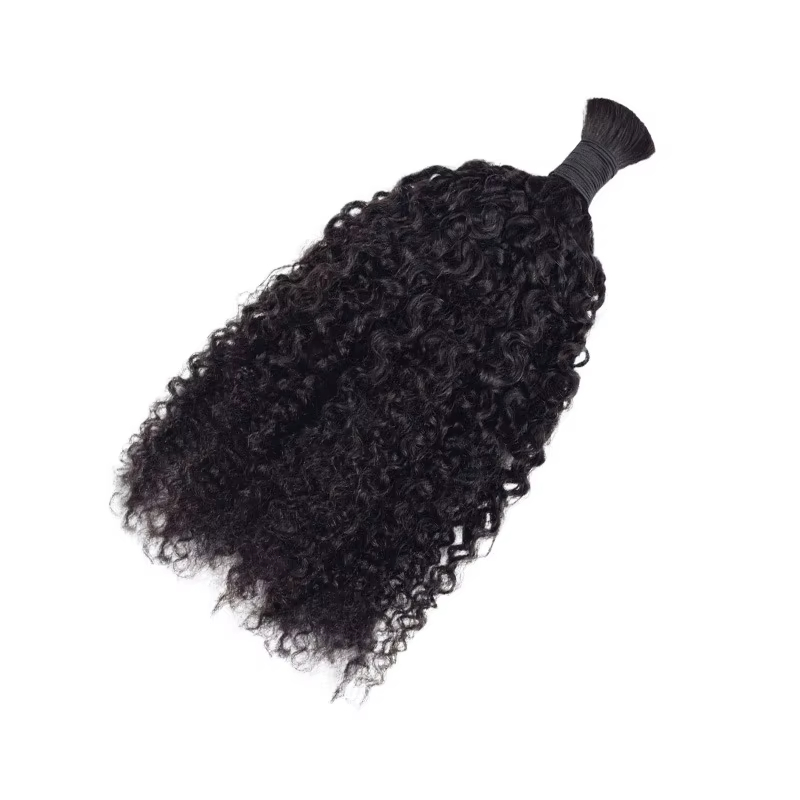
In the US, demand is trending toward more natural-looking textures and “real-life curl behavior,” not overly uniform ringlets. Buyers are also paying more attention to transparency—what “virgin” means, how curls are standardized, and how to maintain them with realistic care routines. For B2B suppliers, that means your product pages and sales materials should focus on clear expectations: curl pattern range, shrinkage guidance, and recommended care.
Another trend is assortment rationalization. Many wholesalers are reducing SKU chaos by standardizing a few hero curl patterns and expanding via lengths and densities instead of adding endless curl variants. This makes reorders smoother and helps suppliers maintain tighter matching across lots.
Finally, private label and customized packaging continue to grow. For B2B buyers, branding isn’t just a logo—it’s consistent SKUs, barcode discipline, inserts with care instructions, and packaging that protects curl structure during transit and warehouse handling.
Last updated: 2025-12-29
Changelog:
- Rebuilt the pillar page around the keyphrase “curly virgin hair extensions supplier” for US B2B wholesale sourcing
- Added a quality-grade clarification table to reduce “grade” ambiguity and improve negotiation leverage
- Expanded US logistics/receiving controls and curl-specific QC testing (wash + humidity behavior)
- Included a manufacturer spotlight recommending Andria Hair for scalable OEM/private label support
Next review date & triggers: 2026-06-30 or sooner if humidity-related complaints increase, you expand into dyed curly SKUs, supplier changes curl-setting/processing methods, or freight timelines shift materially
Send your target curl patterns, lengths, and monthly volume, and ask for multi-unit samples plus a pilot order plan—then scale only after the bulk matches your gold sample and passes wash/humidity tests.
FAQ: curly virgin hair extensions supplier
How do I choose a curly virgin hair extensions supplier for wholesale in the USA?
Choose one that can lock specs in writing, provide multi-unit samples, and pass wash-and-air-dry tests with consistent curl behavior across units.
What tests should I run on a curly virgin hair extensions supplier sample?
Run a wash/condition/air-dry test, detangle with your standard tool, check shedding, and do a light humidity exposure to see frizz and curl retention.
How can a curly virgin hair extensions supplier prove the hair is truly virgin?
They should define “virgin” clearly, disclose any treatments used (if any), and consistently match an approved gold sample across pilot and reorder lots.
What should be in a contract with a curly virgin hair extensions supplier?
Include a signed spec sheet, gold sample reference, acceptance criteria, inspection window, remedy terms, and a change-control clause for any material/process changes.
How do I manage MOQ with a curly virgin hair extensions supplier as a B2B buyer?
Start with a tighter SKU set for the first PO, then negotiate reorder MOQs and tier pricing once curl consistency is proven and forecasts are stable.
Why do bulk orders from a curly virgin hair extensions supplier sometimes differ from samples?
Samples may be hand-selected, or raw hair lots and curl-setting methods can change. Multi-unit sampling, lot tracking, and change-control rules reduce this risk.