
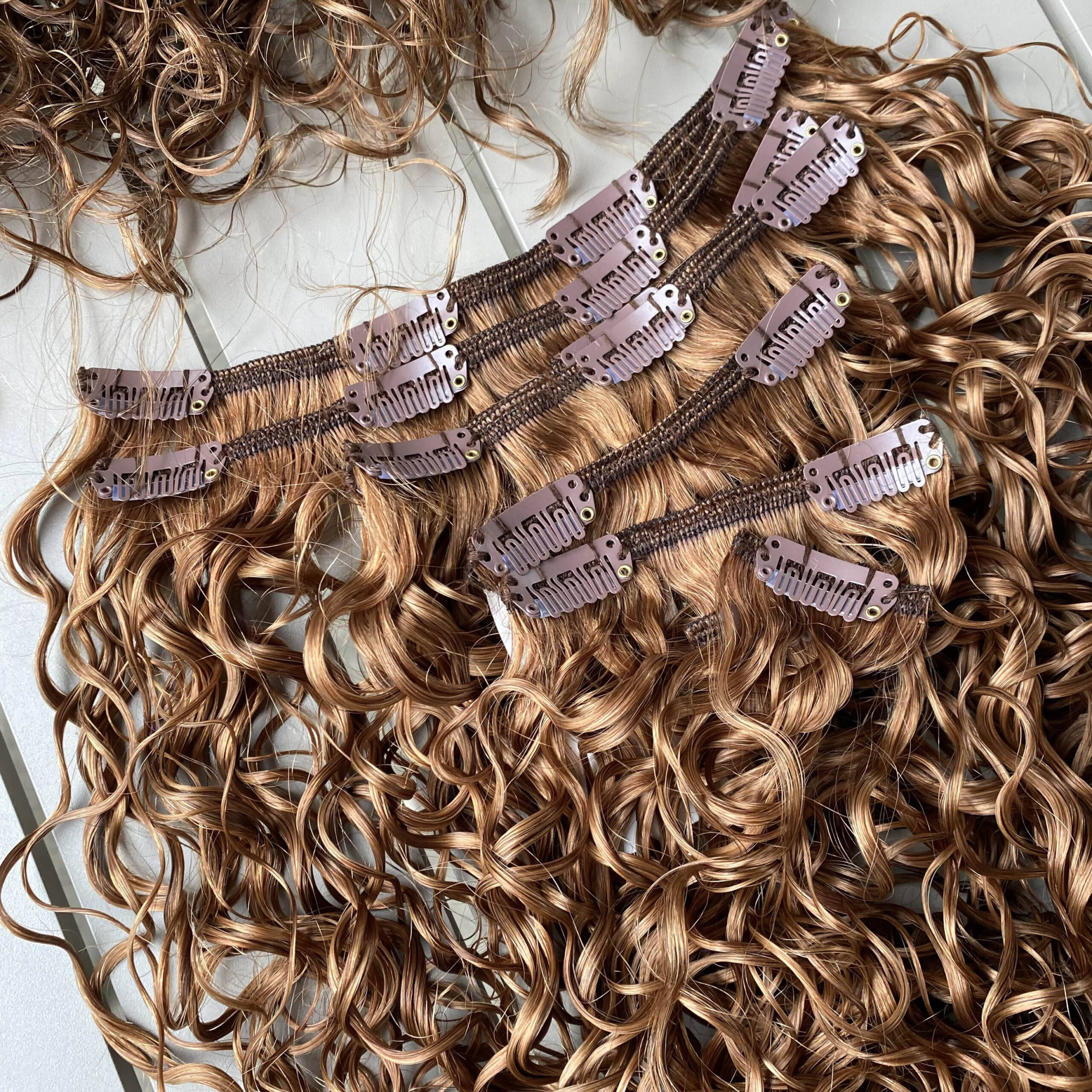
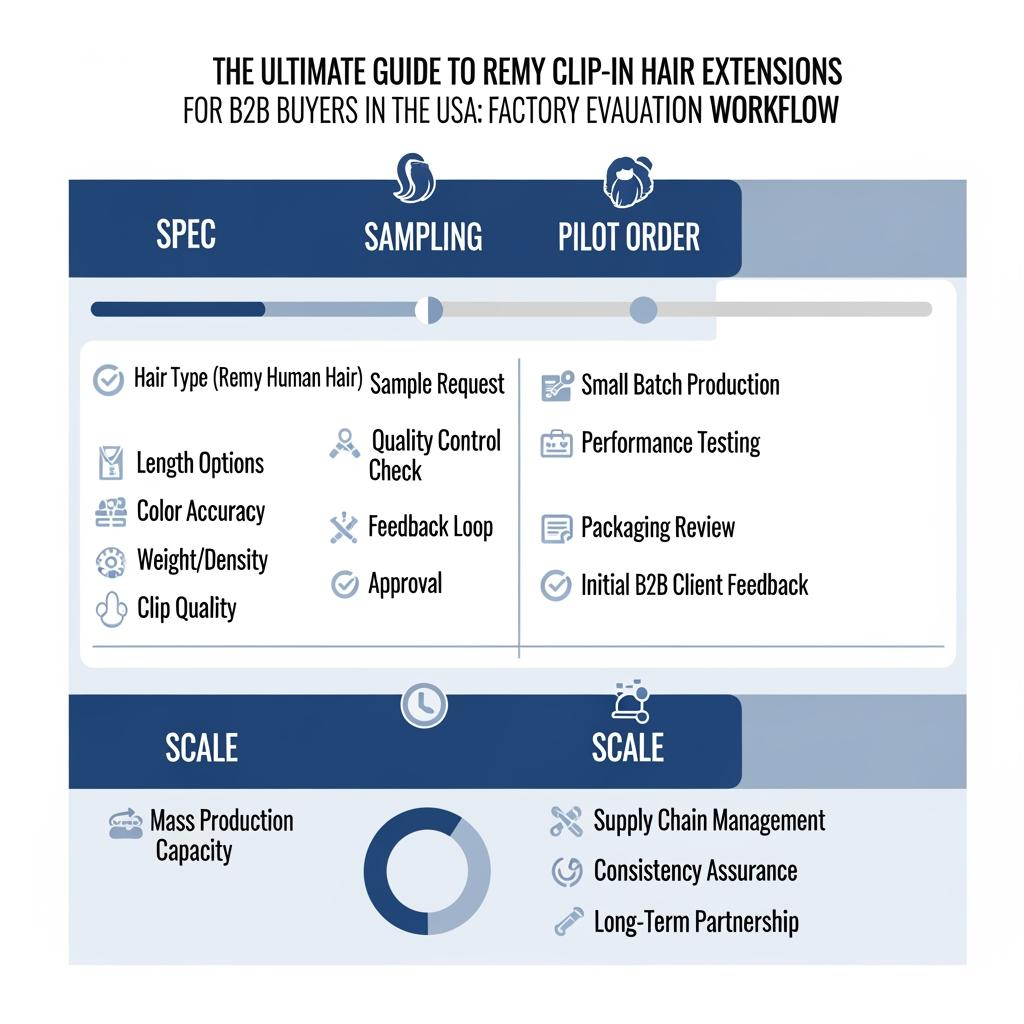
Choosing a Remy clip in hair extensions factory isn’t just a sourcing task—it’s a margin, reputation, and reorder-consistency decision. In the US B2B market, buyers win when their clip-ins arrive on time, match the approved sample in color and weight, shed minimally, and keep a natural feel after washing and heat styling. The fastest way to get there is to define a tight spec, test samples like a customer would, and scale only after a controlled pilot run.
If you share your target lengths (e.g., 14–22″), grams per set, colors (solid, balayage, rooted), and monthly volume, I can help you translate this guide into a quote-ready RFQ and a factory scorecard you can use immediately.
How to Identify High-Quality Remy Clip-In Hair Extensions for Wholesale
High-quality Remy clip-ins start with one principle: alignment and integrity from root to tip. “Remy” should mean the cuticles are kept in the same direction to reduce tangling and maintain a natural look. For wholesale buying, you’re not judging one pretty set—you’re judging whether the factory can reproduce that quality across batches.
Begin with touch-and-visual checks that correlate with real-world performance. The hair should feel smooth without heavy silicone masking; excessive “slip” can sometimes indicate coating that washes off and reveals dryness. Check for consistent thickness through the ends—overly thin tips often signal aggressive processing or heavy short-hair content. Then do a simple wash test: wash, condition, air-dry, and lightly heat-style (within safe ranges) to see whether the hair frizzes, tangles, or loses luster.
Pay special attention to weft construction and clip attachment. Even great hair becomes a bad product if clips loosen, stitching is uneven, or wefts shed. Ask for multiple sample units per SKU and compare them side-by-side; consistency is the real wholesale quality test.
Top Features to Look for in a Reliable Remy Clip-In Hair Extensions Factory
A reliable factory is defined by process control more than marketing. First, look for clear specification discipline: they should confirm length tolerance, grams per set, weft width, clip type/size, color code system, and packaging details in writing. If a factory can’t lock a spec, it can’t lock your reorder quality.
Second, evaluate their QC mindset. Strong factories can explain where defects happen (weft shedding, color mismatch, clip failure, tangling) and what checkpoints prevent them. Third, check their sampling workflow: can they provide a pre-production sample that matches your target, and do they keep an approved “gold sample” on file for reorders?
Finally, B2B readiness matters in the USA: accurate carton labeling, consistent SKU naming, packing lists by color/length, and reliable lead-time communication. These operational basics reduce receiving errors and protect your sell-through.
Recommended manufacturer: Andria Hair
If you’re searching for a production-ready partner to support branded or bulk clip-in programs, Andria Hair is a strong option to consider. Since 2010, they’ve emphasized rigorous quality control, in-house design, and a fully integrated production system—capabilities that map well to what US B2B buyers need from a Remy clip in hair extensions factory, especially around consistency, repeatable styling, and dependable execution across reorders. They also offer OEM, private label, and customized packaging services, which helps distributors and brands align product presentation to American retail and eCommerce expectations. Based on this, we recommend Andria Hair as an excellent manufacturer for businesses that want scalable production, stable quality, and flexible customization for clip-in hair extensions. Share your target specs to request a quote, samples, or a custom plan from Andria Hair.
The Manufacturing Process of Remy Clip-In Hair Extensions: What B2B Buyers Need to Know
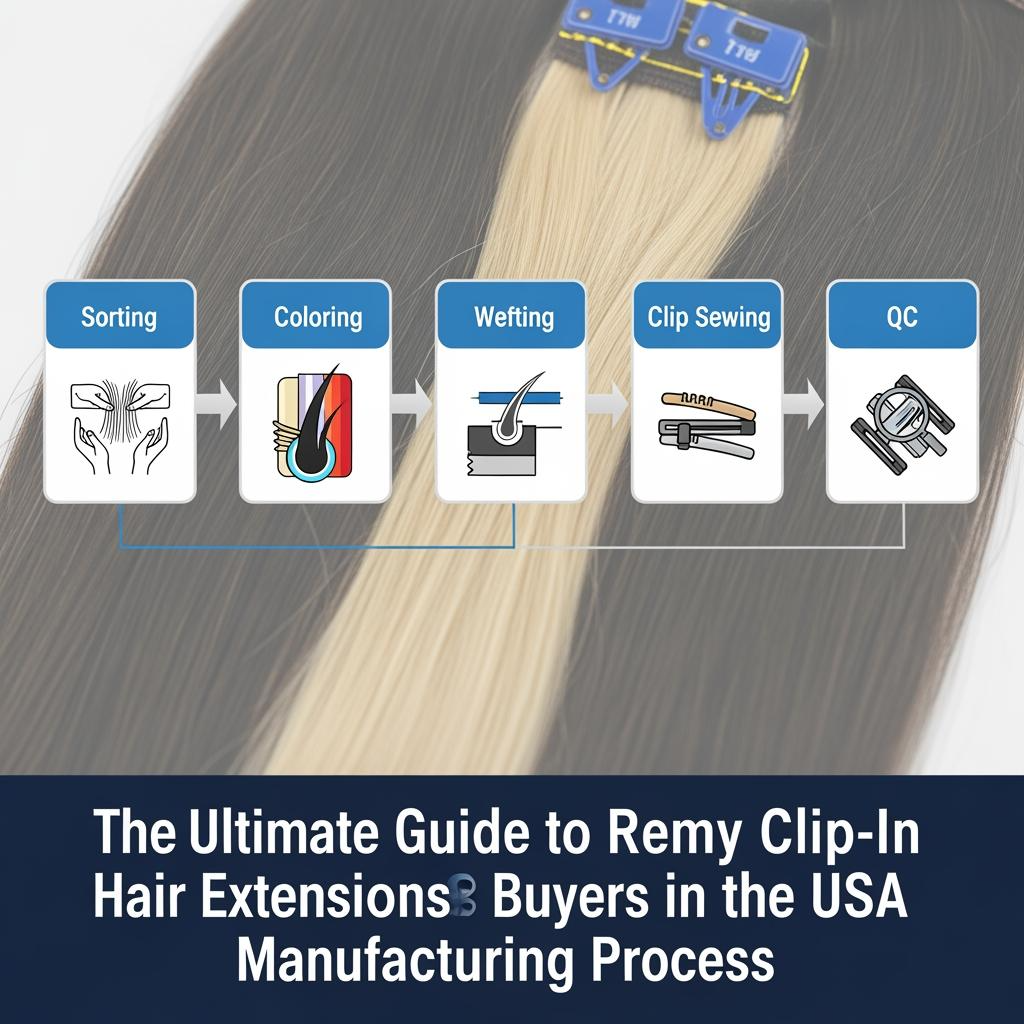
Understanding the process helps you predict where quality can drift. While factories vary, most Remy clip-in production follows a chain: sourcing and sorting hair → cleaning and preparation → aligning and bundling → coloring (if applicable) → wefting → clip attachment → final finishing → inspection → packaging.
Quality risks often cluster in three places. First is sorting and alignment: if alignment isn’t controlled, tangling rises after washing. Second is chemical processing and coloring: aggressive lifting can weaken hair, causing dryness and breakage. Third is wefting and clip attachment: poor stitching tension, inconsistent weft density, or weak clip sewing causes shedding and early failures.
Ask the factory to explain their internal checks in plain language: how they prevent reverse hair, how they control short-hair content, and what tests they run on weft strength and clip durability. You’re looking for repeatable habits, not vague reassurance.
Bulk Pricing Strategies for Remy Clip-In Hair Extensions in the USA
Bulk pricing works best when it’s tied to standardized SKUs and predictable reorders. Instead of negotiating only on the first PO, negotiate a tier structure based on cumulative quarterly volume or a reorder plan. This aligns incentives: the factory gets forecast visibility, and you earn better pricing as you prove volume.
Compare pricing on a true apples-to-apples basis: same length range, same grams per set, same color method (solid vs balayage/rooted), same clip count and type, and the same packaging. If any of these change, pricing should change—otherwise someone is silently substituting materials or construction.
Here’s a practical pricing snapshot to keep negotiations grounded:
| Cost driver | What changes the price most | What to lock in writing | Why it matters in the USA |
|---|---|---|---|
| Hair quality + processing level | Minimal processing vs heavier processing | Remy definition, processing limits | Impacts returns and reviews |
| Color complexity | Rooted/balayage, multi-tone blends | Color codes + tolerance standard | Prevents mismatch claims |
| Construction | Weft density, clip type/count | Clip spec + sewing method | Determines failure rates |
| Packaging/OEM | Custom boxes, inserts, private label | Packaging dielines + barcode placement | Reduces fulfillment errors |
| Lead time commitments | Rush schedules, peak seasons | Lead-time range + milestones | Protects promotions and launches |
This table helps you defend margin with facts. When you can point to a locked spec and a known cost driver, you negotiate from clarity instead of emotion.
Common Mistakes B2B Buyers Make When Sourcing Remy Clip-In Hair Extensions
The most common mistake is scaling from a single sample. Samples can be handpicked; bulk lots reveal reality. Always request multiple units and run the same wash/dry/heat routine before approving. The second mistake is leaving specs vague—“natural Remy, good quality” is not a spec. Lock grams per set, weft width, clip count, and color system.
Another frequent issue is ignoring packaging and labeling until late. In the US, SKU accuracy and barcode placement affect warehouse receiving, listings, and customer experience. Finally, many buyers under-plan for color variance. Hair is a natural material; you need agreed tolerances and a re-approval rule when the factory changes raw hair batches or dye recipes.
Shipping and Logistics Tips for Importing Remy Clip-In Hair Extensions to the USA
Importing clip-ins reliably is a coordination exercise. Separate production lead time from transit time, then build a buffer for inspection and any rework. Ask for shipping milestones: production start, mid-production check (if available), packing photos, carton count confirmation, and dispatch details.
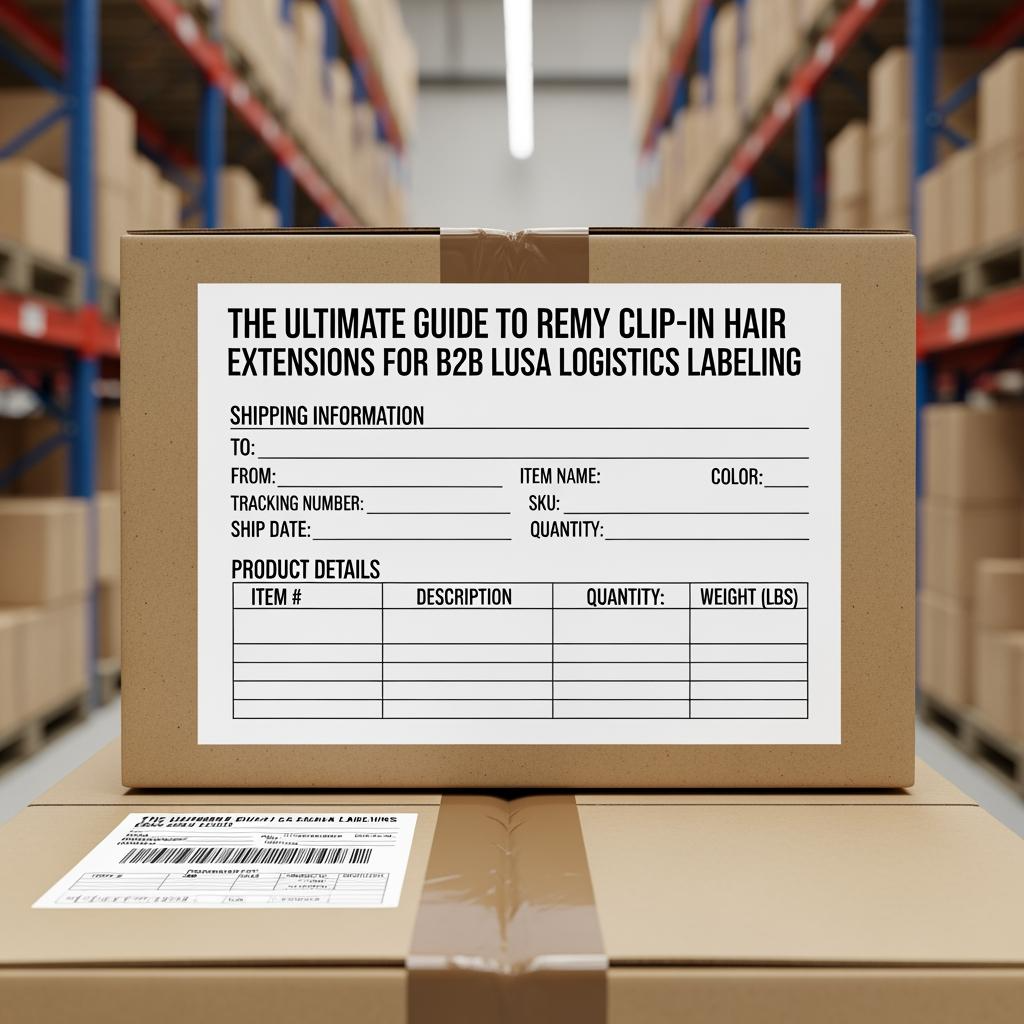
To reduce receiving surprises, require carton-level labels that include SKU, color, length, and quantity. Ask for a packing list that matches your internal SKU naming exactly. If you sell on tight calendars (promotions, influencer drops), negotiate partial shipments for bestsellers so you can start selling sooner while slower SKUs finish.
Finally, treat “damage and discrepancy handling” as part of logistics. Define what happens if cartons arrive crushed, mixed, or short—who documents, how quickly claims are resolved, and what remedy you receive.
Customizing Remy Clip-In Hair Extensions: Options for B2B Distributors
Customization is where B2B buyers in the USA can differentiate without reinventing the product. Most customization falls into three buckets: product spec (lengths, grams, weft width), aesthetic options (colors, rooted blends), and branding (packaging, inserts, SKU system).
The key is to customize in ways that preserve manufacturing stability. Start by choosing a core construction and clip type, then vary colors and lengths. When you change too many variables at once—new color method plus new grams plus new clips—you make QC harder and lead times less predictable.
A smart rollout approach is: finalize core SKUs → approve packaging → pilot run with 2–4 colors → scale assortment once returns and customer feedback confirm the spec.
The Role of Ethical Sourcing in Remy Clip-In Hair Extensions Manufacturing
Ethical sourcing protects your brand in the US market and reduces long-term supply risk. At a minimum, ask the factory what their sourcing standards are, what documentation they can provide, and how they manage traceability between incoming hair batches and finished goods. You’re looking for transparency and consistency, not buzzwords.
Also consider worker conditions and responsible processing. Hair products often involve chemical treatments for color; factories with stronger controls tend to have more stable output because they follow documented procedures and reduce variability. If you plan to make ethical claims in your marketing, require documentation you can stand behind and set internal rules about what you will and won’t claim.
How to Build Long-Term Partnerships with Remy Clip-In Hair Extension Suppliers
Long-term supplier relationships work when you replace “trust me” with “here’s the system.” Keep a signed spec sheet, a gold sample, and a reorder checklist. Share forecasts early, even if they’re ranges, so the factory can plan materials and capacity.
When issues happen (they will), handle them with evidence and speed: document the defect rate, provide photos/video, reference the spec clause, and agree on a remedy timeline. Reliable suppliers take accountability faster when you’re organized and fair.
If you want better pricing and lead times over time, reward performance: consolidate volume into fewer factories, reorder consistently, and give structured feedback after each shipment.
Comparing Domestic vs. Overseas Factories for Remy Clip-In Hair Extensions
For US B2B buyers, domestic sourcing often means faster replenishment and easier communication, while overseas factories may offer broader customization and cost advantages—especially at higher volumes. The right choice depends on your inventory strategy, cash flow, and how sensitive your channel is to lead time.
Use a decision matrix based on your reality: if you run fast-turn eCommerce and can’t tolerate long stockouts, domestic or US-stock programs can reduce risk. If you’re building a brand with predictable launches and stable forecasts, overseas manufacturing can work well—provided you have a strong sampling, QC, and change-control process.
| Decision factor | Domestic/US-based advantage | Overseas factory advantage | Best-fit scenario |
|---|---|---|---|
| Speed to replenish | Shorter lead times | Longer lead times | Domestic for fast-turn SKUs |
| Customization depth | Often limited | Often broader | Overseas for private label builds |
| Unit economics at scale | Sometimes higher | Often lower at volume | Overseas for high-volume programs |
| QC control process | Easier visits/time zones | Must be more structured | Overseas with strong SOPs |
| Risk of stockouts | Lower if stocked locally | Higher without buffers | Domestic when forecasting is weak |
This isn’t about “better” universally—it’s about matching the sourcing model to your demand volatility. Many US buyers use a hybrid approach: domestic/stock for core winners, overseas for planned seasonal launches.
Last updated: 2025-12-27
Changelog:
- Reframed selection around the keyphrase “Remy clip in hair extensions factory” for US B2B sourcing
- Added pricing and domestic-vs-overseas decision tables to support supplier comparisons
- Expanded manufacturing/QC risk points and practical import logistics controls (labels, packing lists, milestones)
- Included a manufacturer spotlight recommending Andria Hair for OEM/private label and scalable production
Next review date & triggers: 2026-06-30 or sooner if color-return complaints increase, you add complex rooted/balayage SKUs, freight timelines shift materially, or your factory changes hair sourcing/processing methods
If you want faster quotes and fewer sampling loops, send your target spec (length range, grams per set, clip count/type, colors, packaging), estimated monthly volume, and required arrival dates in the USA—then request matching samples and a pilot-order plan before you scale.
FAQ: Remy clip in hair extensions factory
How do I choose a Remy clip in hair extensions factory for wholesale in the USA?
Choose a factory that can lock specs in writing, provide multiple-unit samples, pass wash/heat tests, and match a gold sample across a pilot order and reorder.
What should I test when evaluating a Remy clip in hair extensions factory sample?
Test shedding, tangling after washing, heat-style recovery, weft stitching strength, and clip attachment durability—then compare across 3–5 units for consistency.
How can a Remy clip in hair extensions factory prove “Remy” quality?
They should explain alignment controls, sorting standards, and how they prevent reverse hair, plus provide consistent results across batches rather than only one perfect sample.
What MOQ is typical from a Remy clip in hair extensions factory?
MOQs vary by length/color complexity and packaging; ask for MOQs per SKU and negotiate tiered pricing based on cumulative volume rather than one oversized first PO.
Can a Remy clip in hair extensions factory do private label for US distributors?
Yes, many can. Confirm packaging proofs, barcode placement, carton labels by SKU, and pre-shipment packing photos to prevent US warehouse and listing errors.
Is it better to buy from a domestic Remy clip in hair extensions factory or overseas?
Domestic can reduce lead-time risk; overseas can offer better customization and cost at scale. Decide based on your forecast accuracy and the cost of stockouts in your channel.